Why Are Some Cleaners Unsuitable for Granite?
Many household cleaners contain acids, bleach, ammonia or strong alkalis. These ingredients can:
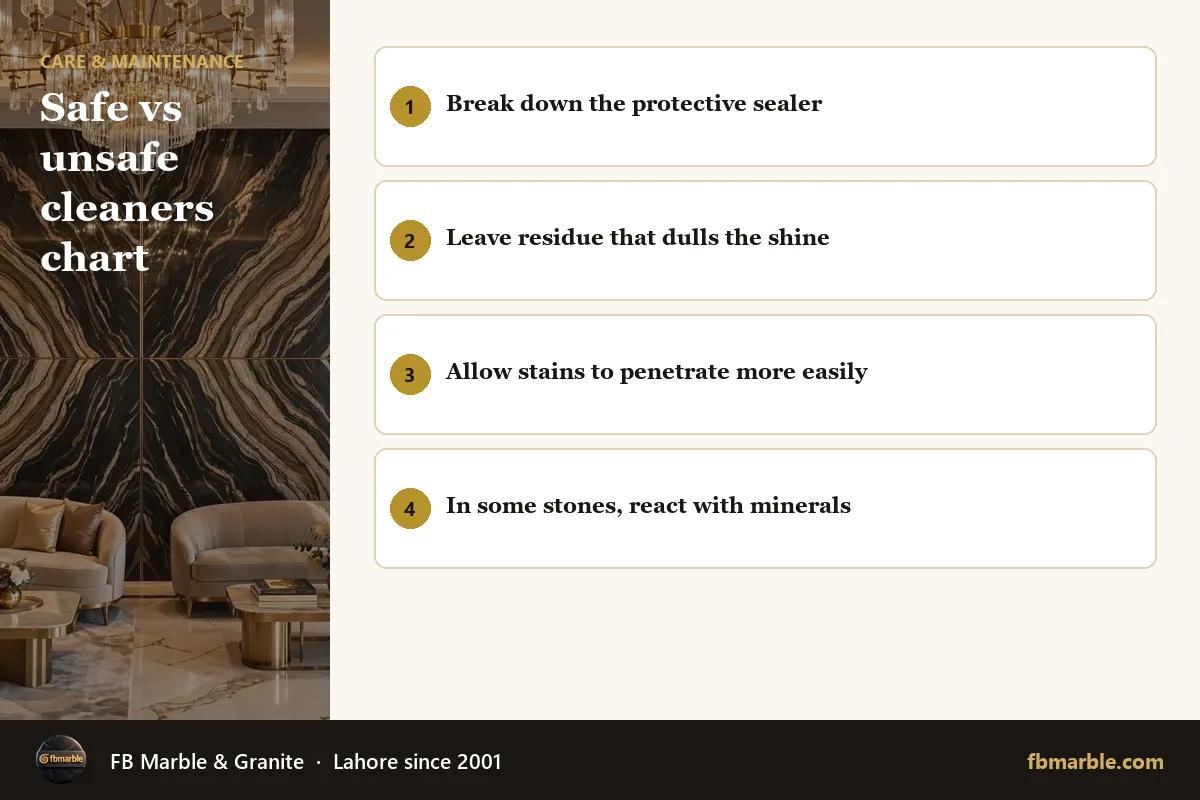
- Break down the protective sealer
- Leave residue that dulls the shine
- Allow stains to penetrate more easily
- In some stones, react with minerals
Common Products and Granite
Disinfecting wipes (bleach or citric acid-based): convenient, but regular use weakens the sealer. Use occasionally if necessary and wipe with water afterwards.
Bleach: can dull and discolour some granites and break down sealers.
Glass cleaners with ammonia: repeated use dulls polish.
Multi-purpose disinfectant sprays: many contain harsh ingredients; check labels.
Furniture polish sprays: leave a slippery, cloudy film.
Degreasers: strongly alkaline formulas can strip sealer.
How to Disinfect Granite Safely
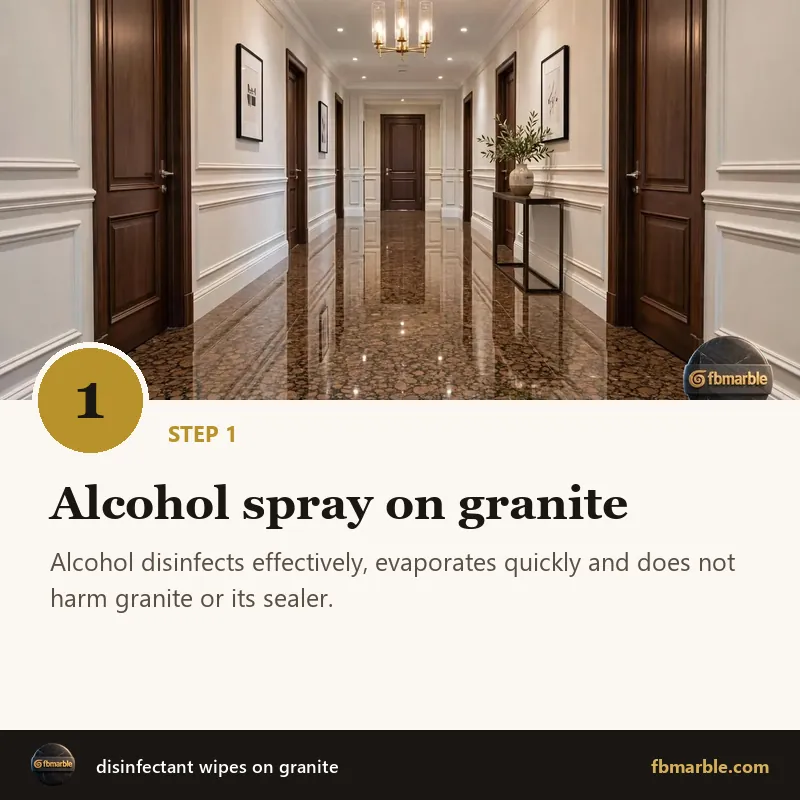
Isopropyl alcohol (70%) is the best option. Mix it 1:1 with water in a spray bottle, spray the counter, leave for a minute or two, then wipe and dry. Alcohol disinfects effectively, evaporates quickly and does not harm granite or its sealer.
Stone-safe disinfectants formulated for natural stone are also suitable.
Hot soapy water cleans away most germs physically and should always be the first step.
A Safe Daily Routine
- Wipe away crumbs and food.
- Clean with hot soapy water.
- Rinse and dry.
- Spray with alcohol solution after preparing raw meat or chicken.
- Wipe dry.
What About Marble and Quartz?
Marble: never use acidic or bleach-based wipes — they etch and damage it.
Quartz: avoid bleach; alcohol is safe.
Get a Free Quote from FB Marble
Send a simple sketch with measurements on WhatsApp (+92 323 4148908) and we will reply with the best rate, usually within hours. You are welcome to visit our Lahore showroom on Bedian Road to see the stone in person. More guides and products are available at fbmarble.com.