Why Not Vinegar?
Vinegar is acetic acid. Granite itself is made mostly of silicate minerals that are not easily damaged by mild acids, but the sealer that protects your granite is. Repeated cleaning with vinegar gradually breaks down the sealer, leaving the stone's pores open to oil, haldi and chai.
Some granites also contain minerals such as calcite in small amounts, which can react with acids and leave dull spots. And many stones sold as "granite" are actually other rock types that may be more sensitive.
The Result of Regular Vinegar Use
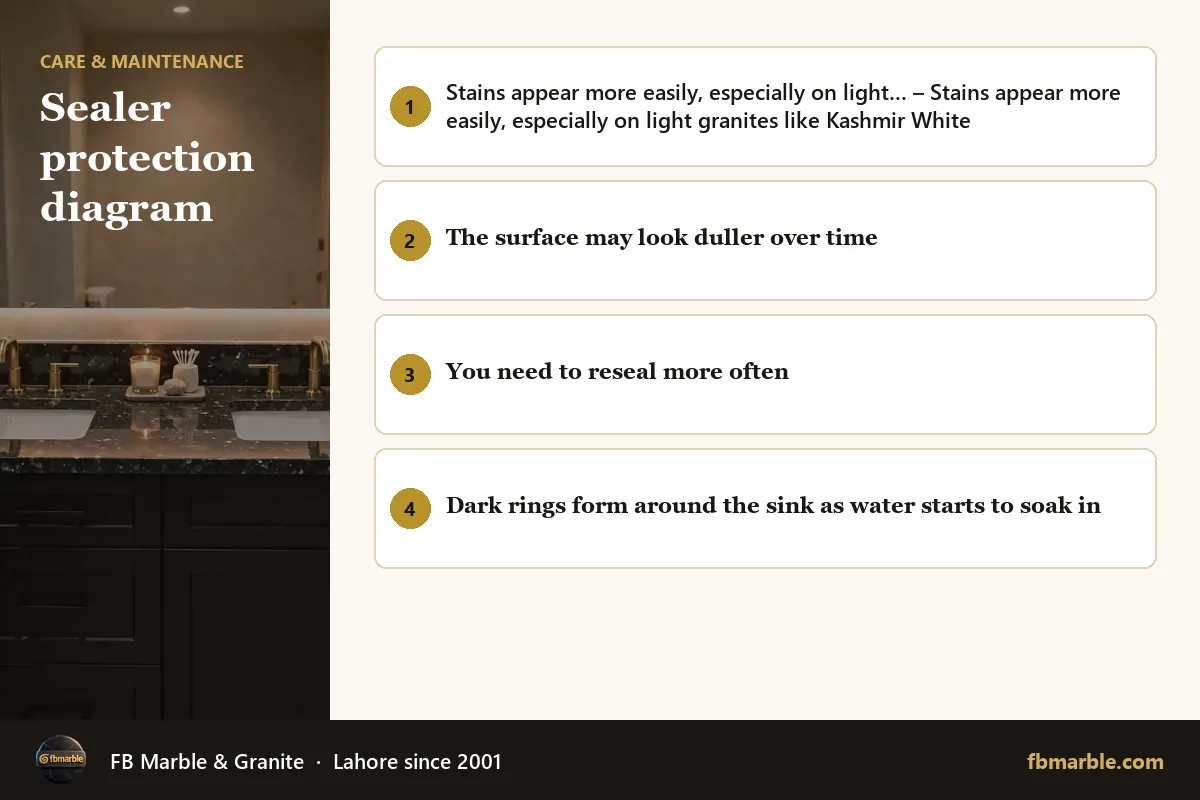
- Stains appear more easily, especially on light granites like Kashmir White
- The surface may look duller over time
- You need to reseal more often
- Dark rings form around the sink as water starts to soak in
What to Use Instead
Warm water and mild dish soap — the best daily cleaner. Rinse and dry afterwards.
Isopropyl alcohol and water (1:1) — a streak-free cleaner and disinfectant that does not harm sealers.
pH-neutral stone cleaners — designed specifically for granite and marble.
Baking soda paste — for gentle stain removal.
Other Products to Avoid
- Lemon juice and citrus cleaners
- Bleach and ammonia
- Bathroom descalers and toilet cleaners
- Abrasive powders and scouring pads
- Glass cleaners containing ammonia
How Often Should You Clean Granite?
- After every meal: wipe with soapy water and dry.
- Weekly: use a pH-neutral stone cleaner.
- Yearly (light granites): test with water and reseal if needed.
Other Tips to Keep Granite in Great Shape
- Use trivets near seams and cut-outs
- Use cutting boards
- Wipe spills promptly
- Avoid sitting or standing on counters
Get a Free Quote from FB Marble
Send a simple sketch with measurements on WhatsApp (+92 323 4148908) and we will reply with the best rate, usually within hours. You are welcome to visit our Lahore showroom on Bedian Road to see the stone in person. More guides and products are available at fbmarble.com.