What Is Pitting?
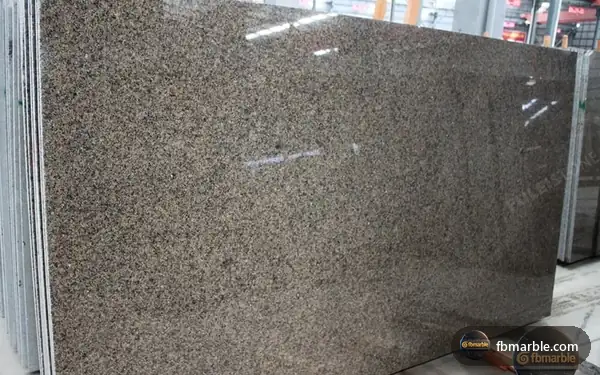
Pits are tiny holes or voids in the surface of a stone. In granite, they occur where softer minerals such as mica have broken away during polishing, leaving small depressions between harder crystals. They are usually only visible up close or when light hits the surface at an angle.
Is pitting a problem? Generally no. Pits do not affect strength. They may collect a little dirt but can be cleaned easily. Some fabricators fill larger pits with resin.
What Are Fissures?
Fissures are natural fine lines or seams within the stone, formed during its geological history. They can look like hairline cracks but are actually mineral boundaries or healed fractures. You can often feel that a fissure is smooth when you run a fingernail across it.
Is a fissure a problem? Usually no. Fissures are part of the stone's natural character and do not weaken it significantly.
What Is a Crack?
A crack is a true separation in the stone, often caused by impact, stress, poor support or thermal shock. Your fingernail will catch on a crack, and you may see the two sides at slightly different levels.
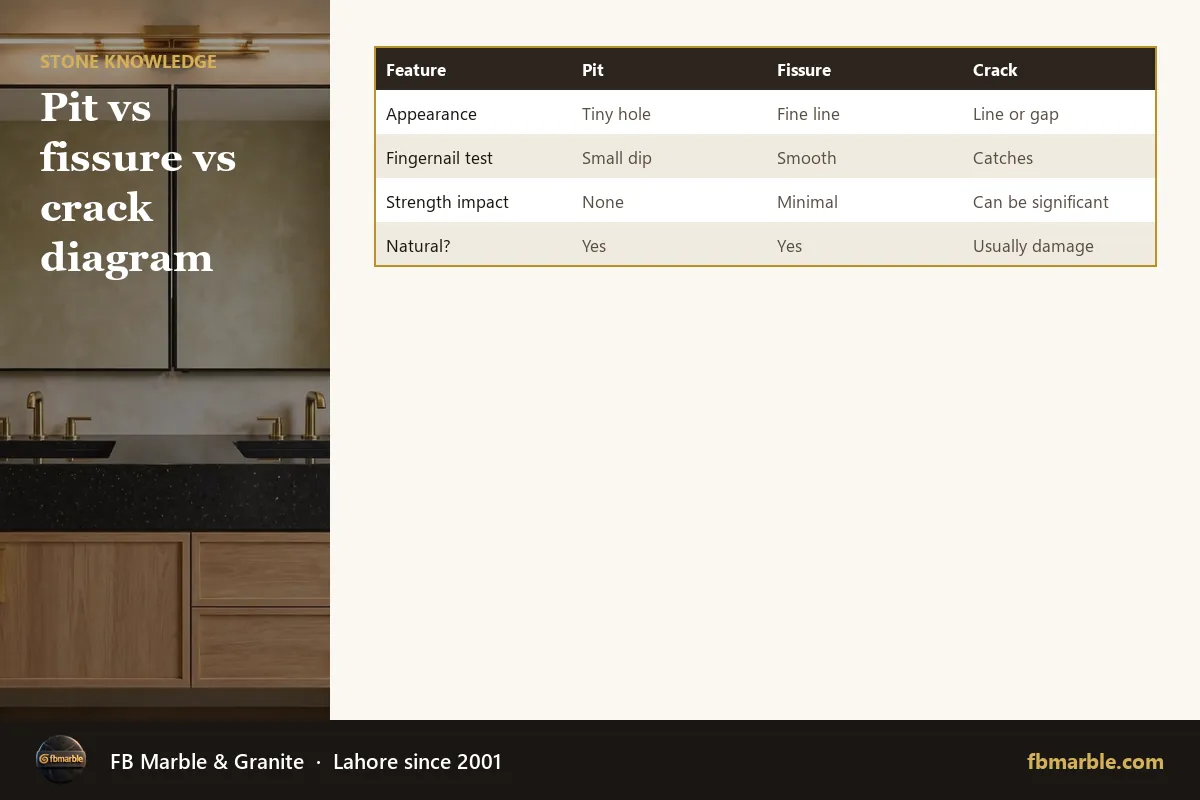
How to Tell the Difference
| Feature | Pit | Fissure | Crack |
|---|---|---|---|
| Appearance | Tiny hole | Fine line | Line or gap |
| Fingernail test | Small dip | Smooth | Catches |
| Strength impact | None | Minimal | Can be significant |
| Natural? | Yes | Yes | Usually damage |
Which Stones Have Pits and Fissures?
- Granite: pitting is common, especially in coarse-grained stones.
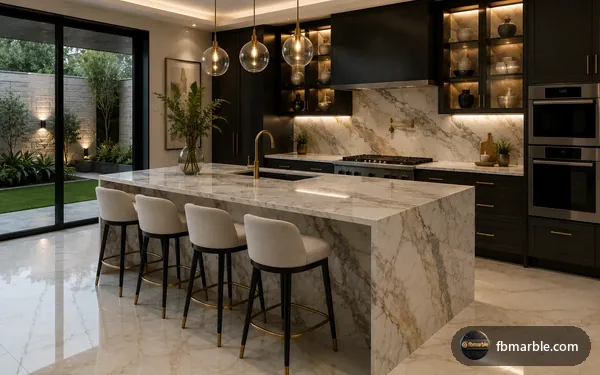
- Marble: natural fissures and veins are common.
- Travertine: natural holes are characteristic.
- Quartzite: fissures may appear.
How FB Marble Handles Them
We inspect slabs and point out natural characteristics before cutting. Many slabs are resin-treated at the factory to fill fissures and micro-pits, which strengthens the surface.
Living with Natural Characteristics
Pits and fissures are a sign of genuine natural stone. Seal the stone regularly and clean with soft cloths to keep it looking its best.
Talk to FB Marble
FB Marble & Granite has supplied and installed natural stone across Pakistan since 2001. Visit our showroom at 51 Y Jamun, Bedian Road, near the DHA Phase 5-6 Interchange, Lahore, or WhatsApp +92 323 4148908 with your measurements for a free quote. Browse our granite, marble, quartz, porcelain and onyx collections on fbmarble.com.