What Is Porosity?
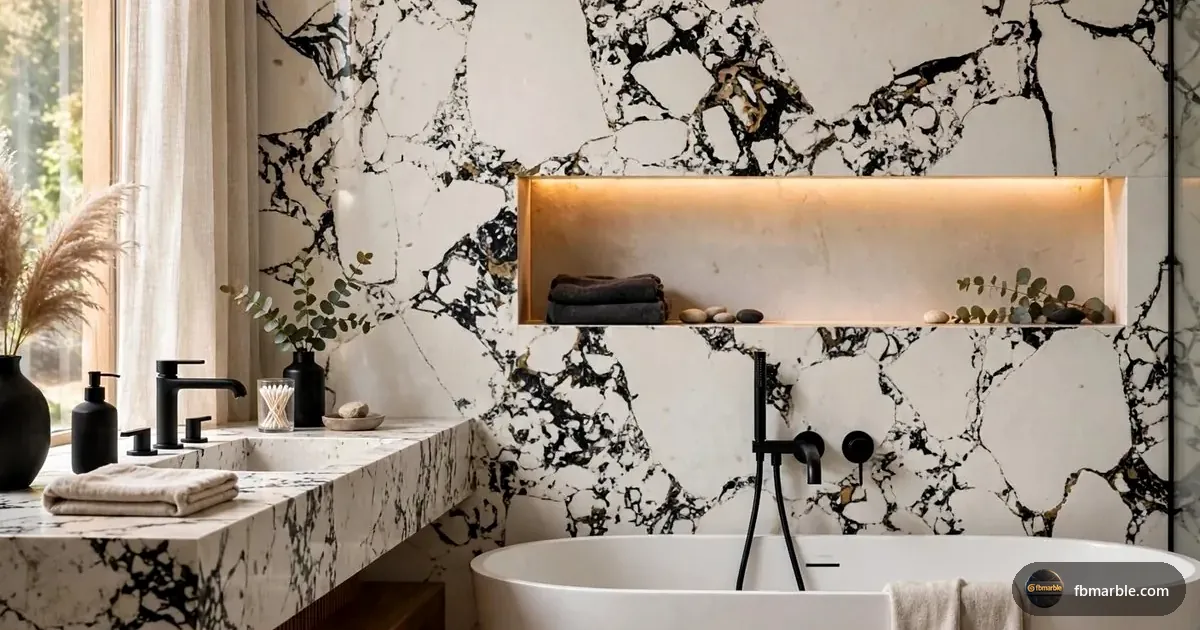
Porosity describes how many tiny open spaces, or pores, a material has, and how easily liquids can enter them. A highly porous material, such as sandstone or unsealed marble, absorbs water and oil like a sponge. A non-porous material, such as glass, lets liquids sit on the surface.
Are Quartz Countertops Porous?
No. During manufacturing, crushed quartz and resin are compacted under vacuum and vibration. The resin fills the gaps between quartz particles, and the vacuum removes trapped air. The result is a dense, practically non-porous slab.
What Non-Porosity Means for You
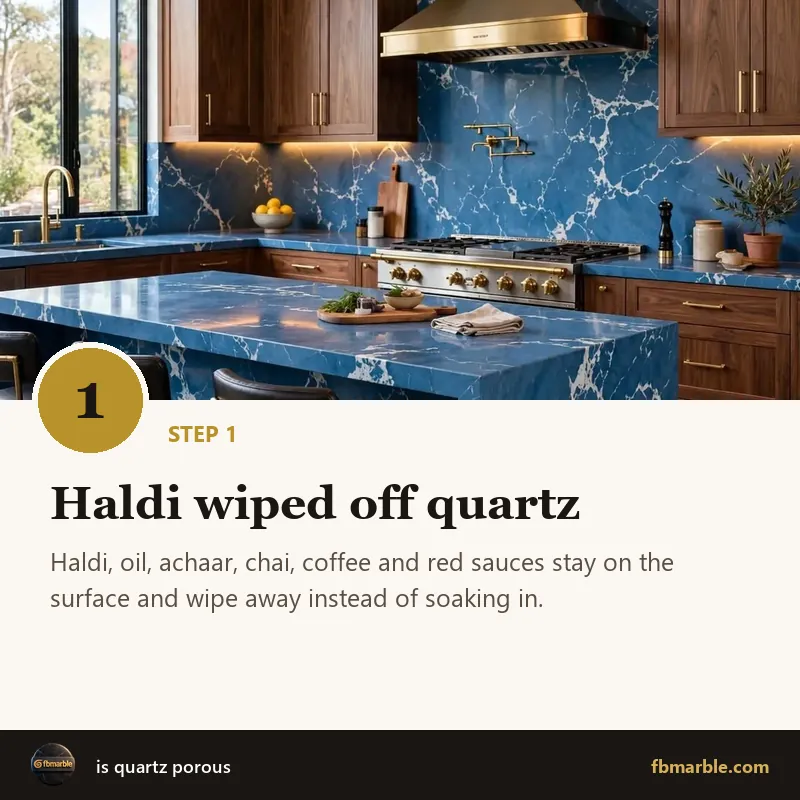
Stain resistance. Haldi, oil, achaar, chai, coffee and red sauces stay on the surface and wipe away instead of soaking in.
No sealing. Unlike marble and light granite, quartz never needs sealing.
Hygiene. With no open pores, bacteria and mould have fewer places to grow — a real advantage when preparing raw meat and chicken.
Easy cleaning. Warm water and mild soap are usually enough.
Can Quartz Still Stain?
Yes, in some circumstances. Strong dyes such as hair colour or permanent marker can leave surface marks if left to dry. Harsh chemicals can damage the resin and create dull or discoloured patches. But true deep staining, the kind marble suffers, is rare.
How Quartz Compares
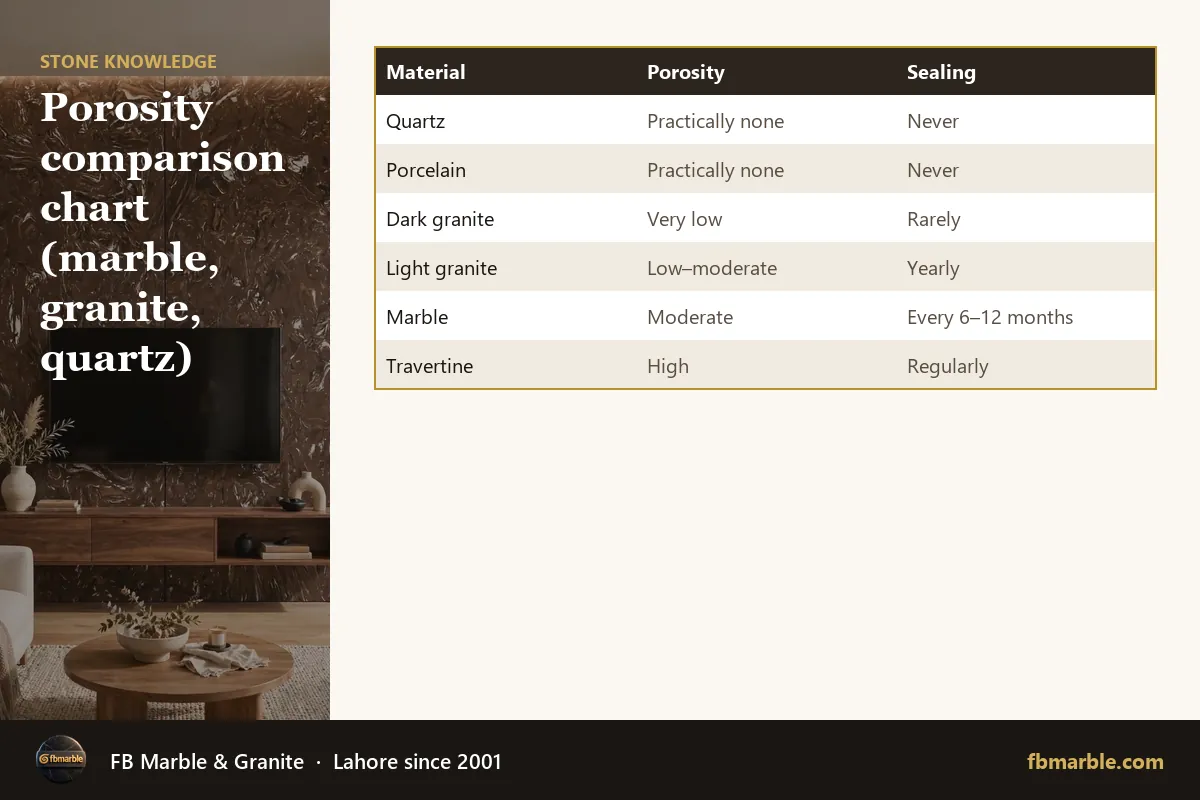
| Material | Porosity | Sealing |
|---|---|---|
| Quartz | Practically none | Never |
| Porcelain | Practically none | Never |
| Dark granite | Very low | Rarely |
| Light granite | Low–moderate | Yearly |
| Marble | Moderate | Every 6–12 months |
| Travertine | High | Regularly |
Pros of Quartz
- Non-porous and stain-resistant
- No sealing
- Hygienic
- Scratch-resistant
- Consistent colours and patterns
Cons of Quartz
- Resin is sensitive to high heat
- Not suitable for outdoor sun
- Harsh chemicals can damage the surface
Need Help Choosing?
Our team at FB Marble will help you compare samples, check full slabs and plan your project from measurement to installation. Call or WhatsApp +92 323 4148908, or visit fbmarble.com to explore our collections and request free samples.