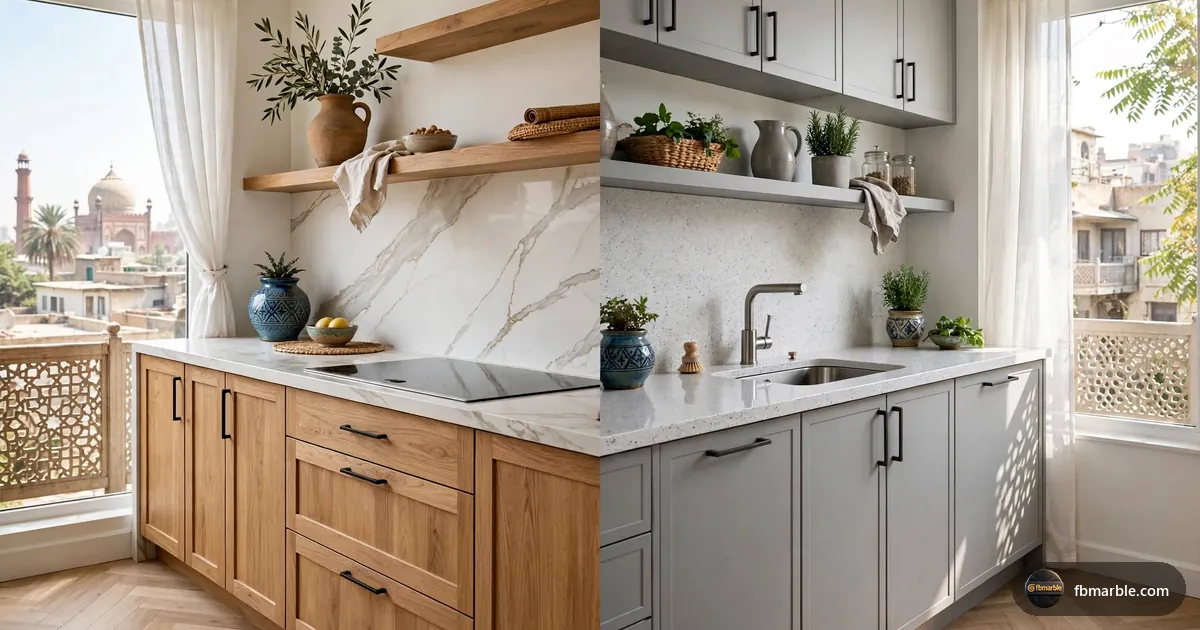
Composition
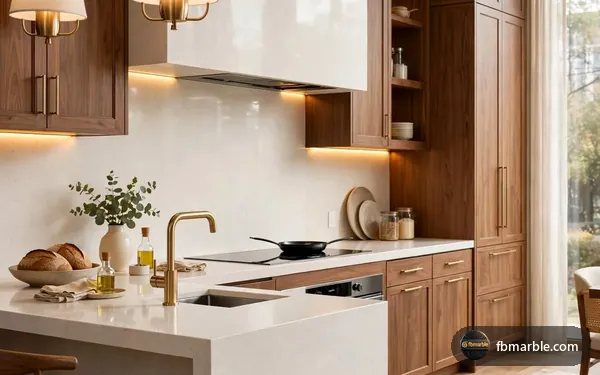
Quartz is made from around 93% crushed natural quartz bonded with polymer resin and pigments, pressed into slabs about 18 mm thick. The colour and pattern run through the whole body.
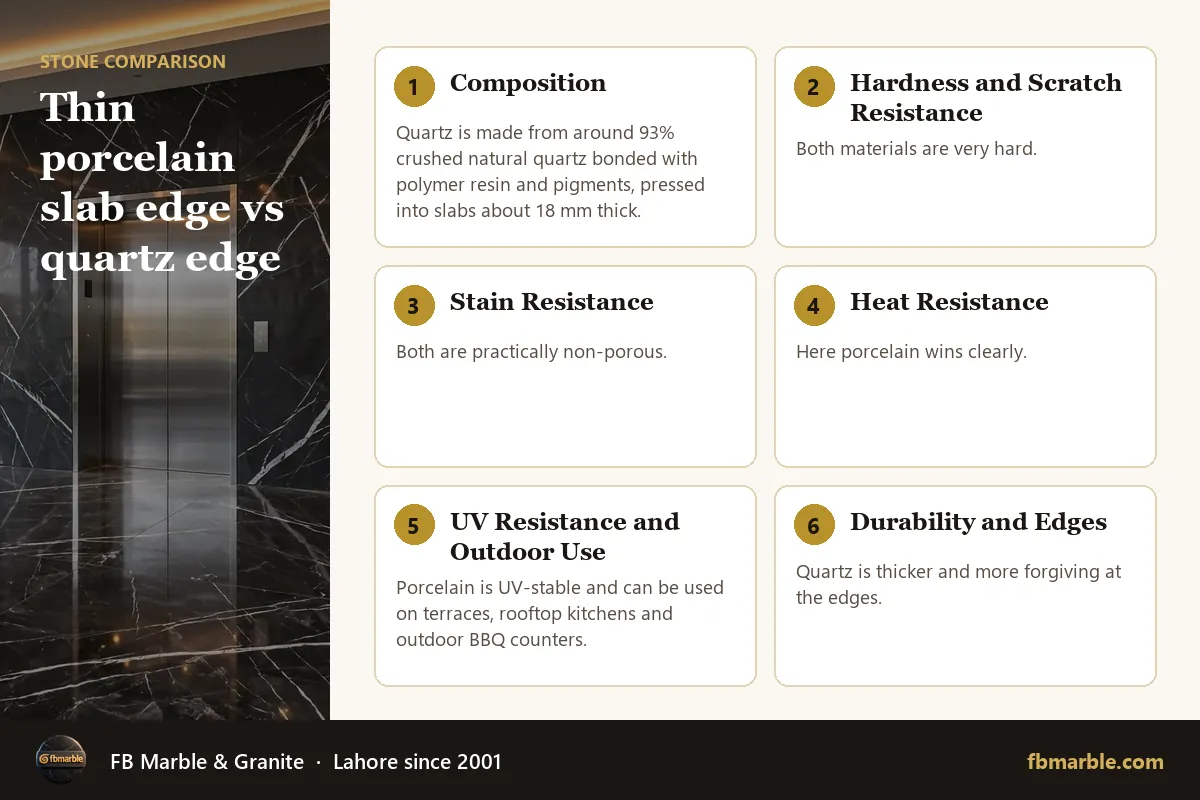
Porcelain is made from refined clays, feldspar and mineral oxides pressed under enormous force and fired in a kiln at well over 1,200°C. The result is a dense, glass-like material. Its pattern is applied with high-definition digital printing, mostly on the surface, and slabs are usually thinner — commonly 9 to 12 mm.
Hardness and Scratch Resistance
Both materials are very hard. Porcelain is especially resistant to scratching, which makes it attractive for floors and heavy-use counters. Quartz is also tough but, over many years, dark polished quartz may show fine marks from rough-bottomed pots.
Stain Resistance
Both are practically non-porous. Haldi, chai, oil, achaar and ketchup sit on the surface and wipe away. Neither needs sealing, which is a major advantage over marble and light granite.
Heat Resistance
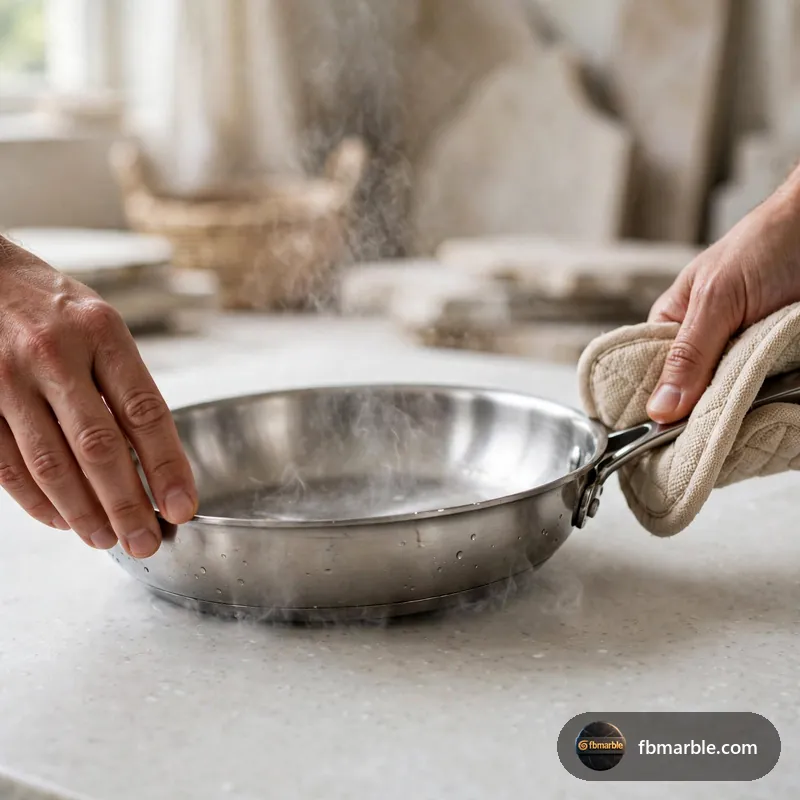
Here porcelain wins clearly. Because it is fired in a kiln, it shrugs off hot pans far better than quartz. Quartz resin can scorch or discolour if a hot tawa or karahi is placed directly on it, so we always recommend trivets with quartz. For homes that cook at high heat every day, porcelain or granite near the stove is a sensible choice.
UV Resistance and Outdoor Use
Porcelain is UV-stable and can be used on terraces, rooftop kitchens and outdoor BBQ counters. Quartz should stay indoors, as strong Pakistani sunshine can yellow the resin over time.
Durability and Edges
Quartz is thicker and more forgiving at the edges. Porcelain slabs can chip if struck sharply on an exposed corner, so fabrication must be precise and supports must be solid. Because porcelain's pattern sits mainly on the surface, decorative edges such as ogee can expose a plain body; mitered edges are the usual solution.
Customisation
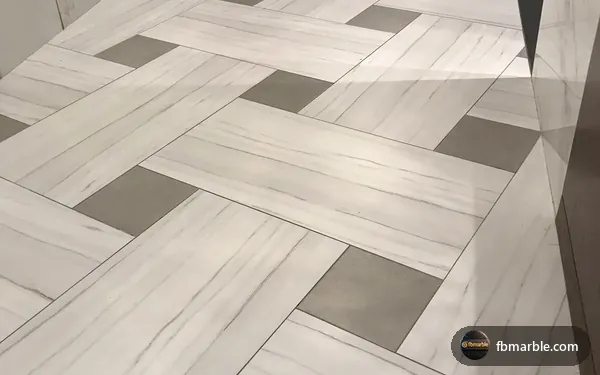
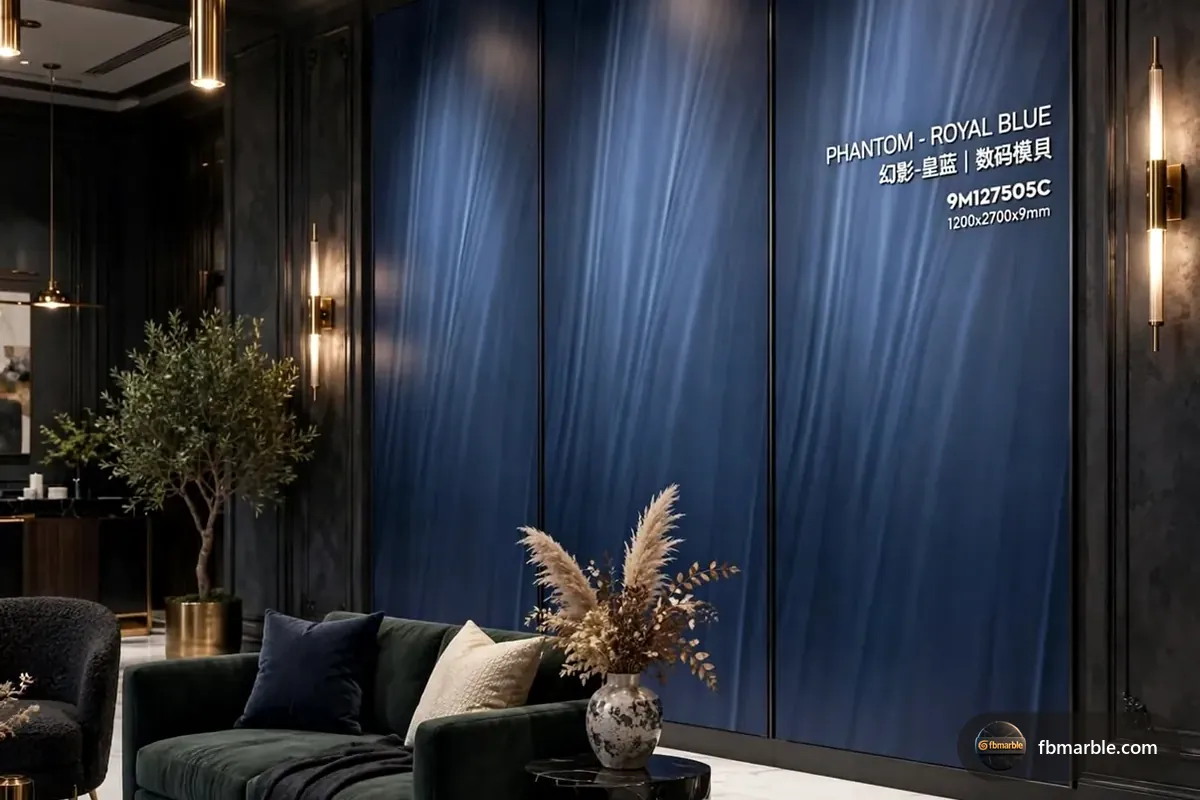
Quartz can be shaped into any profile, with integrated drainboards and curved cut-outs. Porcelain is more limited but excels in large formats — FB Marble stocks porcelain up to 1200 × 2400 mm — which makes it ideal for seamless feature walls and floors.
Cost
Prices depend on design and size. For walls and floors porcelain is often very economical; for countertops with mitered edges and cut-outs, the fabrication cost brings it close to quartz.
Which Should You Choose?
- Busy indoor kitchen, classic edges: quartz.
- High-heat cooking zones and outdoor kitchens: porcelain.
- Large feature walls and floors: porcelain in large format.
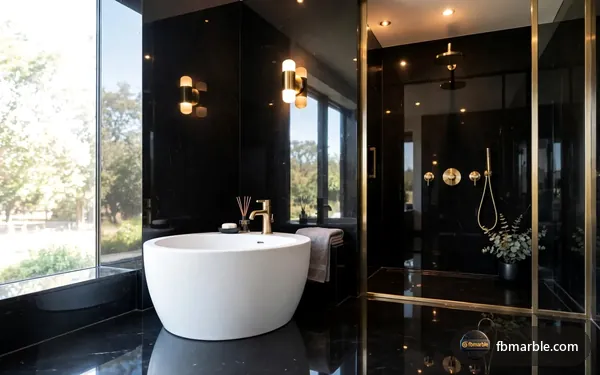
- Bathroom vanities: either works well.
Why Choose FB Marble?
With 25+ years of experience, local and imported stock, in-house fabrication and installation, FB Marble & Granite is a trusted name for stone in Lahore and across Pakistan. WhatsApp +92 323 4148908 or visit fbmarble.com to start your project.