First Response: Treat Every Spill as Urgent
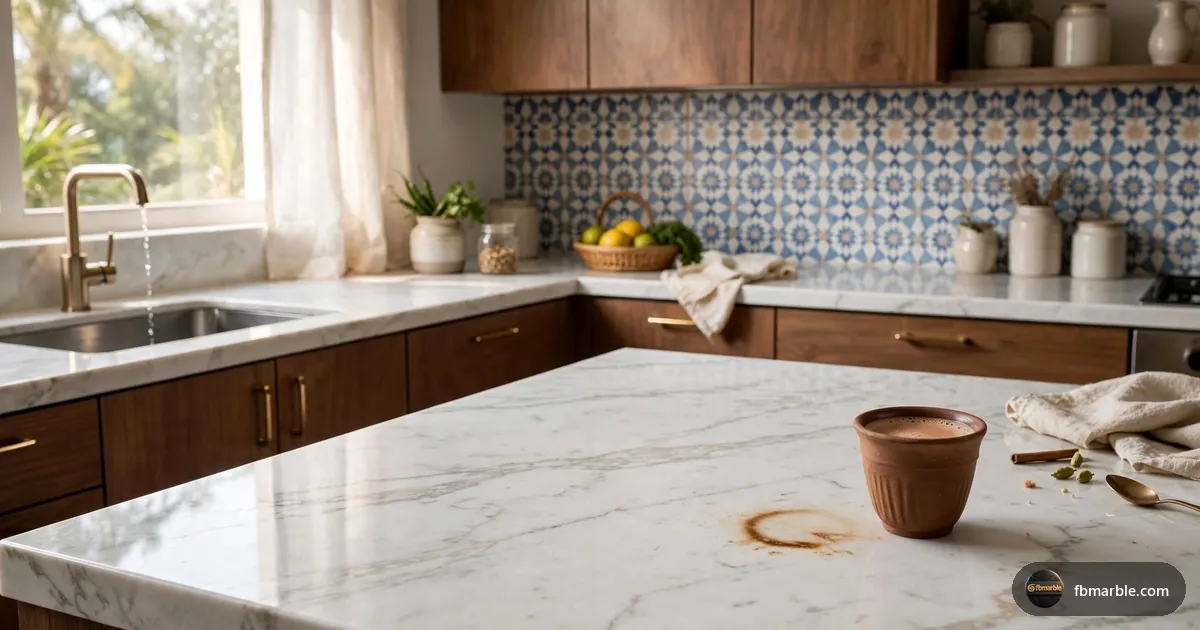
The single most important habit is to blot, not wipe. Wiping spreads the liquid over a larger area and pushes it deeper into the pores. Lay a soft paper towel or cotton cloth on the spill, press gently and lift. Then rinse the spot with plain water and dry it. Spills of lemon juice, vinegar, cold drinks, imli chutney or achaar oil should be cleaned within minutes, because acids and oils are the two biggest enemies of marble.
Identify the Stain Before You Treat It
Different stains need different chemistry, so look at the colour and think about what touched the stone.
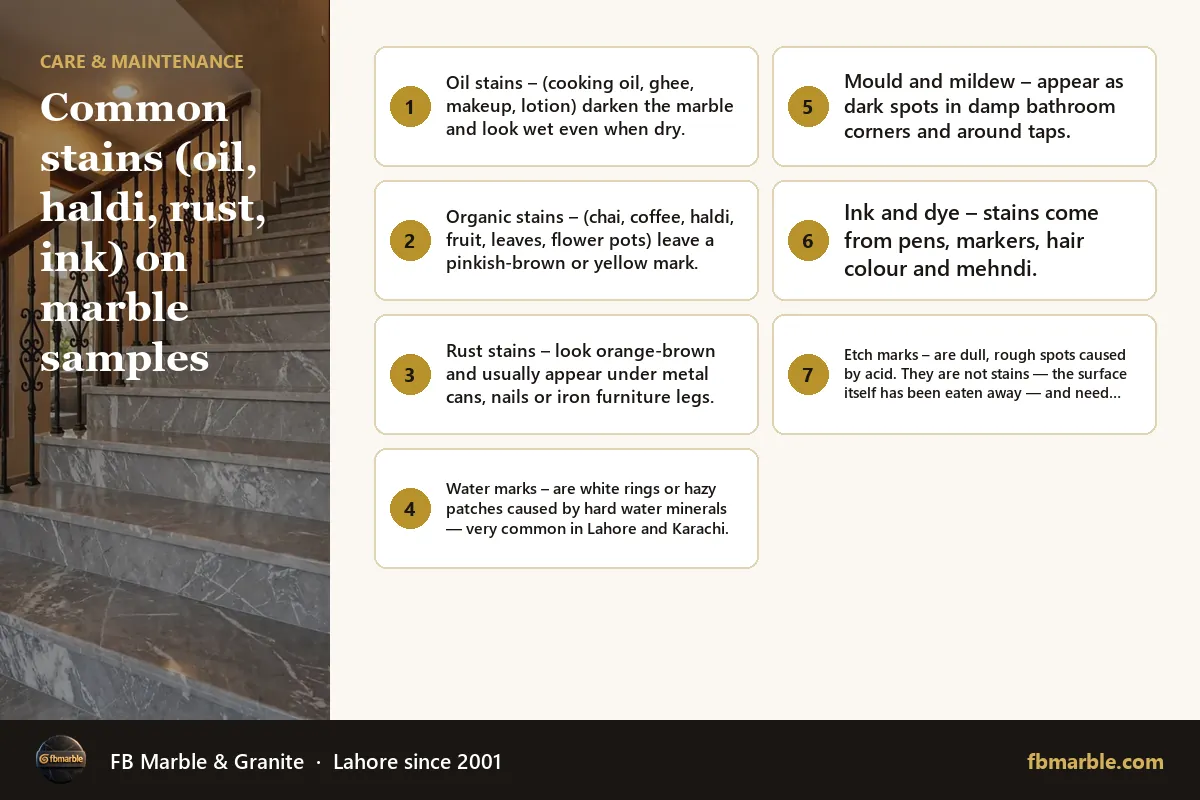
- Oil stains (cooking oil, ghee, makeup, lotion) darken the marble and look wet even when dry.
- Organic stains (chai, coffee, haldi, fruit, leaves, flower pots) leave a pinkish-brown or yellow mark.
- Rust stains look orange-brown and usually appear under metal cans, nails or iron furniture legs.
- Water marks are white rings or hazy patches caused by hard water minerals — very common in Lahore and Karachi.
- Mould and mildew appear as dark spots in damp bathroom corners and around taps.
- Ink and dye stains come from pens, markers, hair colour and mehndi.
- Etch marks are dull, rough spots caused by acid. They are not stains — the surface itself has been eaten away — and need polishing rather than cleaning.
The Poultice Method: Your Best Tool
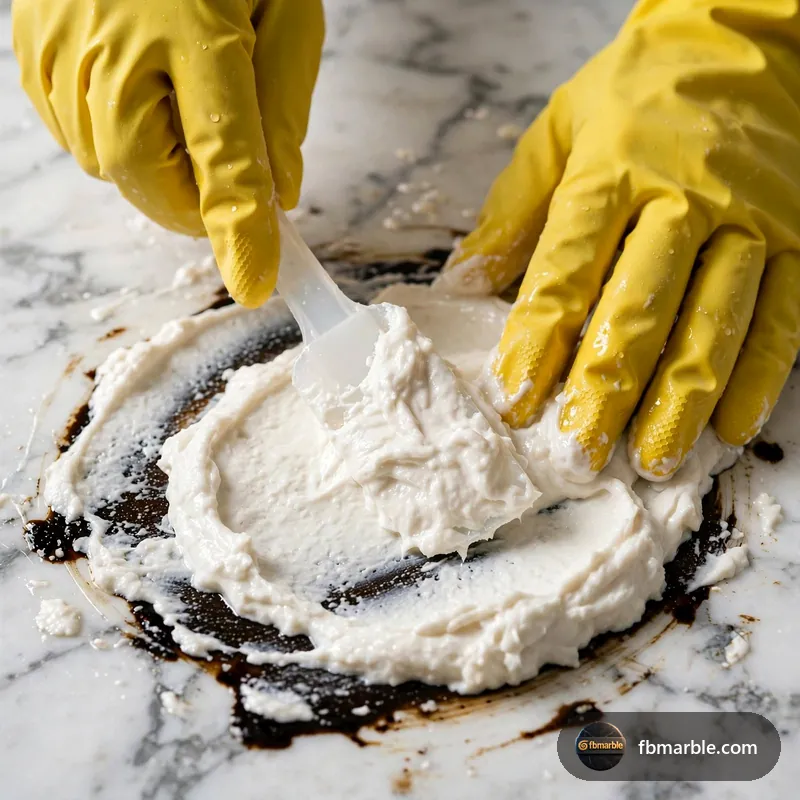
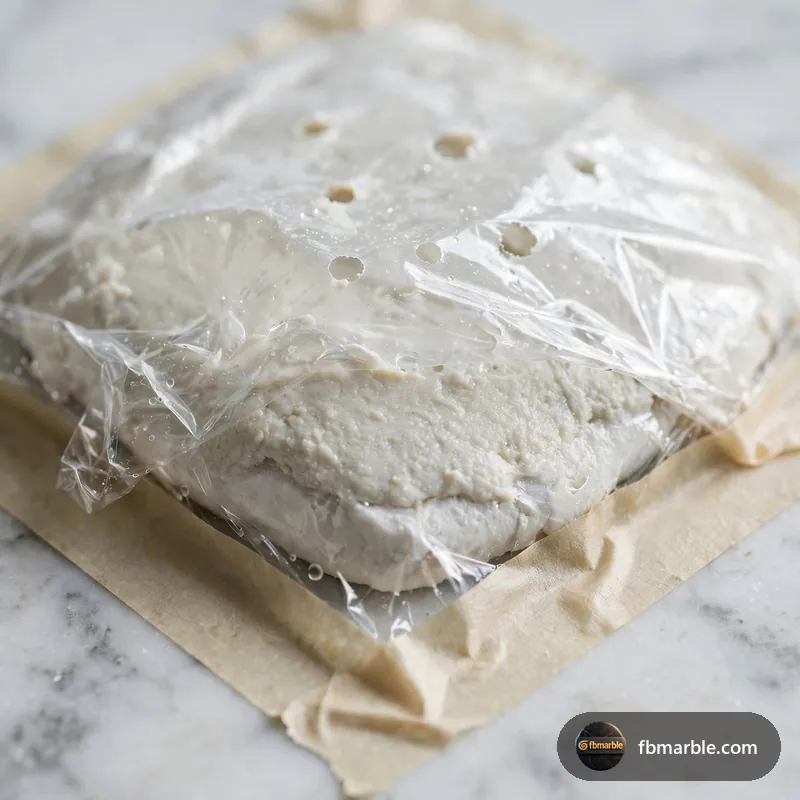
A poultice is a paste that draws the stain out of the stone as it dries. Mix the powder (baking soda, chalk powder or white kaolin clay) with the right liquid until it has the thickness of peanut butter. Spread it about 5–6 mm thick over the stain, extending a little beyond the edges. Cover with plastic wrap, tape the edges and poke a few small holes. Leave it for 24–48 hours, then remove the cover, let it dry fully and scrape it off with a plastic spatula. Rinse and dry. Repeat up to three or four times for deep stains.
Matching the Liquid to the Stain
- Oil-based stains: baking soda mixed with water, or a little acetone on darker marbles. The powder absorbs the grease.
- Organic stains: 6% hydrogen peroxide with a few drops of household ammonia, mixed into the powder. On light marbles such as Ziarat White and Sunny White this works very well. Test first on dark marbles because peroxide can lighten them.
- Ink and mehndi: hydrogen peroxide on light stone; acetone or lacquer thinner on dark stone.
- Rust: rust is the hardest stain. Use a commercial rust remover made specifically for marble. Ordinary rust removers contain acids that will etch the surface.
- Mould: dilute hydrogen peroxide works on light stone; avoid mixing bleach and ammonia under any circumstances.
- Water rings: buff the dry spot gently with very fine (#0000) steel wool. If the ring remains, it may be an etch.
- Paint: small dried splashes can be lifted carefully with a fresh razor blade held flat, followed by a paint stripper suitable for stone.
What About Etch Marks?
If the mark feels rough or looks dull rather than coloured, you are dealing with an etch. Light etches on polished marble can be restored with a marble polishing powder rubbed in with a damp cloth. Deep etches across a whole kitchen top need professional honing and re-polishing. Our team in Lahore regularly restores dining tables and vanity tops that have lost their shine to lemon and vinegar.
Prevention Is Easier Than Cure
- Seal marble after installation and re-seal kitchen and vanity surfaces every 6–12 months.
- Use coasters under glasses and trays under oil bottles, spice jars and perfume.
- Keep metal cans and iron stands off the stone, especially in bathrooms.
- Clean with a pH-neutral stone cleaner or mild dish soap — never vinegar, lemon, bleach or bathroom acid.
- Place mats at entrances so sand and grit do not scratch marble floors.
Talk to FB Marble
FB Marble & Granite has supplied and installed natural stone across Pakistan since 2001. Visit our showroom at 51 Y Jamun, Bedian Road, near the DHA Phase 5-6 Interchange, Lahore, or WhatsApp +92 323 4148908 with your measurements for a free quote. Browse our granite, marble, quartz, porcelain and onyx collections on fbmarble.com.