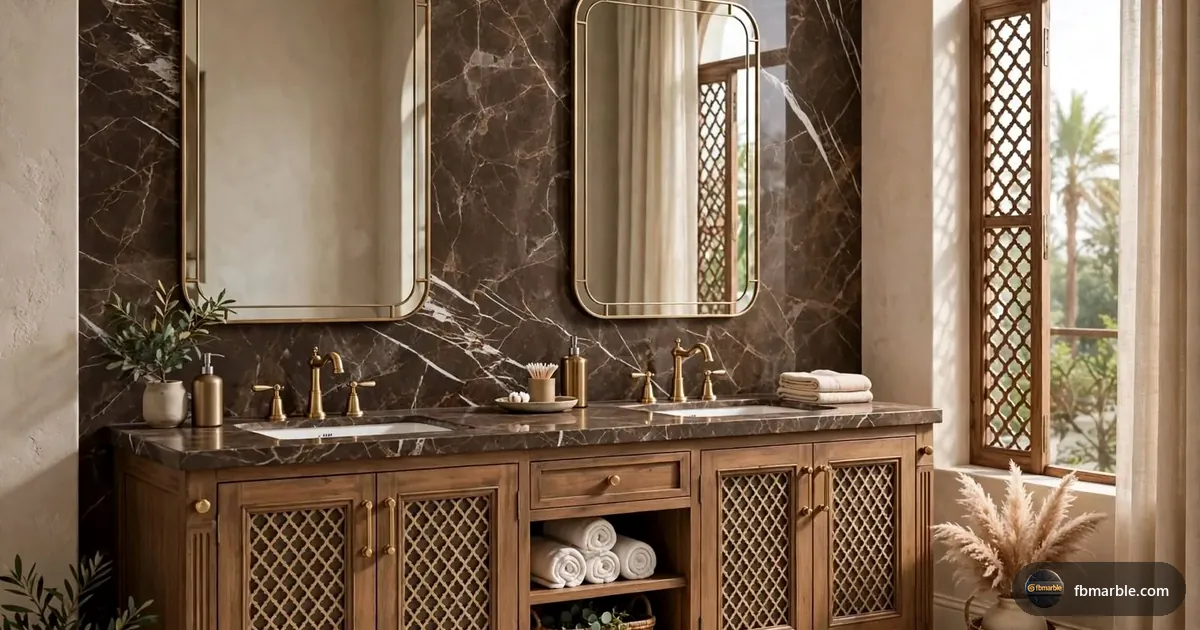
What Is an Etch on Marble?
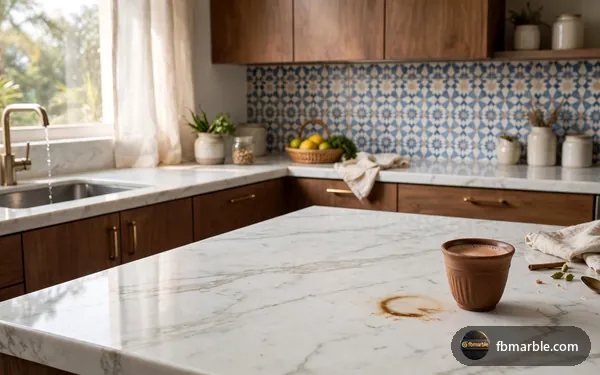
An etch is surface damage caused by acid. Marble is made of calcium carbonate, which reacts with acids and dissolves slightly. The result is a dull, rough or lighter spot where the polish has been eaten away.
How Is Etching Different from a Stain?
A stain adds colour — it is something absorbed into the stone. An etch removes polish — it is damage to the surface. Stains are treated with poultices; etches are treated with polishing.
What Causes Etching?
- Lemon and lime juice
- Vinegar and pickles
- Tomatoes, ketchup and imli
- Yogurt, raita and lassi
- Cold drinks, juices and wine
- Acidic cleaners, toilet cleaners and limescale removers
- Some toothpastes and mouthwashes
Why Seal Marble Anyway?
Sealing does not prevent etching, but it does slow staining. Both types of protection matter, so seal marble regularly while also avoiding acids.
What to Do if Your Marble Is Already Etched
Option 1: Accept It
Many people embrace etching as part of marble's natural patina — especially on honed marble, where it blends in.
Option 2: Marble Polishing Powder
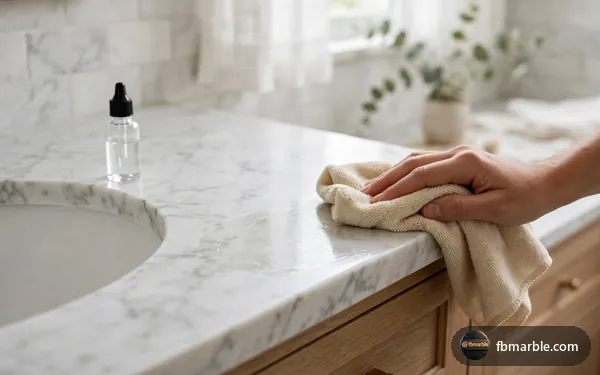
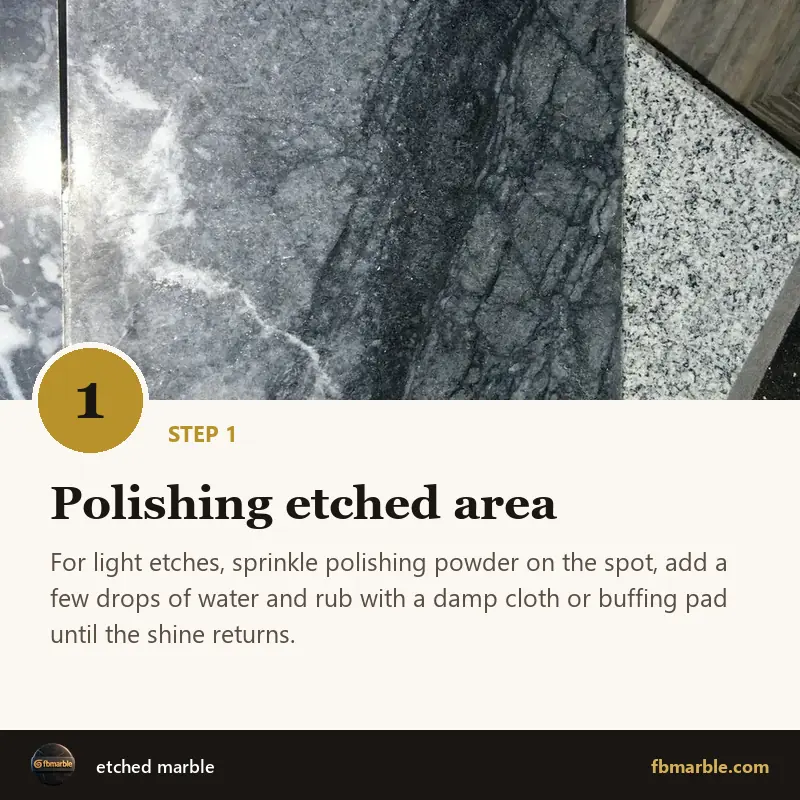
For light etches, sprinkle polishing powder on the spot, add a few drops of water and rub with a damp cloth or buffing pad until the shine returns.
Option 3: Professional Restoration
For widespread or deep etching — such as an entire dining table or kitchen counter — professional honing and polishing restore an even finish. FB Marble offers this service in Lahore.
Option 4: Switch to a Honed Finish
If etching keeps happening, ask a professional to convert polished marble to honed. Etches are much less visible on a matte surface.
Prevention
Use coasters, trays and placemats; wipe acidic spills immediately; and use only pH-neutral cleaners.
Why Choose FB Marble?
With 25+ years of experience, local and imported stock, in-house fabrication and installation, FB Marble & Granite is a trusted name for stone in Lahore and across Pakistan. WhatsApp +92 323 4148908 or visit fbmarble.com to start your project.