How Is Granite Made into a Slab?
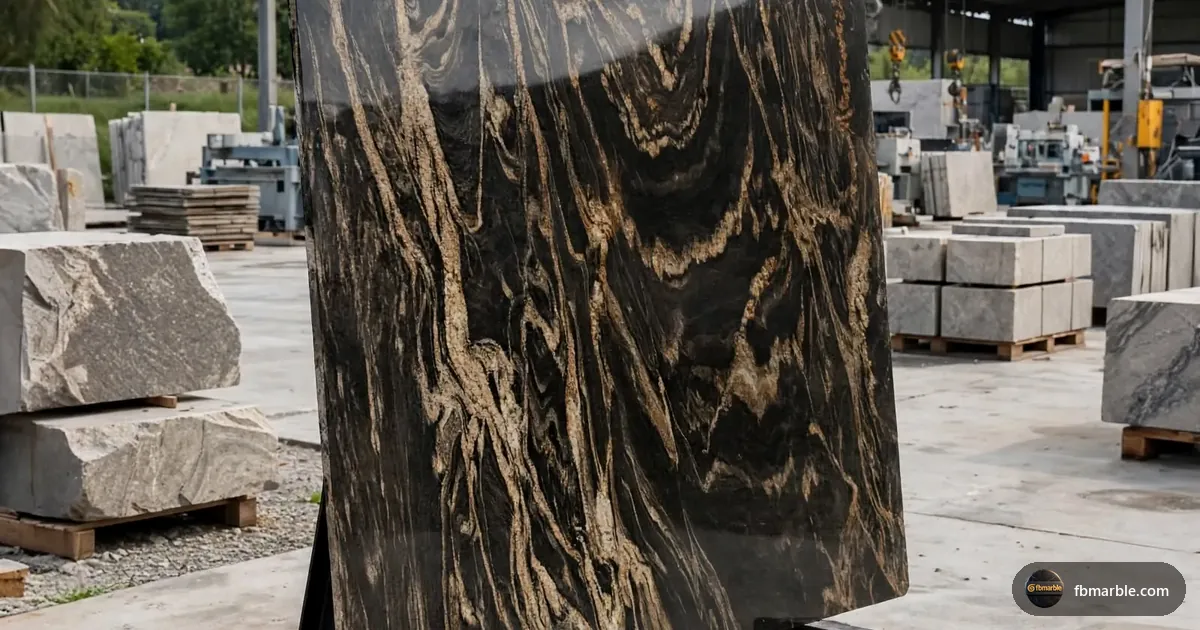
Large blocks are extracted from the quarry, transported to processing plants and sliced into slabs using gang saws or multi-wire saws. The slabs are then polished or given another finish.
What Is the Average Size of a Granite Slab?
Granite slab sizes vary by stone and quarry. As a general guide:
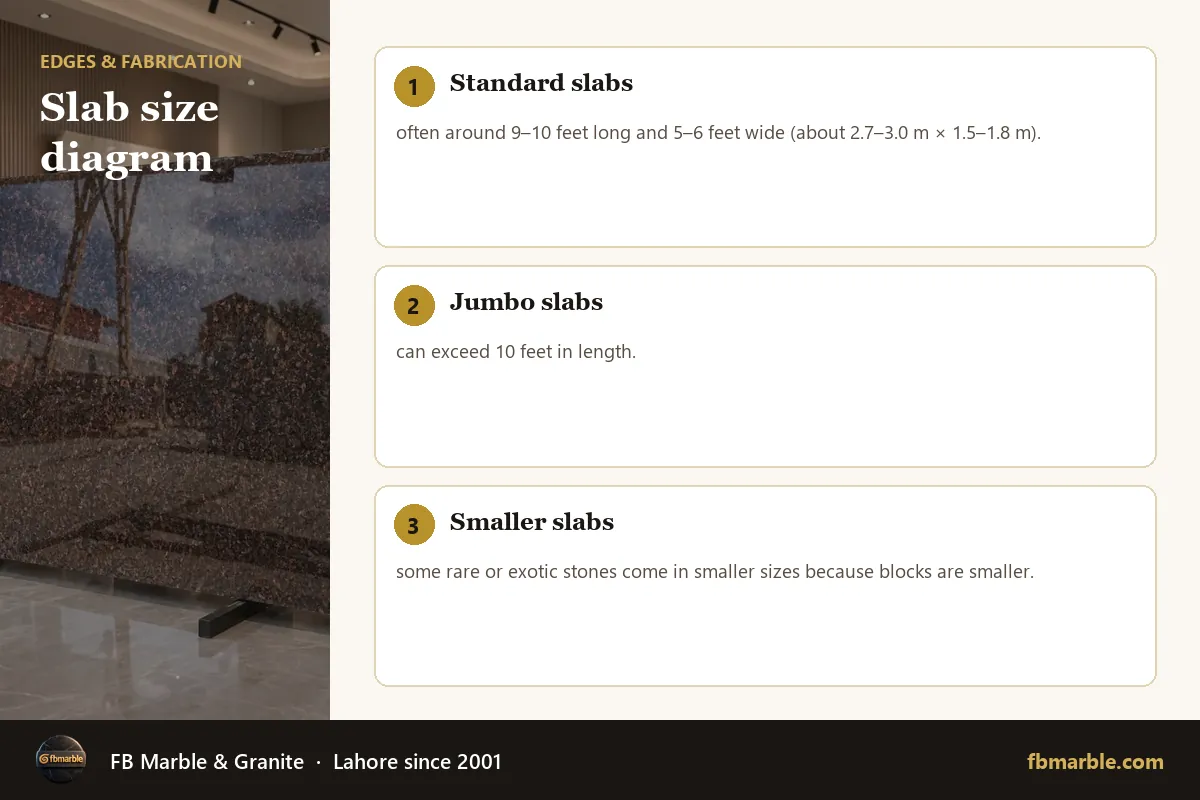
- Standard slabs: often around 9–10 feet long and 5–6 feet wide (about 2.7–3.0 m × 1.5–1.8 m).
- Jumbo slabs: can exceed 10 feet in length.
- Smaller slabs: some rare or exotic stones come in smaller sizes because blocks are smaller.
Local Pakistani granites may also be sold in different standard sizes and as cut-to-size pieces for floors and stairs. Always confirm the size of the specific slabs you choose.
What Happens to the Extra Stone?
After cutting your countertop, leftover pieces become:
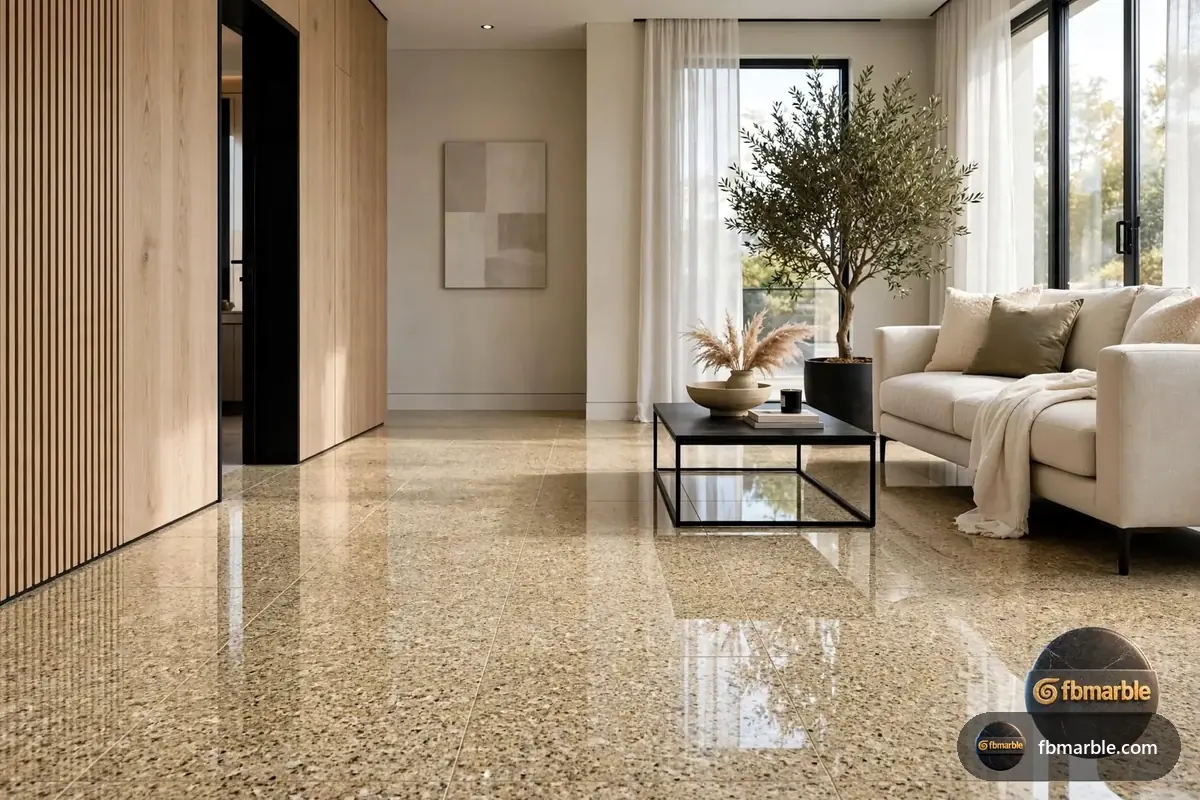
- Remnants for vanities, sills, tables and small kitchens
- Backsplash strips
- Thresholds and steps
- Recycled aggregate for very small offcuts
How Thick Are Standard Granite Slabs?
- 18 mm: common for counters on full cabinets, vanities and sills.
- 20 mm: for islands, overhangs and long runs.
- 30 mm: for stairs, thresholds and heavy-duty counters.
How Much Do Granite Slabs Weigh?
Approximately:
- 18–20 mm: 12–15 kg per square foot
- 30 mm: 18–22 kg per square foot
A full slab can weigh several hundred kilograms, which is why professional handling is essential.
Why Slab Size Matters for Your Kitchen
- Longer counter runs may need seams.
- Large islands may need jumbo slabs to avoid a seam.
- Patterned granites need extra area for vein matching.
Need Help Choosing?
Our team at FB Marble will help you compare samples, check full slabs and plan your project from measurement to installation. Call or WhatsApp +92 323 4148908, or visit fbmarble.com to explore our collections and request free samples.