Step 1: Raw Material Selection
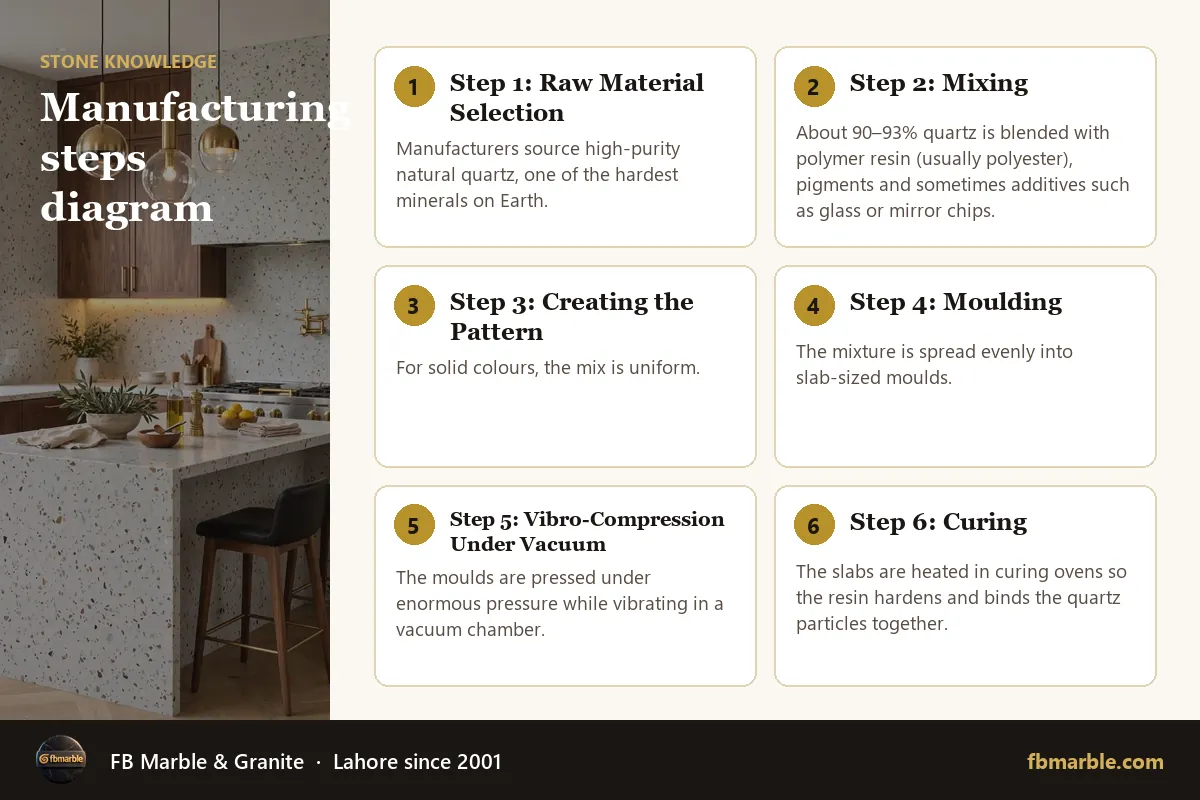
Manufacturers source high-purity natural quartz, one of the hardest minerals on Earth. The quartz is crushed into granules of different sizes and fine powder.
Step 2: Mixing
About 90–93% quartz is blended with polymer resin (usually polyester), pigments and sometimes additives such as glass or mirror chips. The ratio and pigments determine the colour and pattern.
Step 3: Creating the Pattern
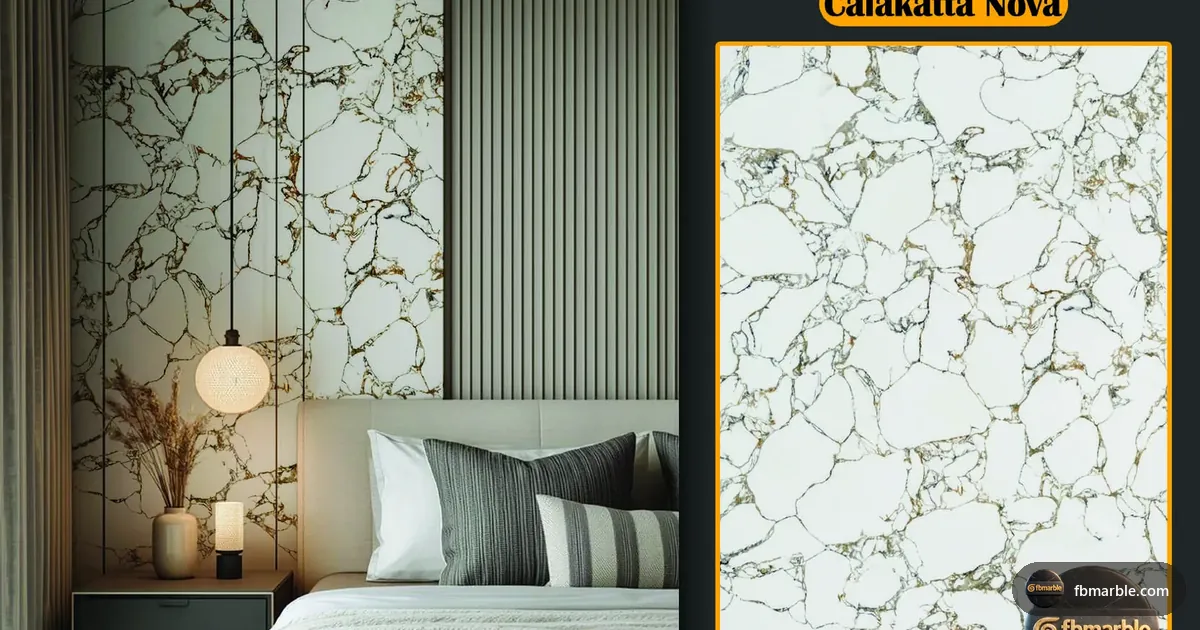
For solid colours, the mix is uniform. For marble-look designs such as Calacatta Gold, different coloured mixes are layered or veins are added by hand or machine to recreate natural veining.
Step 4: Moulding
The mixture is spread evenly into slab-sized moulds.
Step 5: Vibro-Compression Under Vacuum
The moulds are pressed under enormous pressure while vibrating in a vacuum chamber. This removes air bubbles and creates an extremely dense, non-porous slab.
Step 6: Curing
The slabs are heated in curing ovens so the resin hardens and binds the quartz particles together.
Step 7: Calibrating and Polishing
Slabs are ground to a consistent thickness — FB Marble's standard is 18 mm — and polished with diamond abrasives to a glossy, matte or textured finish.
Step 8: Quality Control
Each slab is inspected for colour consistency, surface defects and thickness before it leaves the factory.
Talk to FB Marble
FB Marble & Granite has supplied and installed natural stone across Pakistan since 2001. Visit our showroom at 51 Y Jamun, Bedian Road, near the DHA Phase 5-6 Interchange, Lahore, or WhatsApp +92 323 4148908 with your measurements for a free quote. Browse our granite, marble, quartz, porcelain and onyx collections on fbmarble.com.