Porcelain Slabs vs Natural Marble: Which Is Right for Your Project?
Large porcelain slabs can look remarkably like marble and are nearly stain-proof. Natural marble has depth and character no factory can copy. Here is how to decide.
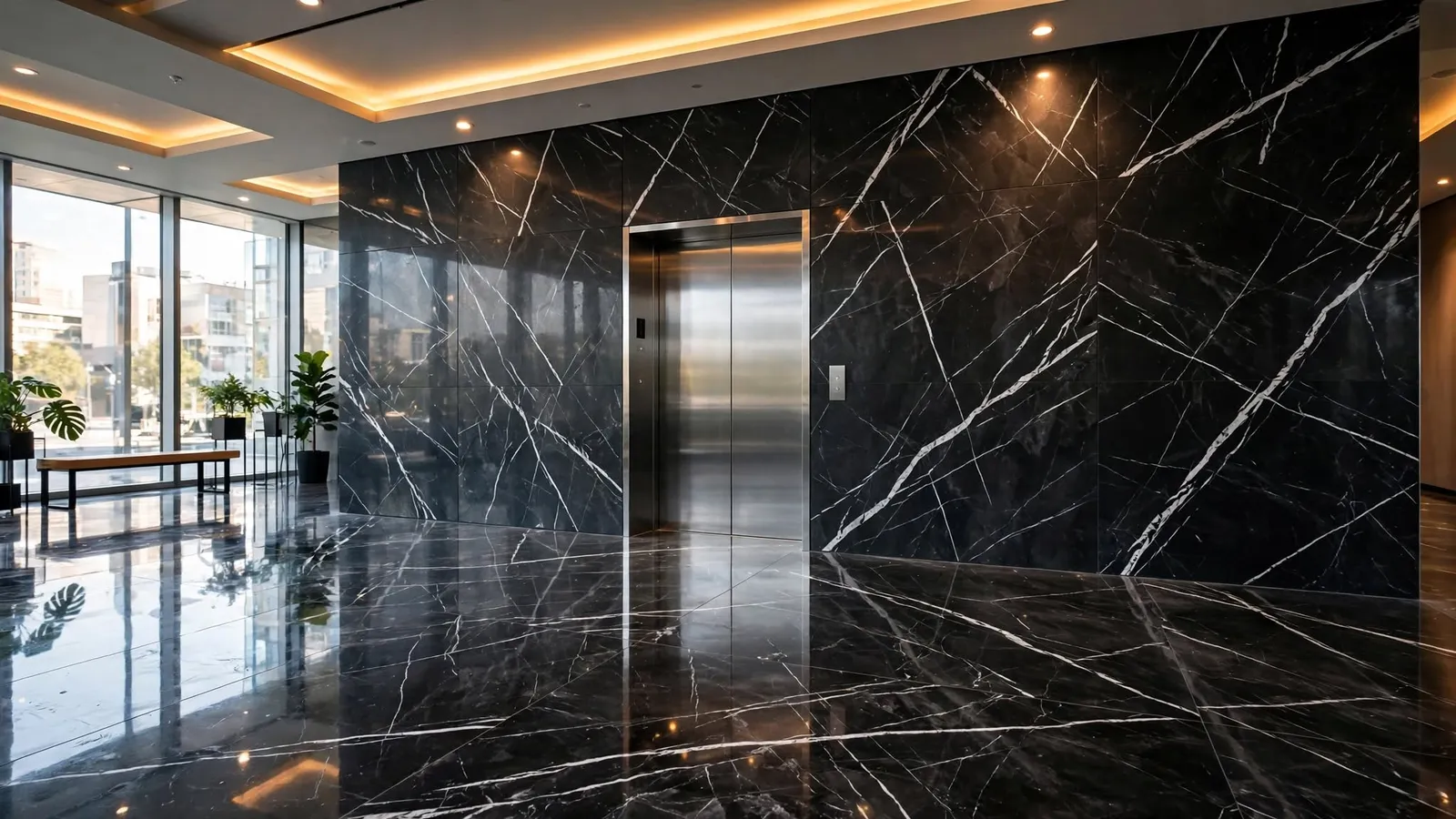
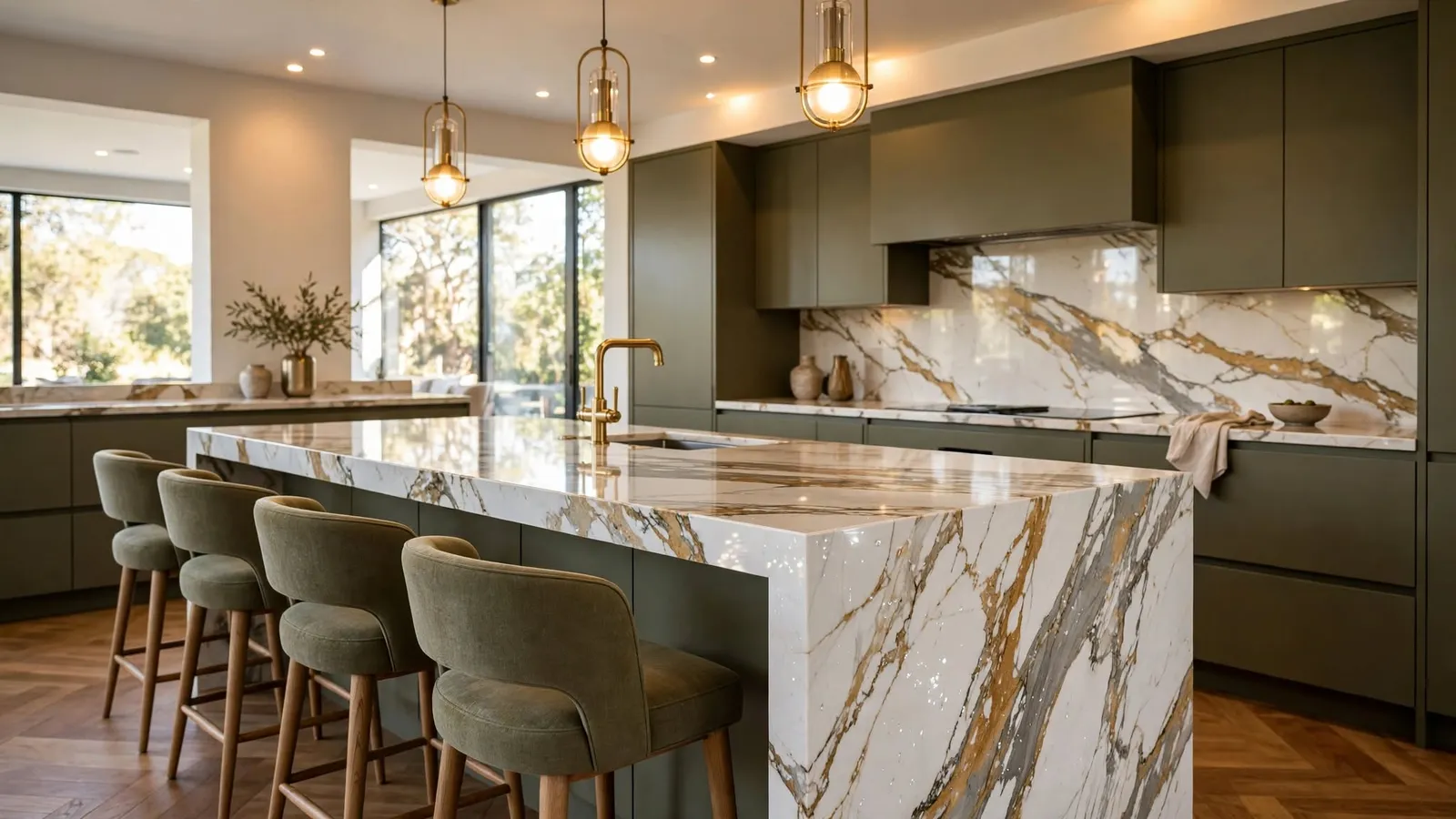
Big-format porcelain slabs have become a serious alternative to stone in Pakistan, especially for walls, lobbies and modern kitchens. They are made by pressing fine clay and minerals and firing them at very high temperatures, which creates a dense surface that absorbs almost no water. The pattern, often a marble or stone look, is printed and fused into the surface.
Natural marble, on the other hand, is quarried stone. Its veins run through the full thickness, and every slab is one of a kind. This guide compares the two on stains, sunlight, repairs, edges and price, then gives a step-by-step way to decide which suits each part of your home.
Where porcelain wins
- Stains: very low water absorption, so oil, tea and haldi wipe off. No sealing needed.
- Sunlight: colours are fired in, so they do not fade or yellow in sun. Good for sunny lounges and some exterior cladding.
- Consistency: slabs match each other closely, useful for large walls and bookmatched designs.
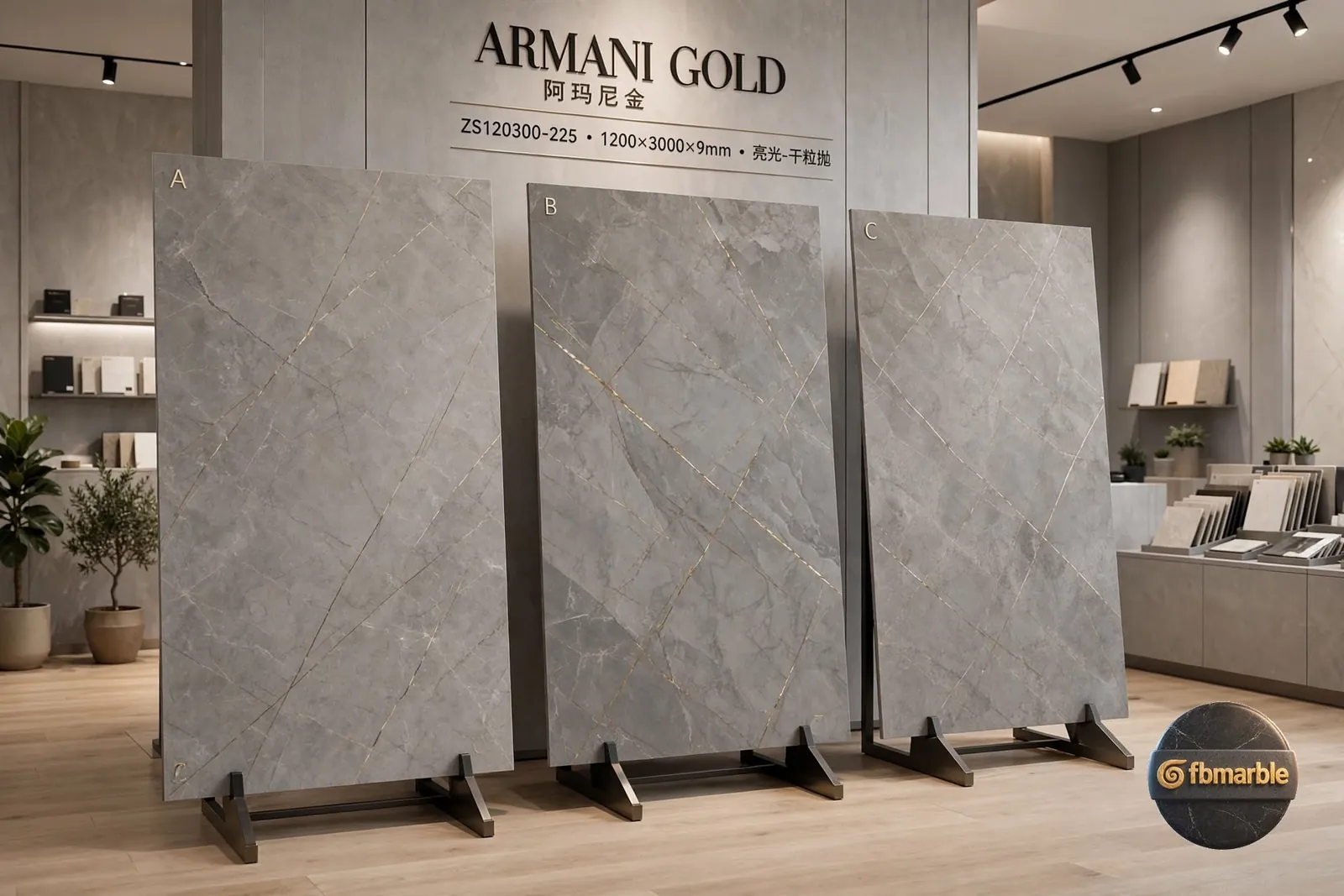
- Looks that are hard to find in stone: designs like Armani Gold, Brazilian Black Gold or Phantom Royal Blue.
Where natural marble wins
- Depth and uniqueness: real veins run through the full thickness and every slab is one of a kind.
- Repairs: marble can be re-ground and re-polished many times over its life. A deep chip in porcelain is harder to hide, because the pattern is only on the surface.
- Edges: profiled edges like bullnose or ogee are easy in marble and granite. On porcelain the edge usually shows the plain body, so mitred edges are used instead.
- Price: many Pakistani marbles cost far less per square foot.
Living with each in a Pakistani home
Daily life tests surfaces in specific ways. Chai rings, haldi from a curry pot and drips of ghee are part of most kitchens and lounges. On porcelain they wipe off. On marble, especially a light polished one, they need prompt wiping and a sealed surface. Marble is calcium-based, so lemon, vinegar and imli also etch it, leaving dull spots on a polished finish.
Summer sun is another test. A lounge with large west-facing windows gets strong afternoon light for months. Porcelain colours are fired in and do not fade, which makes it a safe choice for a sunny feature wall. Marble keeps rooms cool underfoot, which many families value in the heat.
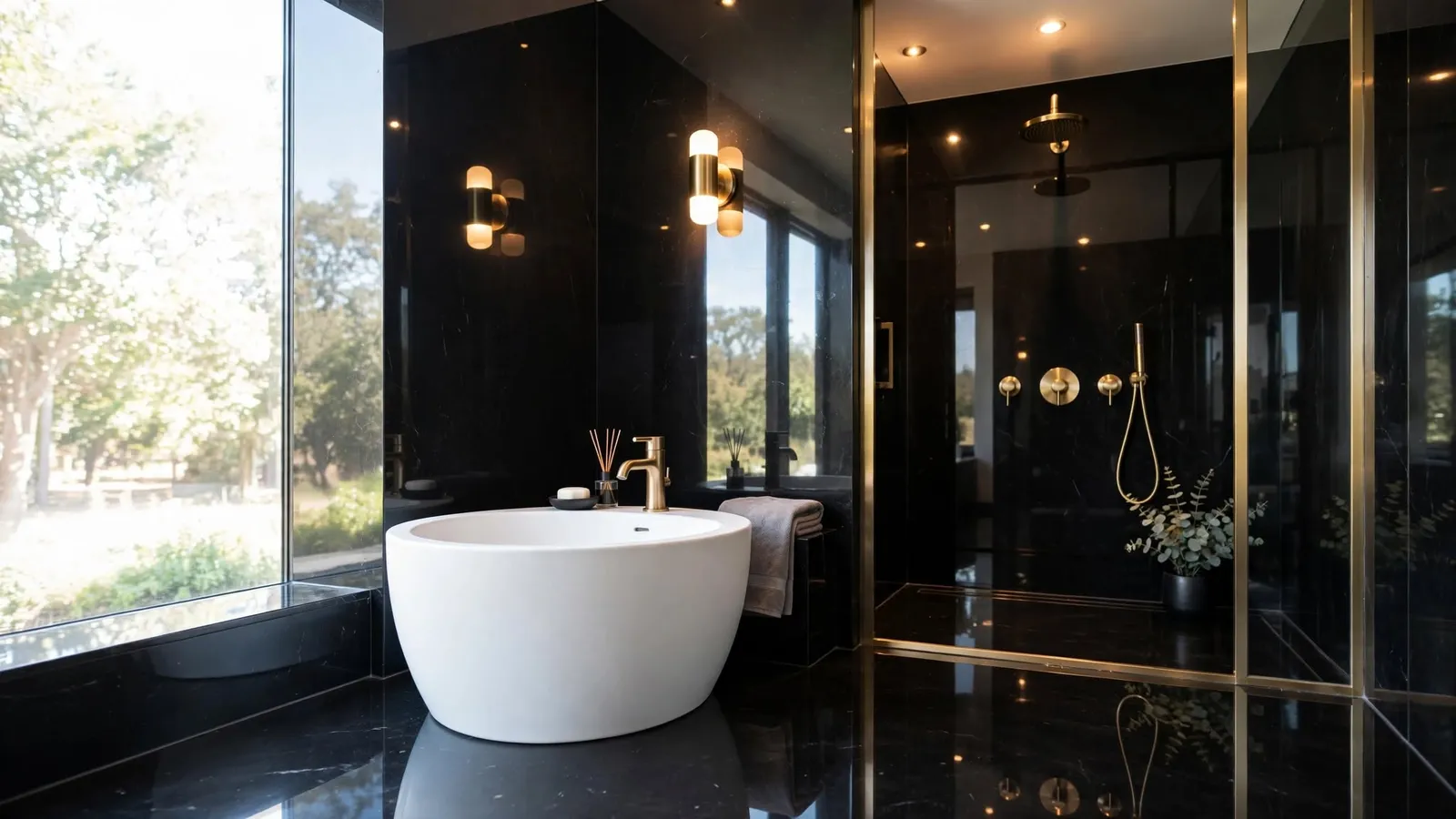
Hard water leaves mineral marks on any shiny surface. On a dark porcelain slab such as Mercedes Black, or on dark marble, those spots show more, so wipe wet areas dry.
Fabrication matters with porcelain
Porcelain slabs are hard and thin, and they can chip if cut with the wrong blade or handled carelessly. Cut-outs for sinks and hobs need care, and the installer should have experience with large slabs. Ask about this before you order.
Price comparison in Pakistan
| Material | Estimated slab rate |
|---|---|
| Porcelain slabs (our range) | Rs 3,000 – 3,500 / sq ft |
| Pakistani marble, e.g. Botticino, Sunny White | Rs 650 – 1,000 / sq ft |
| Premium white, Ziarat White | Rs 1,500 – 3,500 / sq ft |
| Imported, Cream Marfil | Rs 2,400 – 2,600 / sq ft |
The table shows why marble remains the usual choice for whole-house floors. Covering every room in porcelain slabs costs far more than a Pakistani marble such as Botticino or Sunny White. Porcelain earns its price where its strengths matter most: feature walls, lobbies and sun-facing areas.
Porcelain and marble side by side
| Porcelain slabs | Natural marble | |
|---|---|---|
| Material | Fired clay and minerals, printed pattern | Natural calcium-based stone |
| Stains | Wipe off, no sealing | Seal light marbles, wipe spills promptly |
| Acids | Resists | Etches |
| Repairs | Deep chips are hard to hide | Can be re-ground and re-polished |
| Edges | Mitred | Bullnose, ogee and others |
Using both in one home
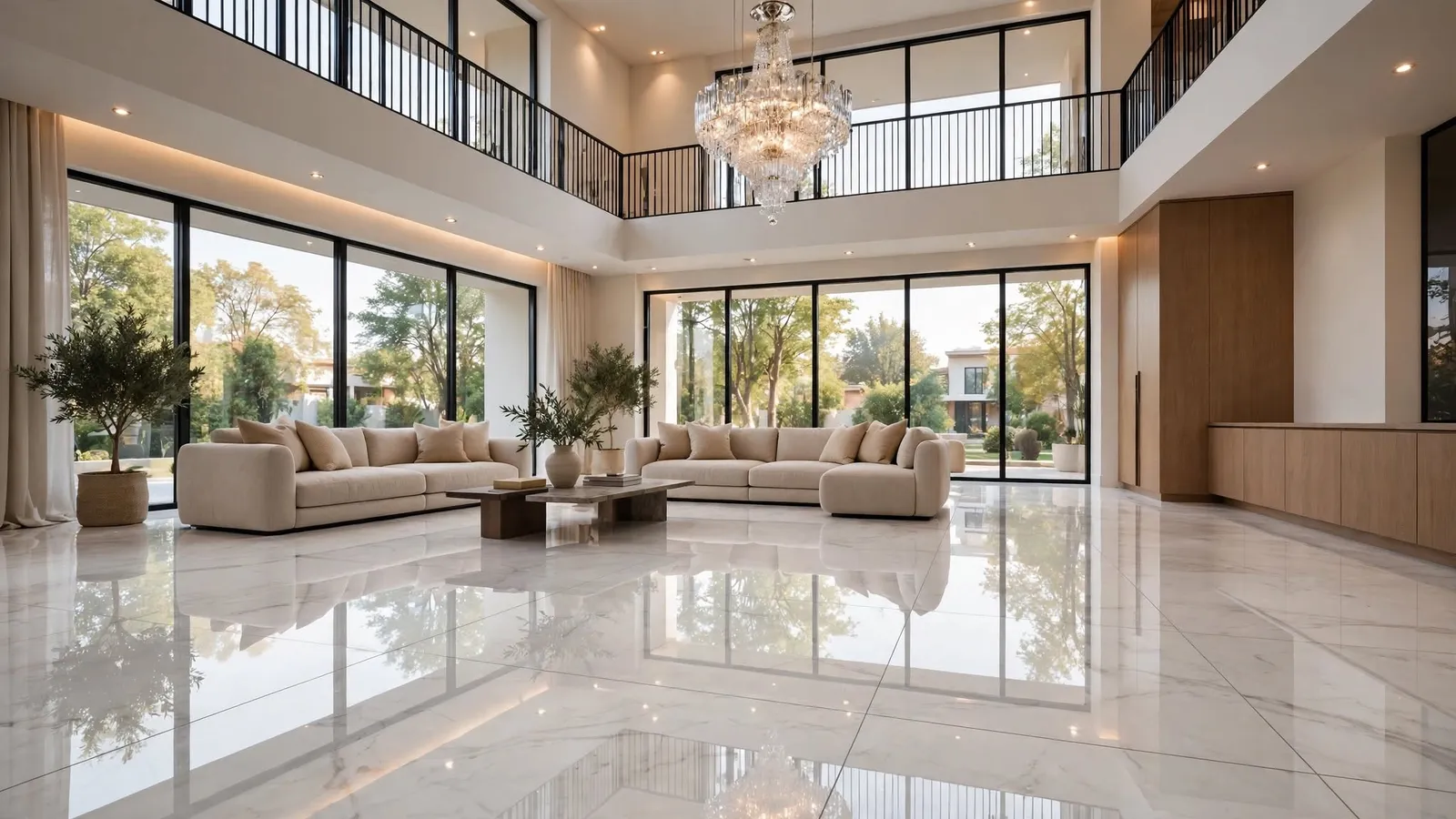
You do not have to pick one material for the whole house. A common plan uses natural marble for the floors of the lounge, bedrooms and drawing room, where it keeps rooms cool and can be re-polished over the years. Porcelain slabs then go on the feature wall behind the TV, the lobby or entrance wall, and any sunny wall where a perfectly matched pattern matters. In bathrooms, a honed marble floor or porcelain both give good grip when wet, and porcelain walls need no sealing against soap, shampoo and hair oil.
When mixing the two, choose colours that sit well together. A warm beige marble floor such as Botticino pairs with porcelain in cream and gold tones, while a white floor such as Ziarat White suits porcelain designs like Abu Dhabi White. Look at both samples together in daylight before you order.
What you need to decide
- a list of areas: floors, feature walls, kitchen counters, bathrooms
- which of those areas get strong sun
- your preferred edge profile for any counters
- a budget per square foot for each area
- a fabricator with experience of large porcelain slabs, if you choose porcelain
Choosing between them: step by step
Step 1: Separate floors from walls
For large floor areas on a budget, natural marble is usually the practical choice. For feature walls and lobbies, porcelain slabs give matching patterns across a large area.
Step 2: Check the sun
Walk through the house in the afternoon and note which walls and floors take direct sun. For sunny lounges and some exterior cladding, porcelain holds its colour because the pattern is fired in. Rooms that stay shaded give you a free choice between the two materials.
Step 3: Decide on the edge
If you want a bullnose or ogee edge on a counter or step, choose marble or granite. Porcelain usually needs a mitred edge. Our edge profiles guide explains the options.
Step 4: Think about repairs
Marble can be re-polished many times. Porcelain is very hard-wearing, but a deep chip is harder to hide.
Step 5: Confirm the fabricator
Before ordering porcelain for a counter, ask whether the installer has cut large slabs and sink cut-outs before.
Common mistakes
- Choosing an ogee or bullnose edge on porcelain. The edge shows the plain body. Use a mitred edge instead.
- Using an inexperienced cutter. Porcelain can chip with the wrong blade or careless handling.
- Cleaning marble with acid. Tezab, lemon and vinegar etch marble. Use a pH-neutral cleaner.
- Leaving light marble unsealed. Tea, oil and haldi can mark it. Seal after polishing.
- Pricing a whole-house floor in porcelain without comparing marble. Pakistani marble costs far less per square foot.
Which to choose
- Large feature walls, lobbies, sun-facing areas: porcelain slabs.
- Floors on a budget, classic interiors, profiled edges: natural marble.
- Kitchen counters: porcelain works with a skilled fabricator; granite and quartz are simpler. See quartz vs granite.
Browse the full porcelain range, including Mercedes Black and Abu Dhabi White, or the marble collection.
Stones in this guide
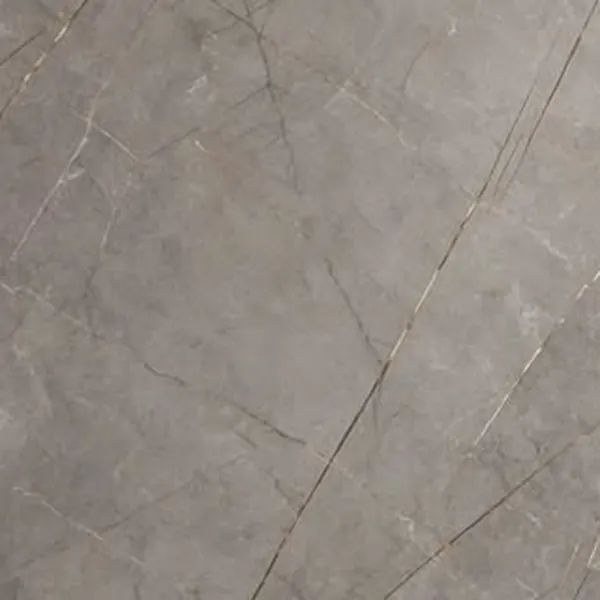 Armani Gold PorcelainFrom Rs 3,000 / sq ft
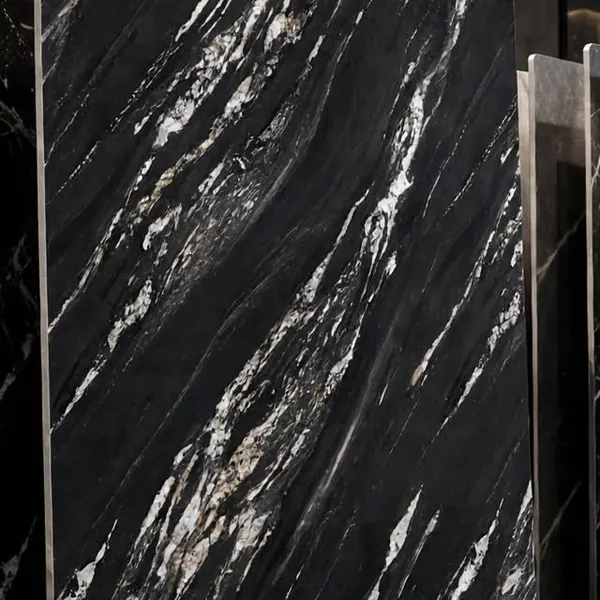 Brazilian Black Gold PorcelainFrom Rs 3,000 / sq ft
 Phantom – Royal Blue PorcelainFrom Rs 3,000 / sq ft
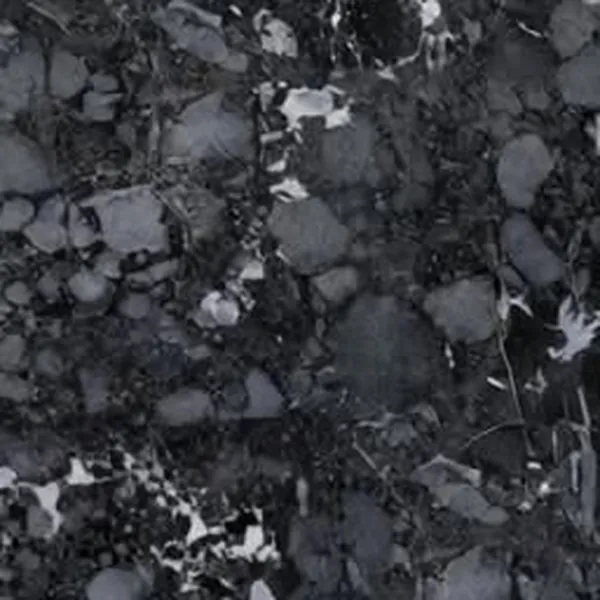 Mercedes Black PorcelainFrom Rs 3,000 / sq ft
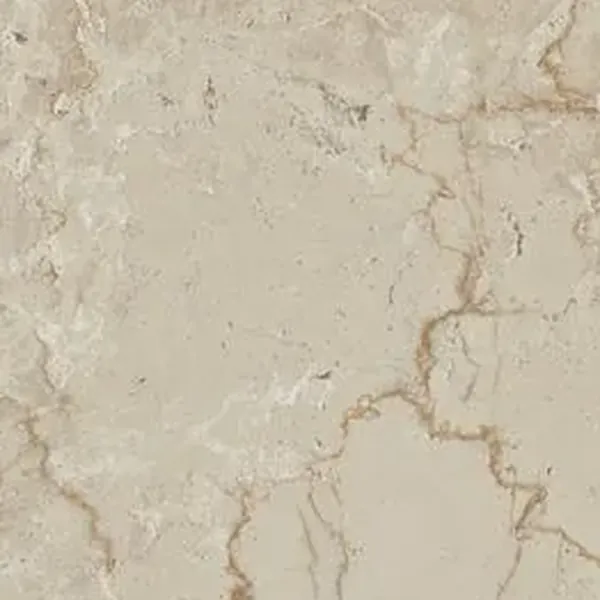 Botticino MarbleFrom Rs 850 / sq ft
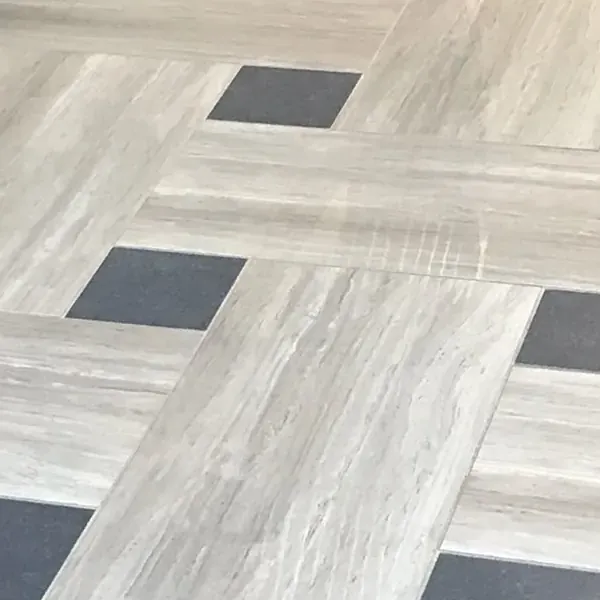 Sunny White MarbleFrom Rs 650 / sq ft
 Ziarat White MarbleFrom Rs 1,500 / sq ft
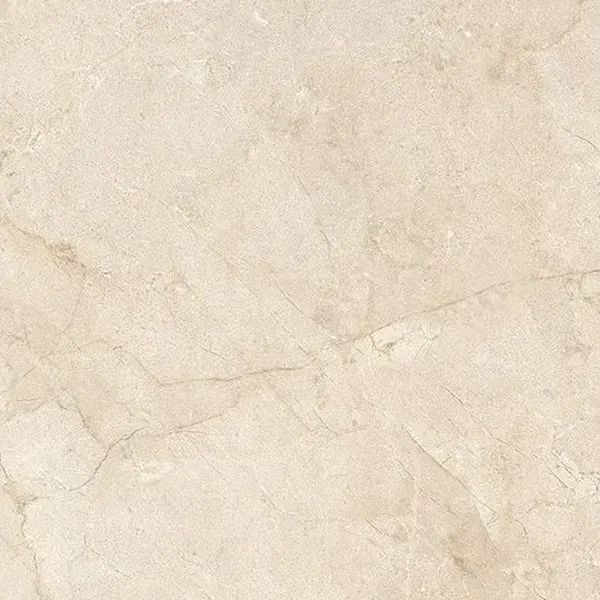 Cream Marfil MarbleFrom Rs 2,400 / sq ft
Estimated rates per square foot for the slab only, as listed on each stone's page. Rates move with stock and import costs, so confirm today's price on WhatsApp.
Frequently asked questions
Is porcelain better than marble?
It depends on use. Porcelain resists stains and sunlight better and needs no sealing. Marble has natural depth, can be re-polished, and many Pakistani marbles cost much less.
What is the price of porcelain slabs in Pakistan?
Our porcelain slabs are estimated at Rs 3,000 – 3,500 per sq ft. Confirm current rates before ordering.
Can porcelain slabs be used for kitchen counters?
Yes, with an experienced fabricator. They resist stains and heat well, but cut-outs and edges need care to avoid chipping.
Does porcelain fade in sunlight?
No. The colours are fired into the surface, so porcelain does not fade or yellow in sun.
Can porcelain have a bullnose edge?
Usually not. The pattern does not run through the body, so a rounded edge shows the plain material. Mitred edges are used instead.
Can a chipped porcelain slab be repaired?
A deep chip is harder to hide in porcelain because the pattern is only on the surface. Marble can be re-ground and re-polished many times.
Want to see these stones in person?
Visit our showroom at Bedian Road, DHA Phase 6, Lahore, ask for free samples, or send us your measurements for a quote.