How Does Quartzite Form?
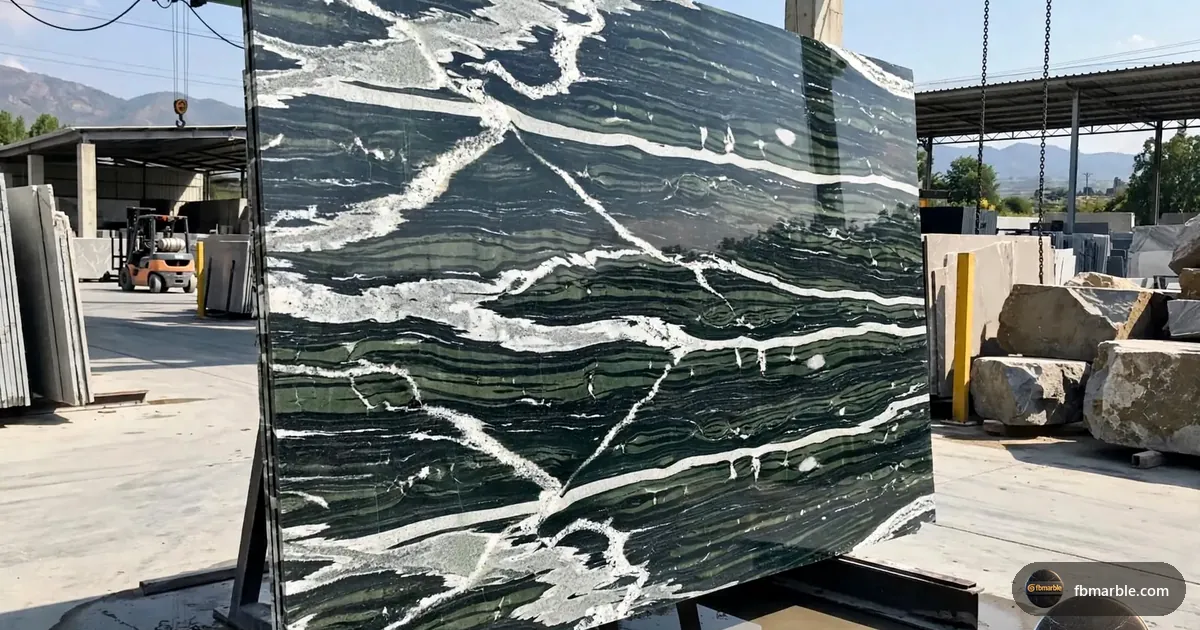
Quartzite begins as sandstone. Over millions of years, heat and pressure fuse its quartz grains into a dense, crystalline metamorphic rock.
Variations of Quartzite
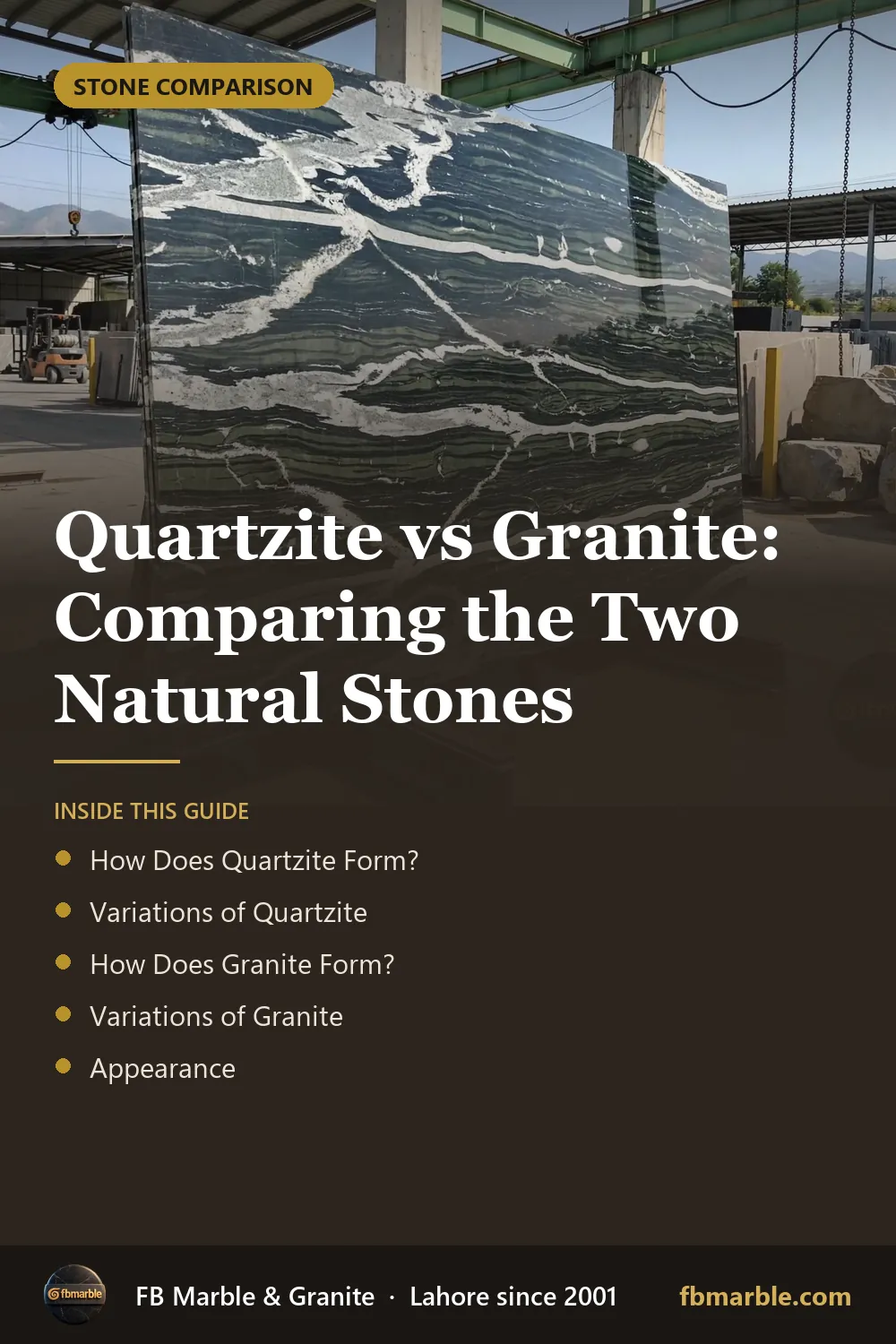
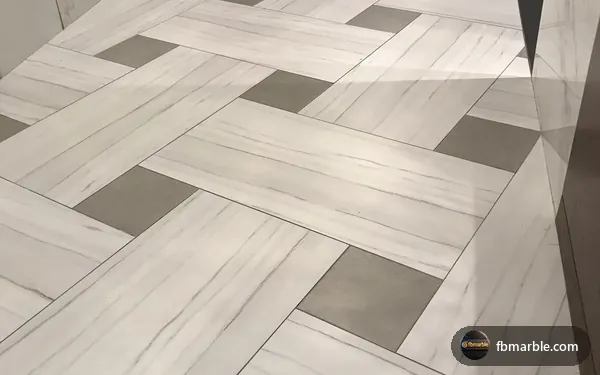
Quartzite comes in white, grey, taupe, green, blue and pink, often with soft, marble-like veining and a subtle crystalline sparkle.
How Does Granite Form?
Granite forms when magma cools slowly deep underground, allowing interlocking crystals of quartz, feldspar and mica to grow.
Variations of Granite
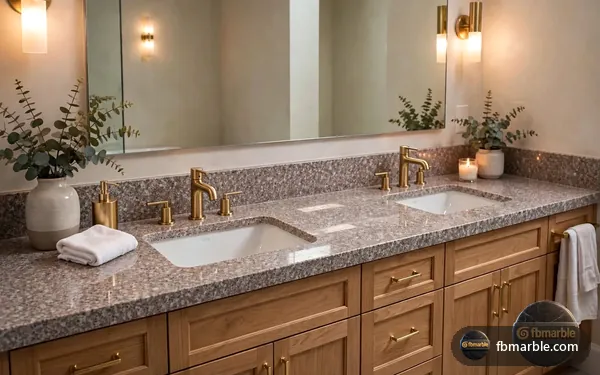
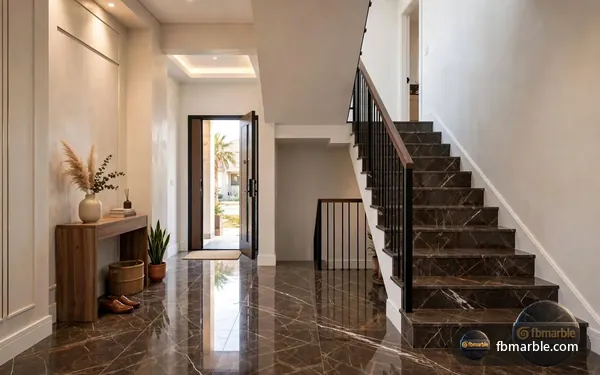
Granite comes in almost every colour — black, white, grey, brown, gold, green, blue and pink — in speckled, solid or wavy patterns. FB Marble stocks more than 45 granites.
Appearance
Quartzite usually looks like marble, with flowing veins and a light background.
Granite usually shows speckles and crystals, though some granites have waves and veins.
Hardness
Quartzite is slightly harder (about 7 on the Mohs scale) than most granite (6–7). Both resist scratches from knives and utensils.
Stain Resistance
Both need sealing. Light quartzite and light granite need regular sealing; dark granites need little.
Heat Resistance
Both handle hot cookware well.
Acid Resistance
Neither etches from typical kitchen acids — a key advantage over marble.
Cost
Quartzite is usually more expensive than granite because it is rarer and harder to fabricate. Granite ranges from economical local stones (from about Rs 250 per square foot in FB Marble's list) to premium imports.
Which Should You Choose?
- Marble look with natural toughness: quartzite.
- Best value and wide colour choice: granite.
- Dark, low-maintenance counters: granite.
- Outdoor use: both work well.
Need Help Choosing?
Our team at FB Marble will help you compare samples, check full slabs and plan your project from measurement to installation. Call or WhatsApp +92 323 4148908, or visit fbmarble.com to explore our collections and request free samples.