What Is Density?
Density is the mass of a material per unit of volume — usually expressed in kilograms per cubic metre (kg/m³) or grams per cubic centimetre (g/cm³). A denser material packs more mass into the same space.
What Is the Density of Granite?
Granite typically has a density of about 2.6 to 2.8 g/cm³ (2,600–2,800 kg/m³), depending on its mineral composition. Darker granites rich in heavy minerals can be slightly denser.
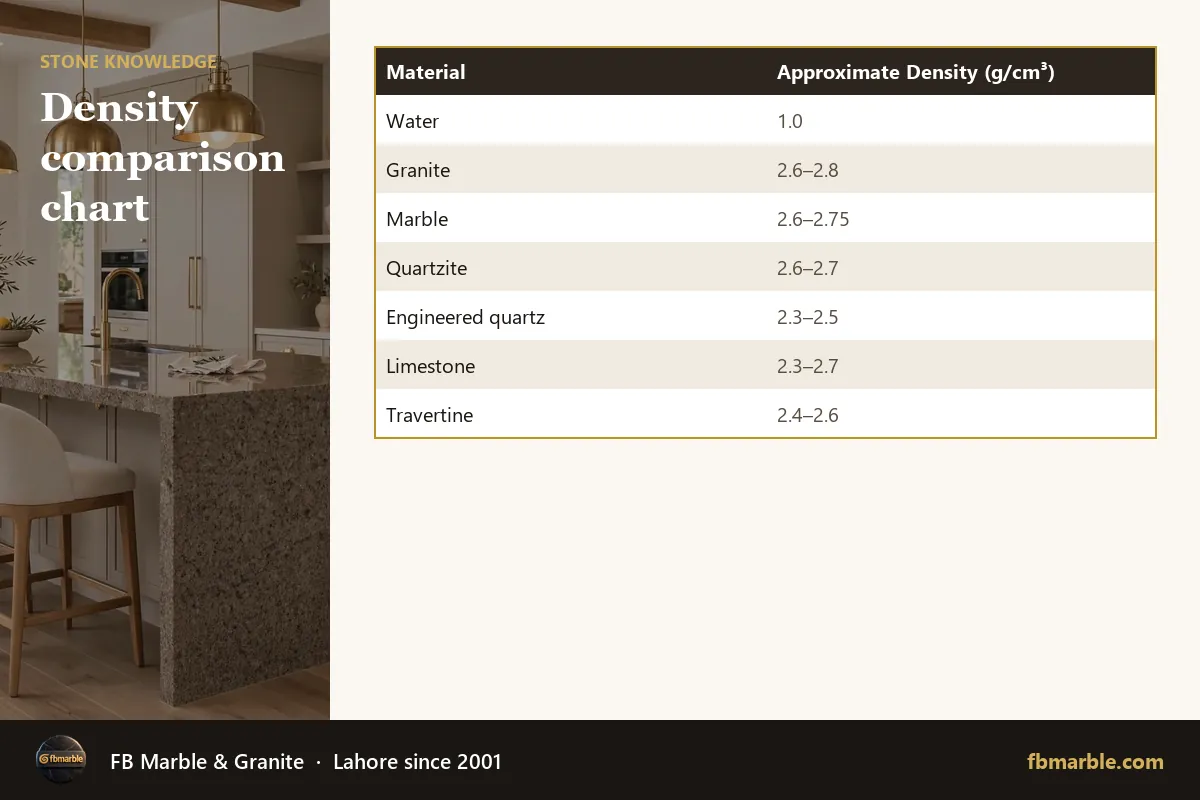
How Does It Compare?
| Material | Approximate Density (g/cm³) |
|---|---|
| Water | 1.0 |
| Granite | 2.6–2.8 |
| Marble | 2.6–2.75 |
| Quartzite | 2.6–2.7 |
| Engineered quartz | 2.3–2.5 |
| Limestone | 2.3–2.7 |
| Travertine | 2.4–2.6 |
| Porcelain | ~2.3–2.4 |
What Density Means for Slab Weight
Because granite is dense, slabs are heavy. As a practical guide:
- 18–20 mm granite: roughly 12–15 kg per square foot
- 30 mm granite: roughly 18–22 kg per square foot
A typical 10-foot kitchen counter that is 2 feet deep (20 sq ft) in 20 mm granite can weigh around 250–300 kg.
Why This Matters
Cabinets. Base cabinets must be strong, level and well fixed. Long spans and overhangs need extra support.
Installation. Slabs need several installers and careful handling, especially up stairs in multi-storey homes.
Transport. Heavier loads affect transport cost and access planning.
Durability. High density means low porosity and excellent resistance to wear.
Density and Porosity
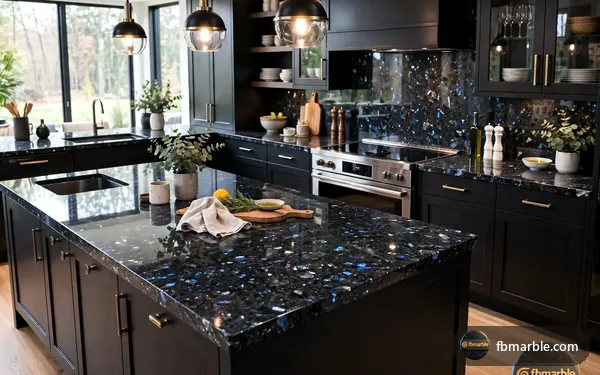
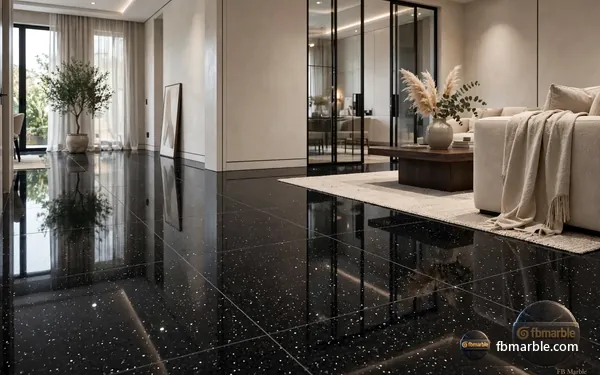
Generally, denser granites absorb less water and resist stains better. That is one reason dark granites such as Galaxy Black rarely need sealing.
Why Choose FB Marble?
With 25+ years of experience, local and imported stock, in-house fabrication and installation, FB Marble & Granite is a trusted name for stone in Lahore and across Pakistan. WhatsApp +92 323 4148908 or visit fbmarble.com to start your project.