How to Fix Marble on High Walls: Wet Fixing vs Dry (Mechanical) Cladding
Marble that is perfectly safe on a 9-foot bathroom wall can become dangerous on a 20-foot lounge wall or a stairwell. The difference is how it is fixed. Here is when each method is right.
The most common question from contractors is simple: "Kya sirf masala ya adhesive se marble upar tak lag jayega?" The honest answer depends on height, slab size, slab weight and the wall behind it. A 20mm marble slab weighs roughly 55 kg per square metre (about 5 kg per sq ft), so a large panel high on a wall is a serious load hanging over people's heads. This guide explains the two main fixing methods, when each is right, and the steps to plan a wall safely.
What you need to know before choosing a method
- The height of the wall, and whether people walk or sit below it.
- The size and thickness of each piece of stone.
- The wall behind: RCC, solid brick, hollow block or plaster over any of these.
- Whether the wall is indoors or exposed to sun and rain.
- Whether the design is bookmatched, so panels must line up exactly.
Step 1: Work out the load
Start with weight. At about 5 kg per sq ft for 20mm marble, a single 4 ft × 2 ft panel (8 sq ft) weighs around 40 kg. A thicker 30mm panel of the same size weighs more again. Granite is similar: about 4.5–5.5 kg per sq ft at 20 mm and 7–8 kg at 30 mm. Multiply by the number of panels on the wall and the total load quickly runs into hundreds of kilograms.
Weight alone is not the only factor. Height matters because a piece falling from 15 or 20 feet can cause serious injury, and because the higher the wall, the harder it is to inspect and repair later.
Step 2: Understand wet fixing with adhesive (low walls, small tiles)
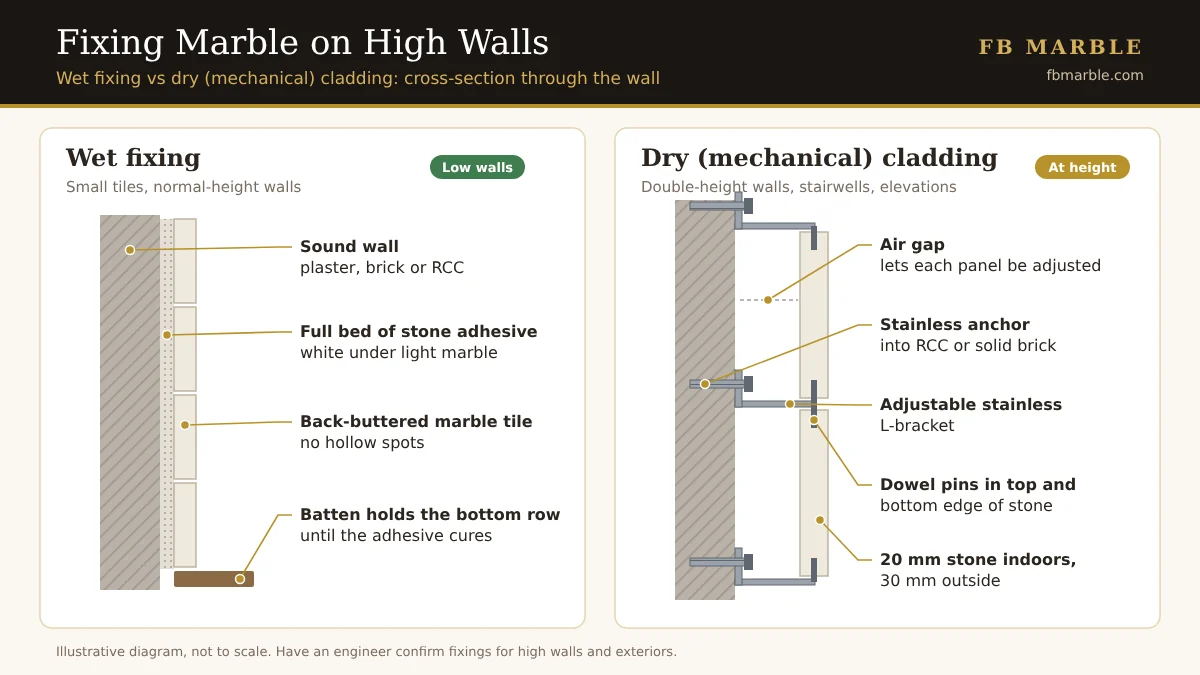
Wet fixing means bonding the stone directly to the wall with a bed of mortar or tile adhesive. It works well for:
- bathroom and kitchen walls up to normal ceiling height
- smaller tiles and thin pieces, such as 60 × 60 cm or 30 × 60 cm
- sound, flat, plastered or RCC walls
Do it properly: use a polymer-modified tile adhesive made for natural stone (white adhesive for white and light marble, so grey cement does not show through), apply it with a notched trowel, back-butter every piece so there are no hollow spots, and support the bottom row on a batten or ledger until the adhesive cures.
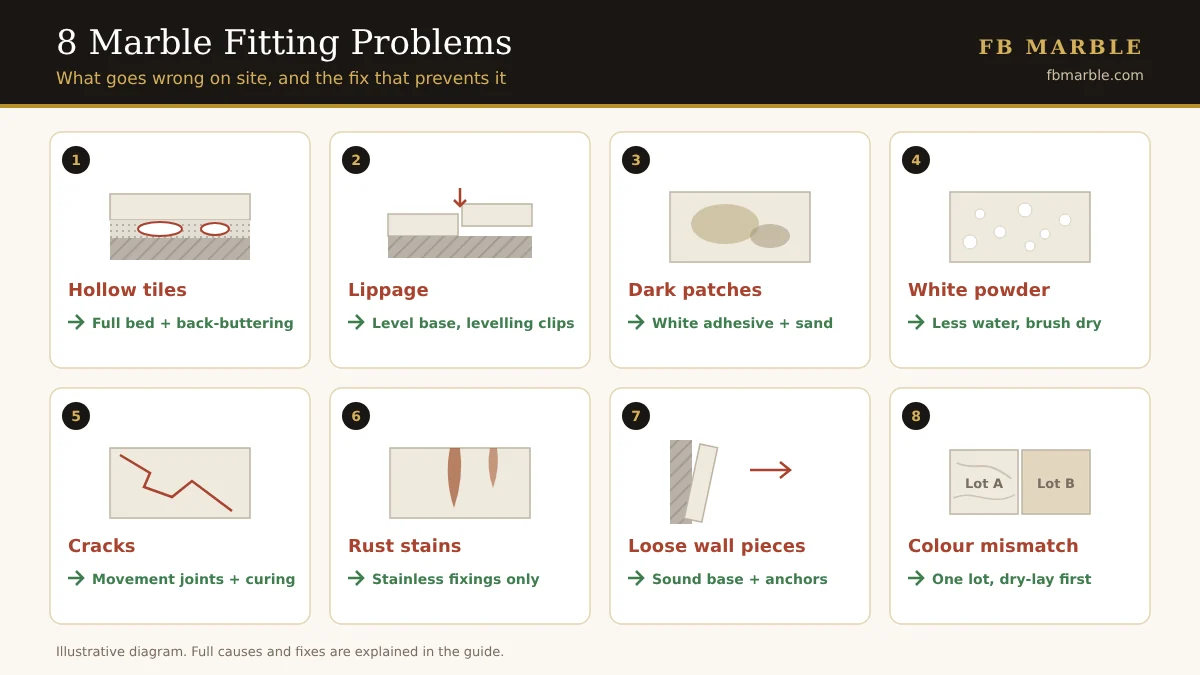
Hollow spots behind a tile are a weak point. They let the piece crack under a knock and allow moisture to collect. Tap each fixed piece lightly; a hollow sound means the bed is not full.
Wet fixing alone is not the right choice for large slabs, high walls, exterior elevations or anywhere a falling piece could hurt someone. That is where mechanical fixing comes in.
Step 3: Understand dry (mechanical) cladding with stainless anchors
In dry cladding, each piece of stone hangs on its own stainless steel anchors fixed into the structure. Adhesive or mortar is not relied upon to hold the weight. This is the standard approach for:
- double-height lounges, lobbies and stairwells
- large slabs and bookmatched feature walls
- exterior elevations and boundary walls (see our elevation fixing guide)
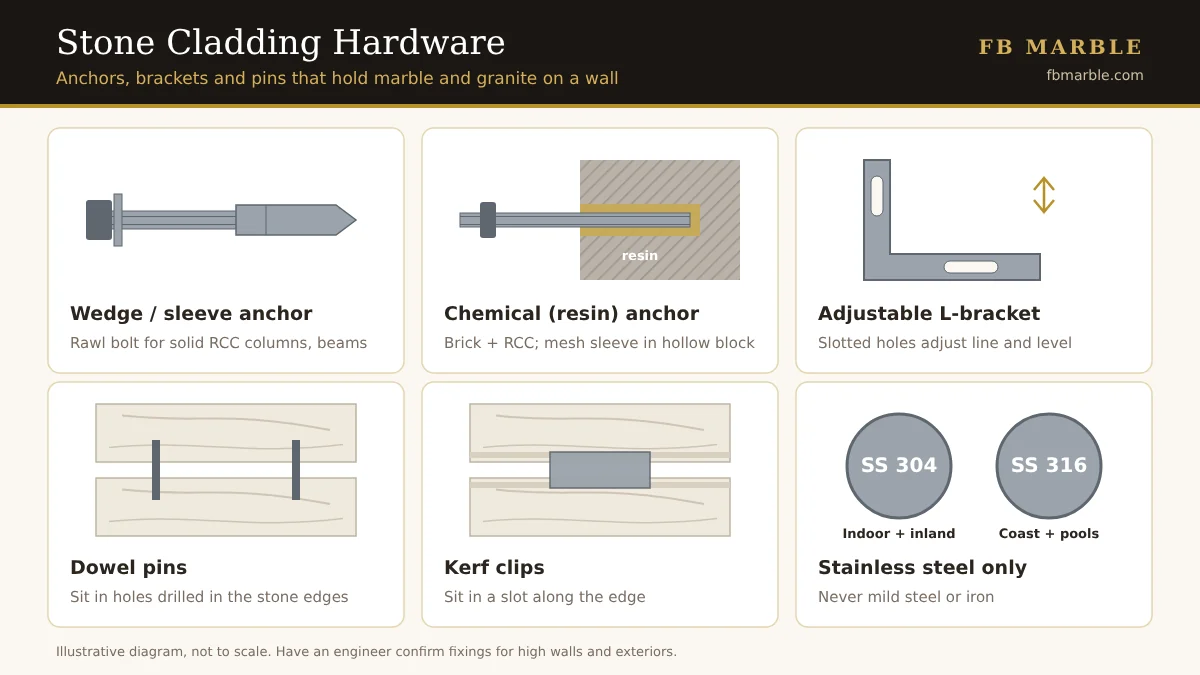
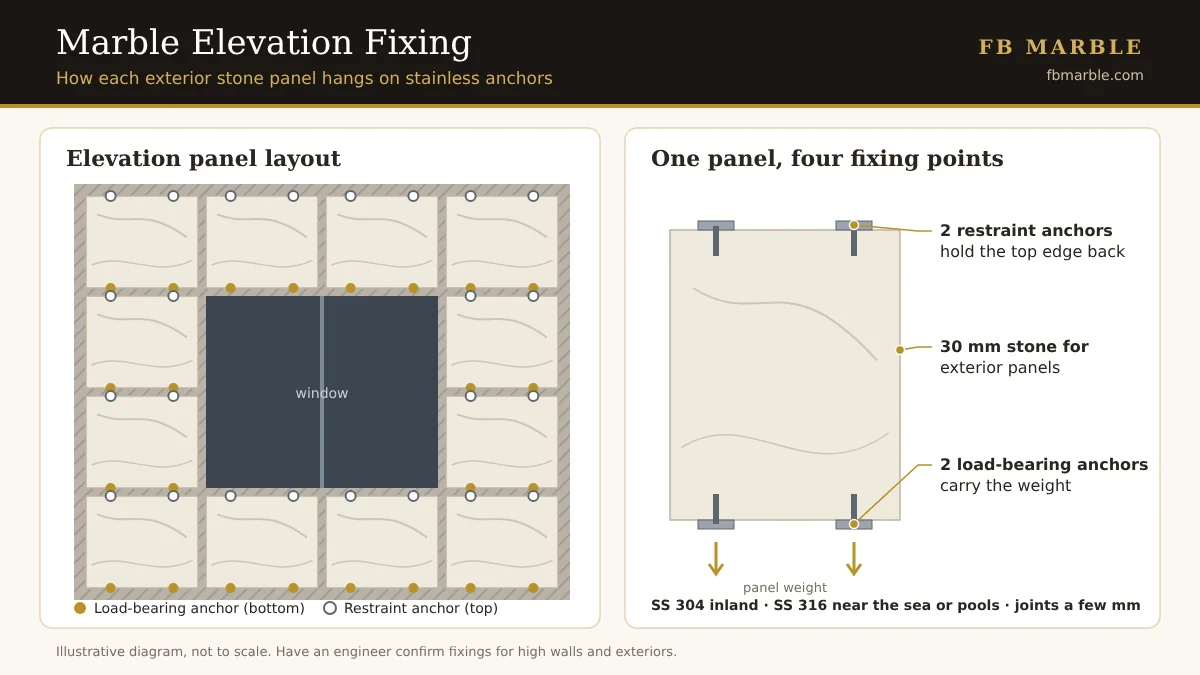
Each panel is usually held by four anchor points: two at the bottom edge that carry the weight, and two at the top edge that hold it back against the wall. Pins or clips sit in holes or slots cut into the edges of the stone. A gap is left behind the stone so each panel can be adjusted to line and level. The hardware itself is explained in our cladding hardware guide.
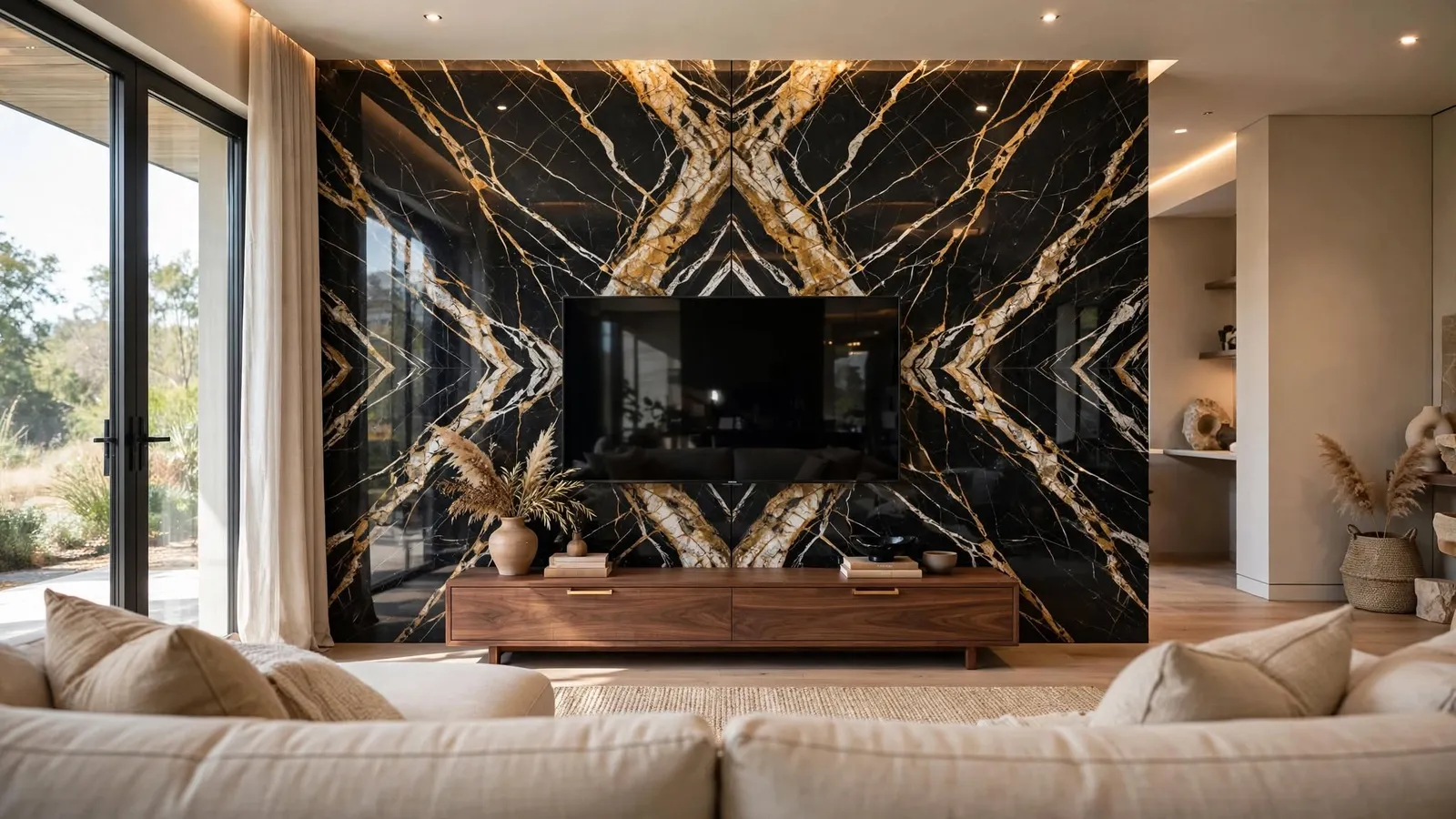
Because each panel is carried independently, one panel cannot drag down the one below it. The gap behind the stone also lets the wall breathe, which helps on exteriors that heat up in the summer sun and get soaked in the monsoon.
Step 4: Choose the right method
| Situation | Recommended |
|---|---|
| Bathroom or kitchen wall, small tiles, normal ceiling | Wet fixing with stone adhesive |
| Large slabs indoors, below about head height | Adhesive plus mechanical safety pins |
| Double-height wall, stairwell, lobby | Dry cladding with stainless anchors |
| Exterior elevation, boundary wall | Dry cladding; engineer to check fixings |
| Ceilings and soffits | Mechanical fixing only, never adhesive alone |
Many Lahore homes now have a double-height lounge or entrance with a feature wall. If the stone on that wall goes above head height, treat it as the third row of the table, not the first.
Step 5: Pick the stone thickness
For mechanical fixing the stone must be thick enough to take a pin or clip without the edge breaking. 20mm is the usual minimum indoors; 30mm is preferred for exteriors and large panels. Many of our marbles, such as Ziarat White, Sunny White and Sunny Grey, are available in 30mm. Lighter options for walls include porcelain slabs, which are thinner but need their own fixing system.
Step 6: Check the wall behind
Plaster is not a fixing surface. Anchors must go into the concrete or brick behind it. RCC columns and beams take anchors well; hollow blocks need special anchors or a steel sub-frame fixed back to the structure. Find out what the wall is made of before the stone is cut, because it decides the anchor type and spacing.
Step 7: Work safely at height
- Use proper scaffolding with boards and guard rails, not ladders, for anything above head height.
- Lift slabs with enough people, a chain block or a vacuum lifter; never carry large slabs up ladders.
- Workers above ground level should wear a safety harness tied to a secure point.
- Keep the area below closed off while panels are being lifted and fixed.
- Fix from the bottom up, and do not load a row before the row below is secure.
In summer, plan lifting and fixing for the cooler hours of the day. Heat makes workers tired, and tired hands drop things.
Step 8: Get an engineer's sign-off
For tall walls and any exterior work, have a structural engineer confirm the anchor type, size and spacing for your wall. The guidance here is general; the engineer's design is what keeps people safe.
Common mistakes
- Using cement or adhesive alone for large slabs high on a wall.
- Fixing anchors into plaster instead of the concrete or brick behind it.
- Grey cement behind white marble, which shows through as a shadow.
- Hollow spots from skipping back-buttering.
- Stone too thin for pins or clips, so the edge breaks.
- Iron or mild steel fixings instead of stainless, which rust and crack the stone.
- Ladders instead of scaffolding for work above head height.
- Adhesive on ceilings and soffits, where only mechanical fixing is safe.
Planning a feature wall? Measure it with our square-feet guide, then send us the drawing on WhatsApp so we can suggest slab sizes and thickness.
Stones in this guide
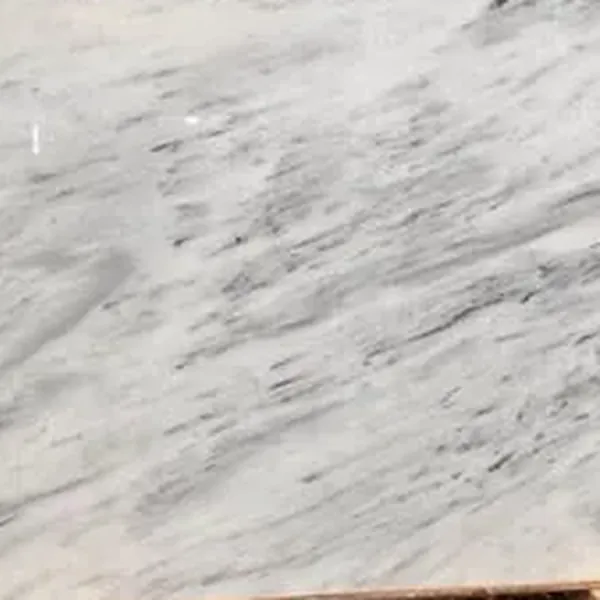 Ziarat White MarbleFrom Rs 1,500 / sq ft
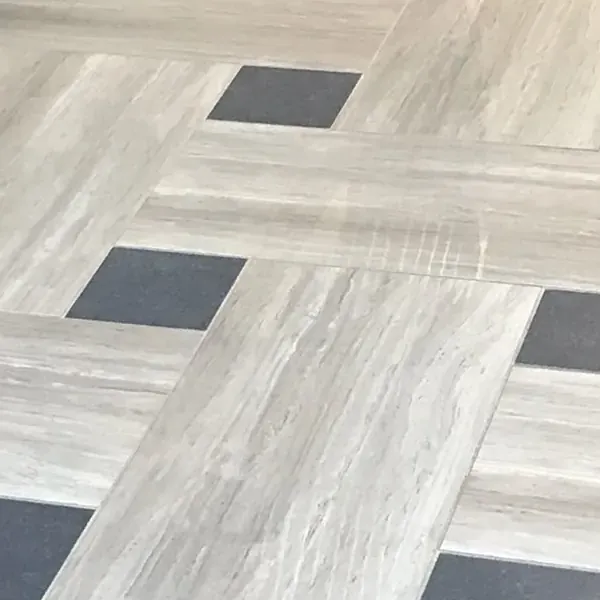 Sunny White MarbleFrom Rs 650 / sq ft
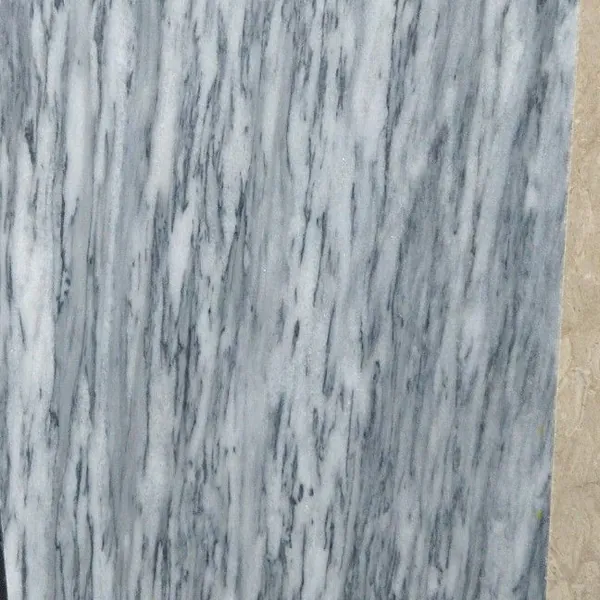 Sunny Grey MarbleFrom Rs 300 / sq ft
Estimated rates per square foot for the slab only, as listed on each stone's page. Rates move with stock and import costs, so confirm today's price on WhatsApp.
Frequently asked questions
Can marble be fixed on a high wall with cement or adhesive only?
For small tiles on normal-height walls, yes. For large slabs, double-height walls, exteriors and ceilings, use mechanical stainless steel anchors so each piece is held independently.
What thickness of marble is needed for dry cladding?
20mm is the usual minimum indoors and 30mm is preferred for exteriors and large panels, so the edge can take pins or clips without breaking.
How many anchors does each marble panel need?
Typically four: two load-bearing anchors at the bottom edge and two restraint anchors at the top. An engineer should confirm this for large panels and exteriors.
Which adhesive should I use for white marble on walls?
A white, polymer-modified tile adhesive made for natural stone, so grey cement does not show through light marble.
How much does a marble wall panel weigh?
A 20mm marble slab weighs roughly 55 kg per square metre, or about 5 kg per sq ft. A 4 ft × 2 ft panel is around 40 kg.
Can anchors be fixed into plaster?
No. Plaster is not a fixing surface. Anchors must reach the concrete or brick behind it. See the cladding hardware guide.
Want to see these stones in person?
Visit our showroom at Bedian Road, DHA Phase 6, Lahore, ask for free samples, or send us your measurements for a quote.