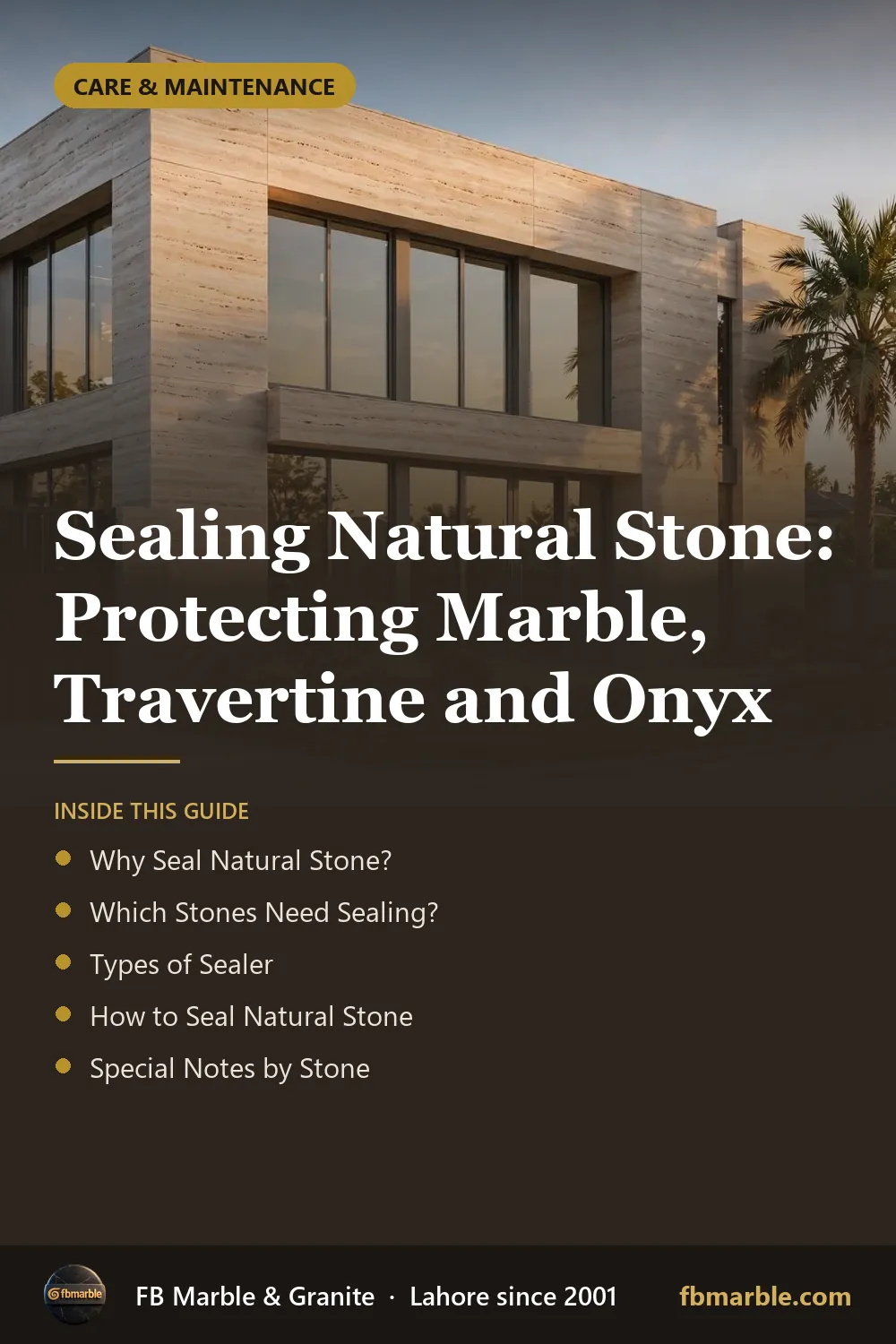
Why Seal Natural Stone?
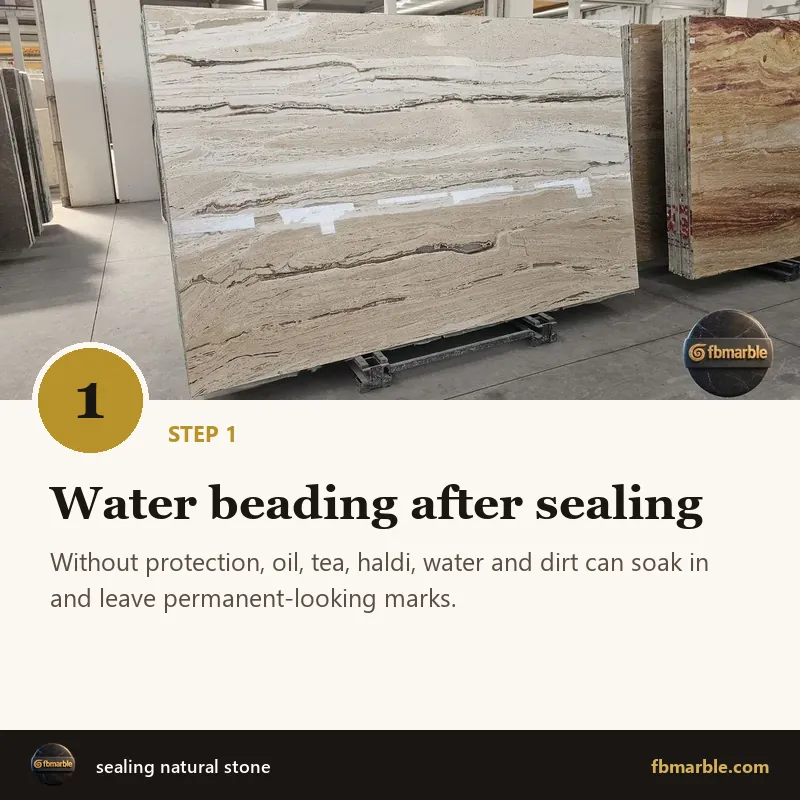
Natural stones have pores — microscopic spaces that absorb liquids. Without protection, oil, tea, haldi, water and dirt can soak in and leave permanent-looking marks. A penetrating sealer fills these pores so liquids bead on the surface.
Which Stones Need Sealing?
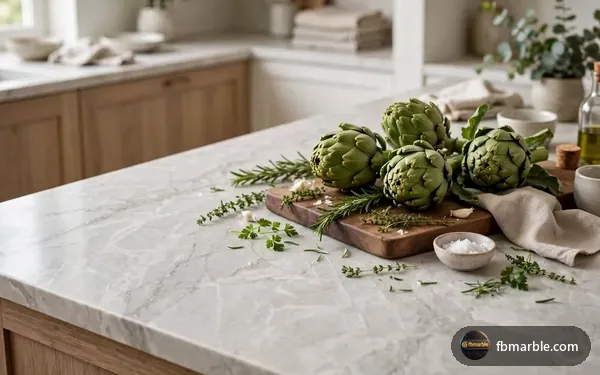
- Marble: yes — counters and vanities every 6–12 months; floors after polishing and periodically.
- Travertine: yes — very porous, especially unfilled; seal regularly.
- Onyx: yes — protects polish and colour.
- Limestone: yes — highly porous.
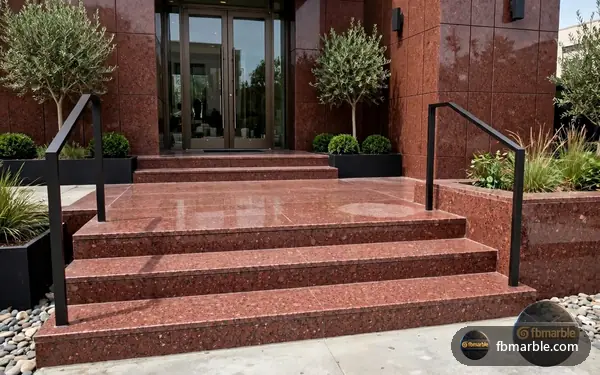
- Light granite: yes — about yearly in kitchens.
- Dark granite: occasionally.
- Quartz and porcelain: never.
Types of Sealer
Penetrating (impregnating) sealers soak into the stone and protect from within. They do not change the appearance and are the best choice for most uses.
Enhancing sealers penetrate and also deepen the colour — popular on honed, tumbled and leathered stone.
Topical coatings sit on the surface and add gloss but can scratch, peel and trap moisture. They are rarely recommended for countertops.
How to Seal Natural Stone
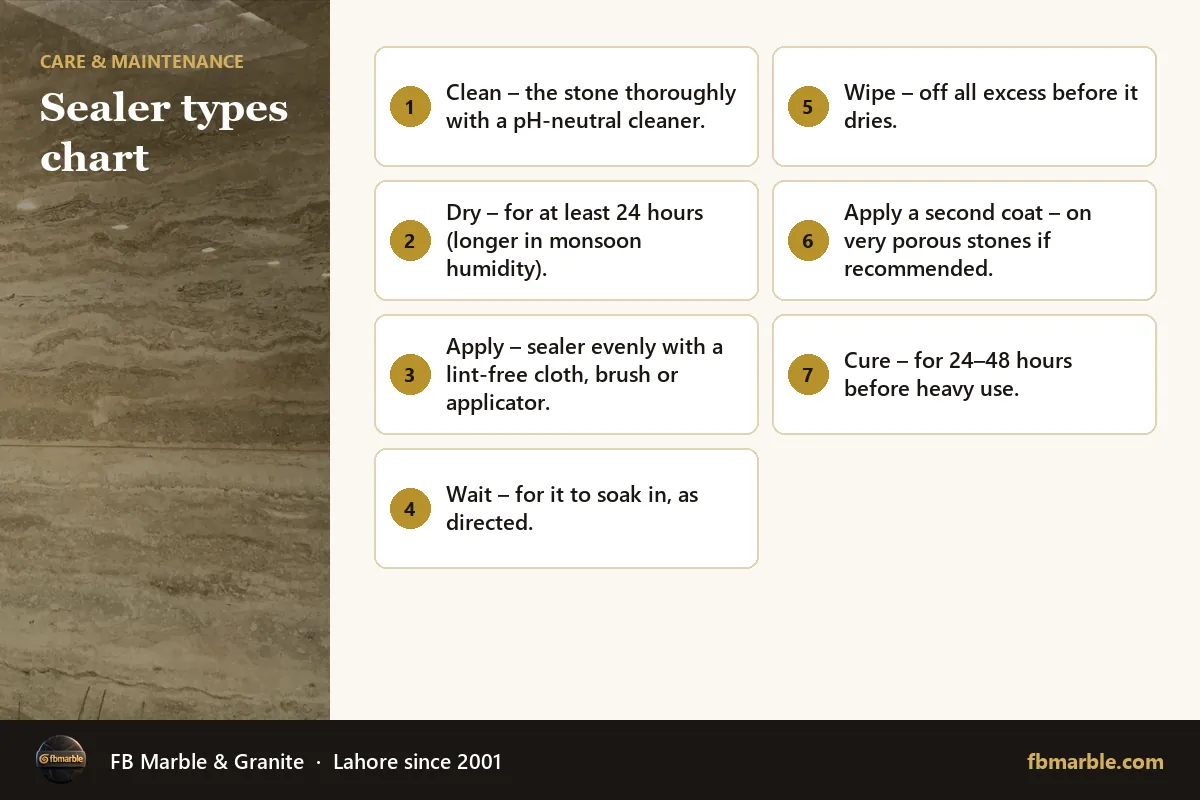
- Clean the stone thoroughly with a pH-neutral cleaner.
- Dry for at least 24 hours (longer in monsoon humidity).
- Apply sealer evenly with a lint-free cloth, brush or applicator.
- Wait for it to soak in, as directed.
- Wipe off all excess before it dries.
- Apply a second coat on very porous stones if recommended.
- Cure for 24–48 hours before heavy use.
Special Notes by Stone
Travertine: seal holes and surface well; unfilled travertine may need more sealer.
Onyx: test first — some sealers can affect translucency.
Marble floors: seal after grinding and polishing.
How to Tell When to Reseal
Do the water-drop test: if the stone darkens within 10–15 minutes, it needs resealing.
Talk to FB Marble
FB Marble & Granite has supplied and installed natural stone across Pakistan since 2001. Visit our showroom at 51 Y Jamun, Bedian Road, near the DHA Phase 5-6 Interchange, Lahore, or WhatsApp +92 323 4148908 with your measurements for a free quote. Browse our granite, marble, quartz, porcelain and onyx collections on fbmarble.com.