What Does Sealing Do?
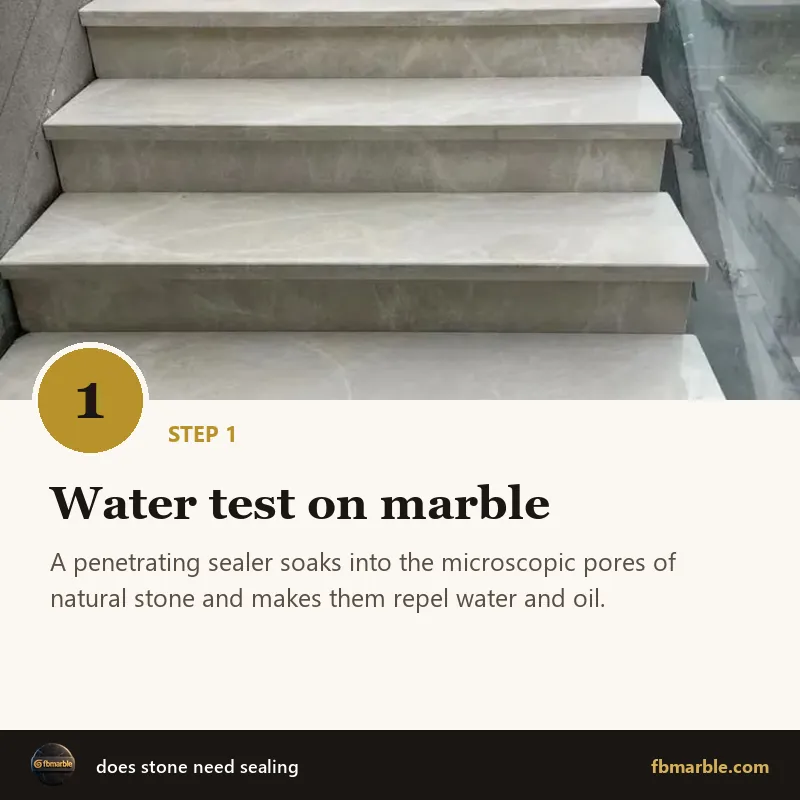
A penetrating sealer soaks into the microscopic pores of natural stone and makes them repel water and oil. This gives you time to wipe up spills before they leave a stain. Sealing does not make stone stain-proof, and it does not prevent etching from acids.
Stones That Need Regular Sealing
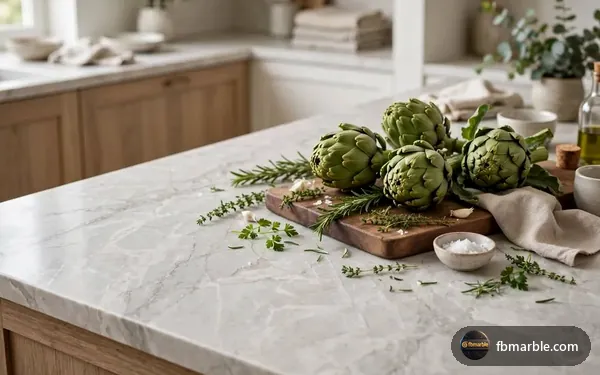
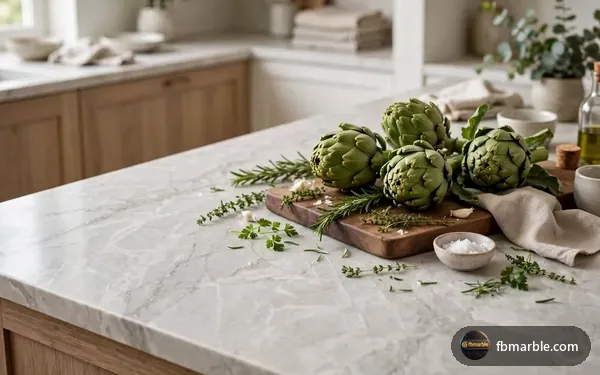
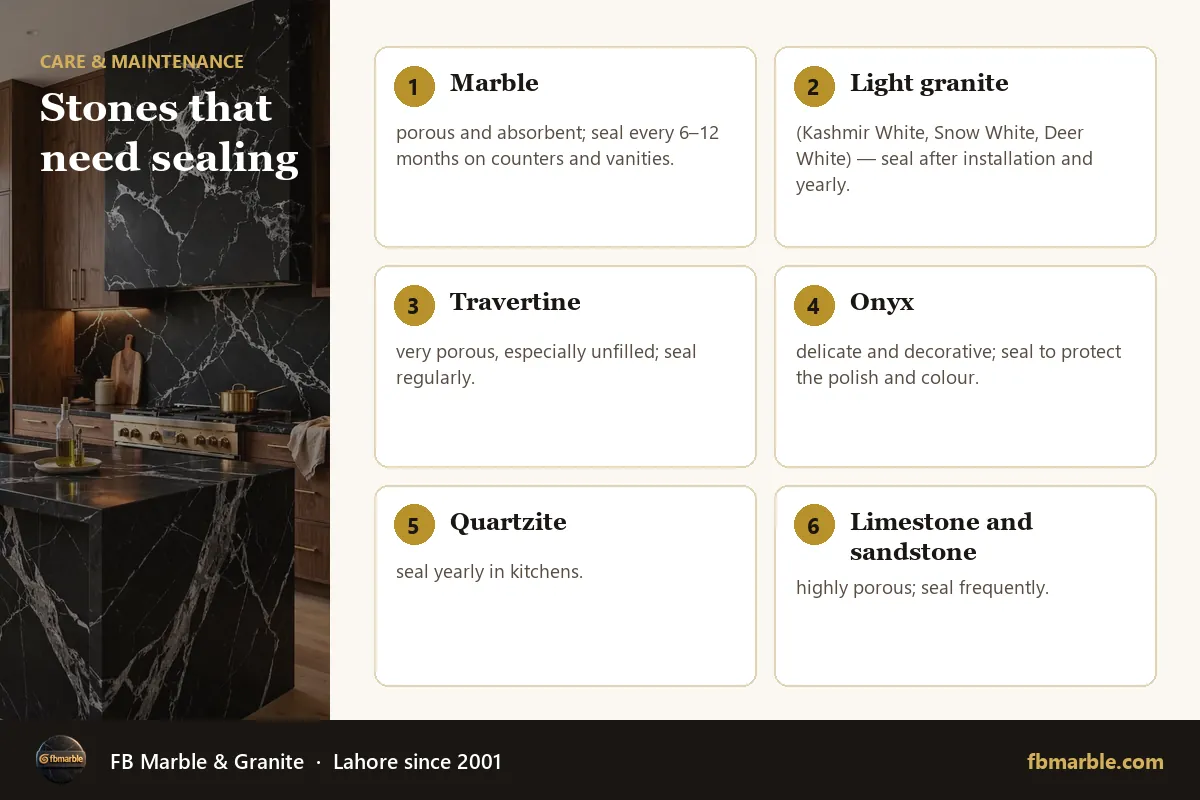
- Marble — porous and absorbent; seal every 6–12 months on counters and vanities.
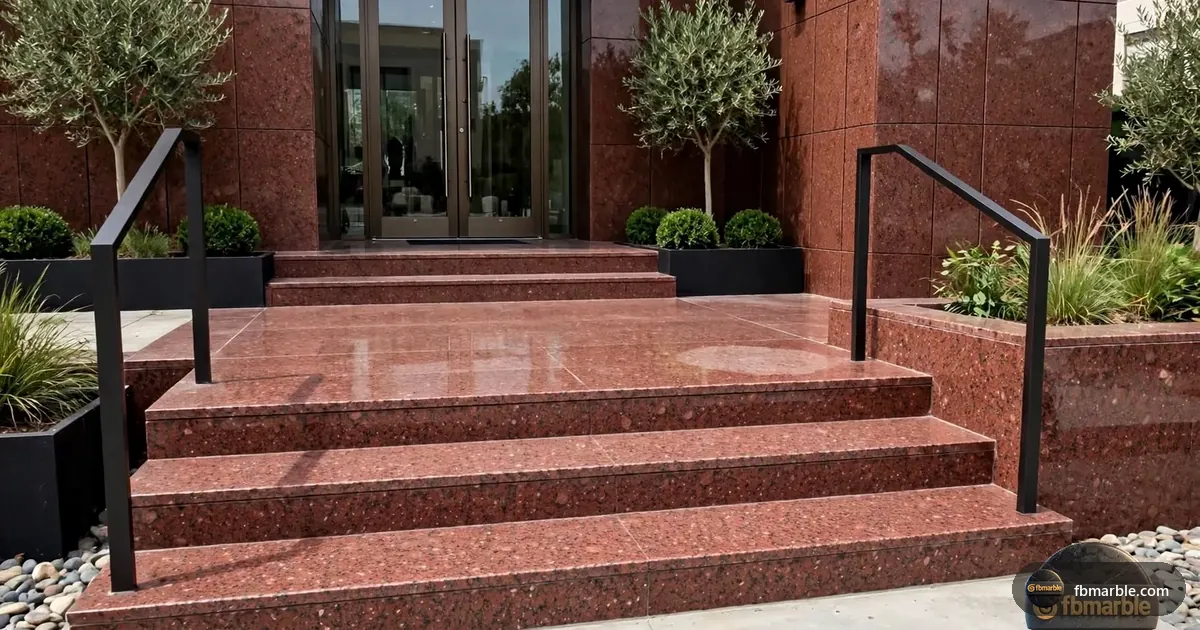
- Light granite (Kashmir White, Snow White, Deer White) — seal after installation and yearly.
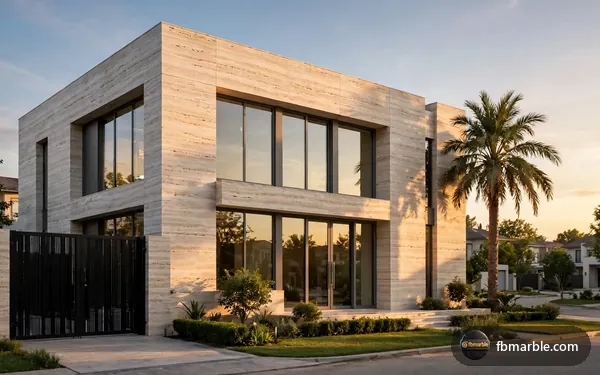
- Travertine — very porous, especially unfilled; seal regularly.
- Onyx — delicate and decorative; seal to protect the polish and colour.
- Quartzite — seal yearly in kitchens.
- Limestone and sandstone — highly porous; seal frequently.
Stones That Rarely Need Sealing
- Dark, dense granite such as Galaxy Black, Black Pearl and Absolute-type blacks have very low absorption. They may need sealing only occasionally, if at all. Always test.
Materials That Never Need Sealing
- Quartz — non-porous engineered stone.
- Porcelain — vitrified and non-porous.
- Solid surface — non-porous acrylic.
Applying sealer to these simply leaves a film on top.
The Water-Drop Test
Place a few drops of water on the stone and wait 10–15 minutes. If the stone darkens beneath the water, it is absorbing and needs sealing. If the water beads and the stone stays the same colour, the seal is working.
How to Seal
- Clean the stone and let it dry for 24 hours.
- Apply a penetrating sealer evenly.
- Allow it to soak in for the time on the label.
- Wipe off all excess.
- Let it cure for 24–48 hours before normal use.
How Often?
Kitchen counters and vanities need sealing more often than walls and floors because they face more spills. Test every few months and reseal when needed.
Talk to FB Marble
FB Marble & Granite has supplied and installed natural stone across Pakistan since 2001. Visit our showroom at 51 Y Jamun, Bedian Road, near the DHA Phase 5-6 Interchange, Lahore, or WhatsApp +92 323 4148908 with your measurements for a free quote. Browse our granite, marble, quartz, porcelain and onyx collections on fbmarble.com.