Best Stone for House Elevations, Porches and Pool Decks in Pakistan
Outdoor stone in Pakistan has to handle 45°C sun, monsoon rain, dust and, on porches, car tyres. Here is what holds up and where to use it.
Exterior stone takes far more punishment than anything inside the house. Strong sun heats surfaces and fades some materials. Monsoon rain makes smooth stone slippery. Dust settles into textures. And porches carry the weight of cars. The good news: several natural stones handle all of this well when chosen and finished correctly. This guide explains which stones suit each outdoor area, then walks you step by step from planning to maintenance.
What you need to know first
- Which areas are fully exposed to sun and rain, and which are covered.
- Which surfaces people walk on, especially barefoot, and which are walls only.
- Whether any area carries vehicles, such as a porch or driveway.
- Whether the stone will be near a swimming pool and chlorinated water.
Granite: the toughest outdoor stone
Granite is hard, dense and colour-stable in sunlight, which makes it the first choice for porches, driveways, steps and boundary walls.
- Flamed finish gives a rough, grippy surface that stays safe in rain. Impala Black flamed is a very popular choice for porches and steps.
- Sadio Pink and Cherry Pink give warm-toned boundary walls and facades.
- Grey Juparana and Silver Eye suit modern grey elevations.
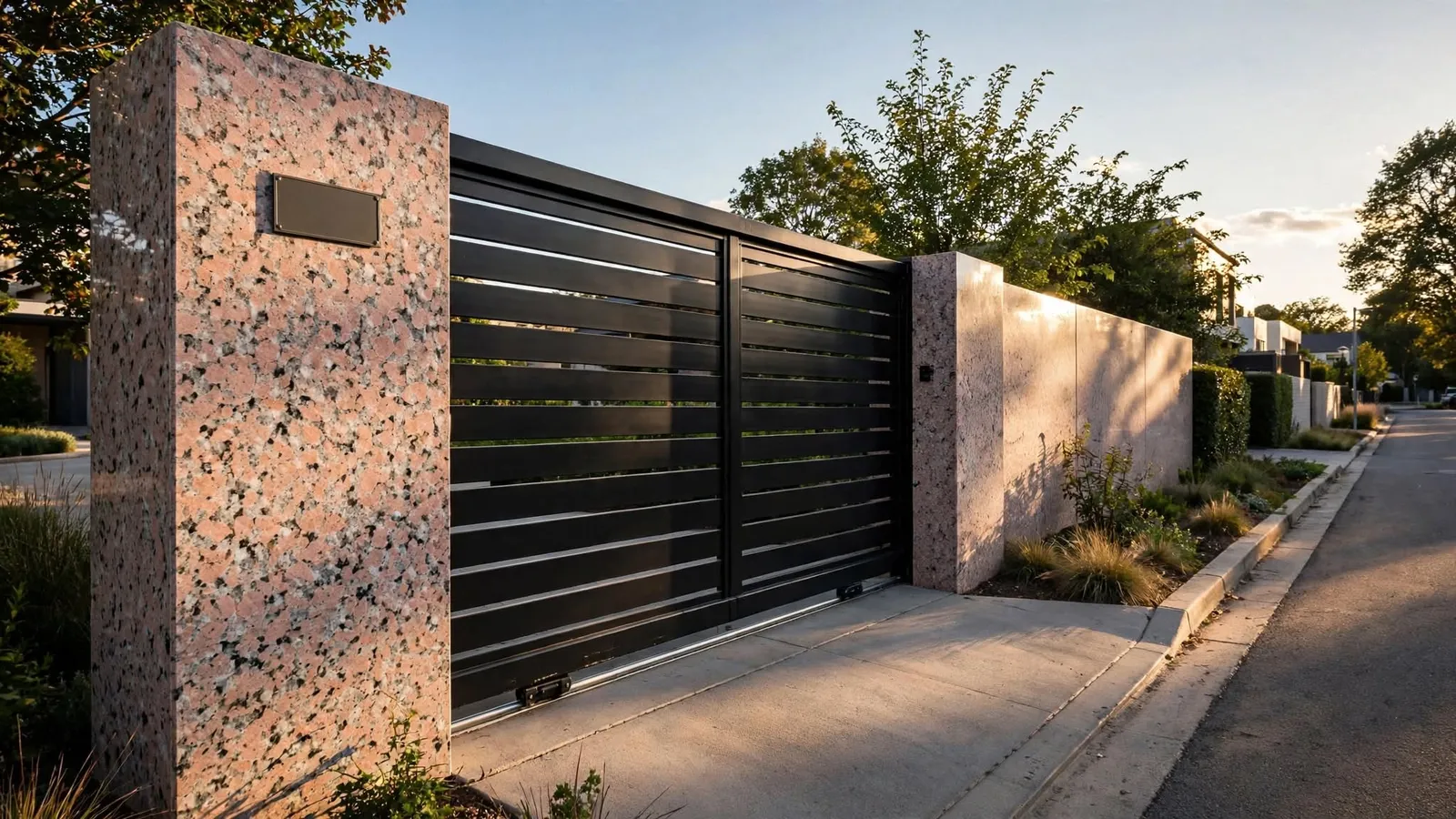
Granite is also heavy, which matters on walls. At 20 mm it weighs about 4.5–5.5 kg per sq ft, and at 30 mm about 7–8 kg. Cladding on an elevation must be fixed to carry that load safely.
Travertine: the elevation favourite
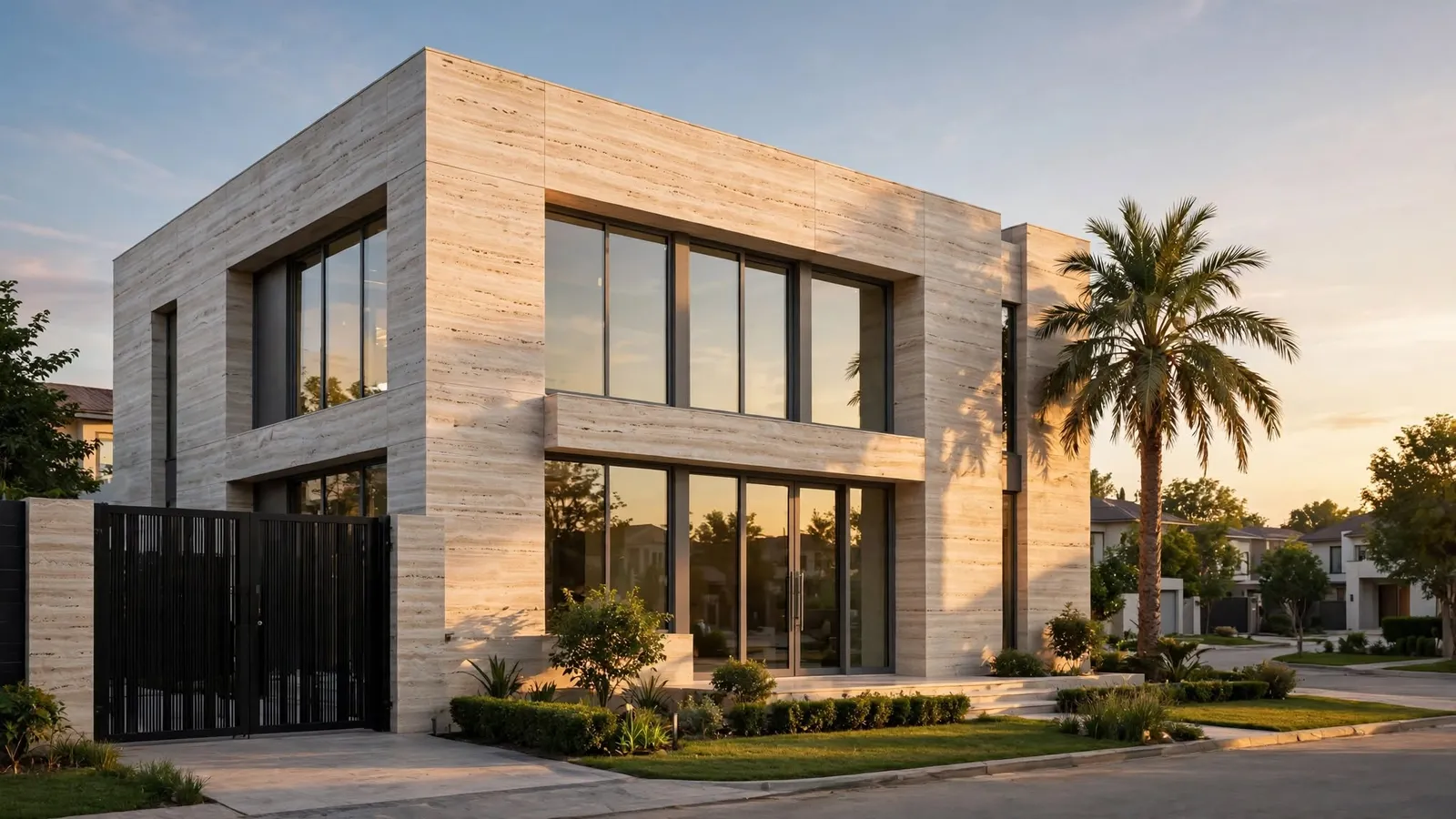
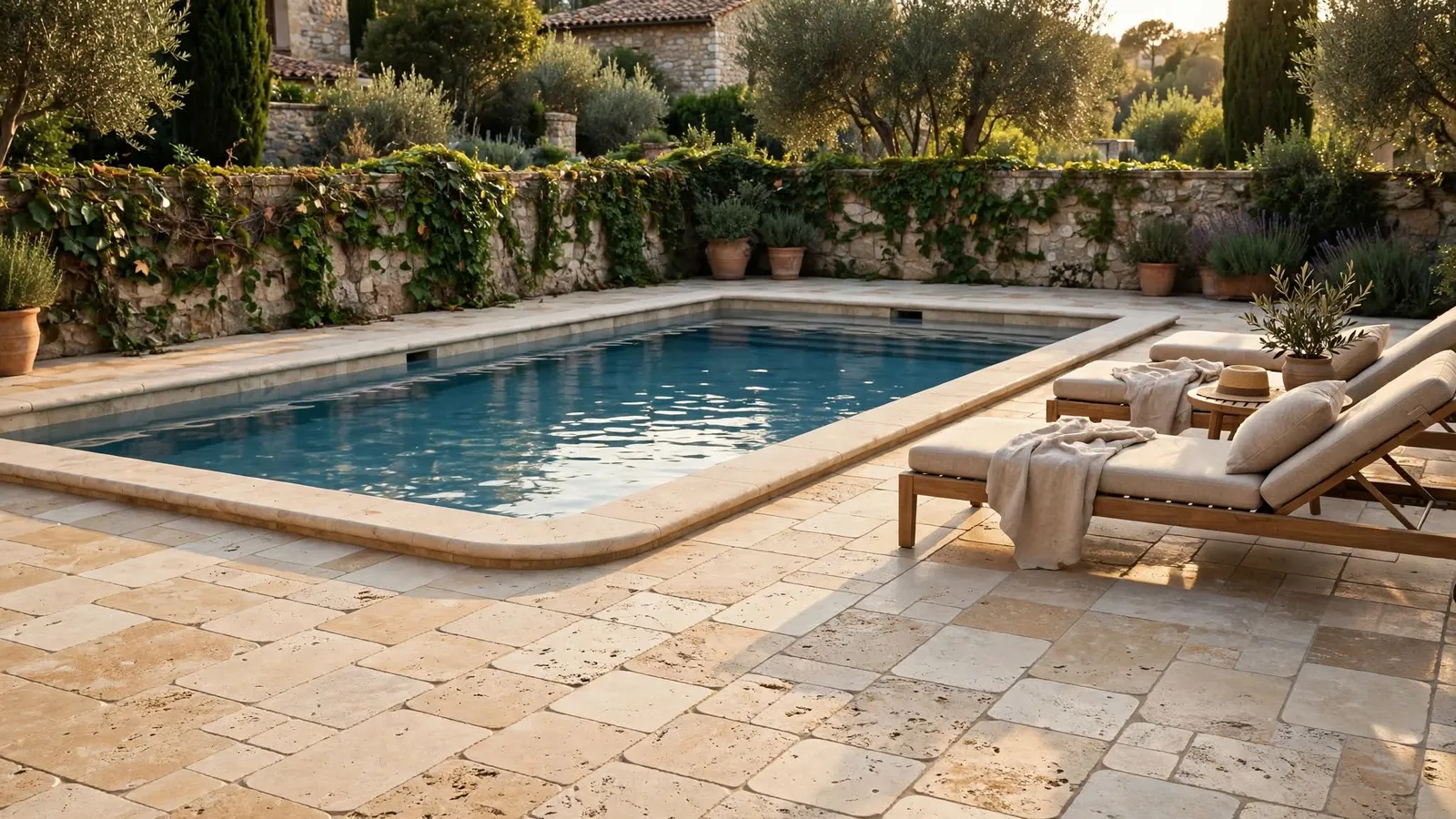
Vein-cut travertine has become the signature look for modern front elevations in Lahore. Classic, Beige and Silver travertine are common choices. Around pools, tumbled and honed travertine give grip and stay relatively comfortable underfoot. Read the full travertine guide for cuts and finishes.
Marble outdoors: use with care
Marble can be used on covered porches and verandas, and economical stones like Badal are common there. On fully exposed areas, polished marble becomes slippery in rain and can weather over time. If you use it outside, choose a honed or textured finish and seal it.
What not to use outside
- Quartz: UV can yellow the resin. Keep it indoors. See quartz vs granite.
- Onyx: too soft and decorative for exterior use.
- High-gloss polished stone on walkways: slippery when wet.
Step 1: Map each outdoor area
Walk around the house and list every surface that will get stone: the front elevation, boundary wall, gate pillars, porch, driveway, outdoor steps, terrace and pool deck. Note which ones are in full sun for most of the day. In a Lahore summer, with temperatures reaching 45°C, a west-facing porch or an open rooftop terrace gets far hotter than a shaded veranda.
Step 2: Match the stone to the use
| Area | Best choices | Finish |
|---|---|---|
| Front elevation | Vein-cut travertine, granite | Honed, filled or natural |
| Porch and car parking | Granite (Impala Black, Grey Juparana) | Flamed or leather |
| Outdoor steps | Granite | Flamed, with grooves |
| Pool deck | Light travertine | Tumbled or honed |
| Boundary wall | Sadio Pink, Cherry Pink, grey granites | Polished or flamed |
Walls can take a polished finish because nobody walks on them. Floors, steps and decks need texture for grip.
Step 3: Think about heat and colour
Dark stone absorbs more sun and gets noticeably hotter underfoot than light stone. For areas people walk on barefoot, such as pool decks and rooftop terraces, choose light colours like cream travertine or light granite. Keep dark stones for walls, trims and shaded steps.
This is especially relevant for rooftop terraces where families sit on summer evenings, and for pool decks used by children. A dark porch is fine for cars and shoes, but uncomfortable for bare feet in June.
Step 4: Choose a finish for grip
Monsoon rain, garden hoses and pool splashes all make stone wet. The finish decides how safe it stays.
- Flamed granite for porches, driveways and steps that take rain.
- Leather finish for a softer texture on covered porches.
- Tumbled or honed travertine around pools and on patios.
- Anti-slip grooves near the front edge of outdoor steps.
See our finishes guide for how each finish looks and feels.
Step 5: Plan the fixing
Stone on the ground is bedded on a solid, well-compacted base so car tyres do not crack it. Stone on walls hangs over people's heads, so large panels and elevations need proper mechanical fixing rather than adhesive alone. Our elevation fixing guide covers this in detail.
Make sure outdoor floors slope gently so rainwater runs off rather than pooling, and leave joints that allow the stone to move as it heats and cools between summer days and winter nights.
Step 6: Seal and maintain
Seal travertine and lighter stones outdoors to reduce dust and water stains, and wash elevations from time to time to clear dust. Around pools, rinse off chlorinated water. Our sealing guide explains how often.
- Wash elevations after dust storms, which are common before the monsoon.
- Sweep porches regularly so grit does not wear the surface under tyres.
- Clear leaves and mud from pool decks before they stain light stone.
- Wipe oil drips from the car porch promptly, before they soak in.
Step 7: Combine stones on one house
Most homes use more than one stone outside, and the house looks best when they are chosen together rather than one at a time.
- Elevation and porch: a light vein-cut travertine elevation pairs well with a flamed Impala Black or Grey Juparana porch. The dark floor hides tyre marks and the light walls keep the front of the house bright.
- Boundary wall and gate pillars: use one granite for both, such as Sadio Pink or Cherry Pink, so the street front reads as one design.
- Steps and porch: run the same granite from the porch onto the steps, with grooves on each tread, so there is no change of grip underfoot.
- Pool and terrace: keep light travertine on every surface people walk on barefoot, and use darker stone only for copings in shade or for trims.
Look at sample pieces outside in daylight before deciding. Stone looks different in strong Pakistani sun than it does under showroom lights, and colours that seem close indoors can look quite different side by side on a wall.
Plan any changes of material at natural breaks, such as a pillar, a step or a corner, so each stone has a clean edge to stop against.
Common mistakes
- Polished stone on walkways and steps, which becomes slippery in rain.
- Dark stone on a pool deck or open terrace, which gets too hot for bare feet.
- Quartz outdoors, where UV can yellow the resin.
- Onyx on exteriors, which is too soft for the conditions.
- Exposed polished marble, which weathers over time.
- Skipping the sealer on travertine and light stones.
- Relying on adhesive alone for heavy panels on an elevation.
- Leaving chlorinated water to dry on the stone around a pool.
Stones in this guide
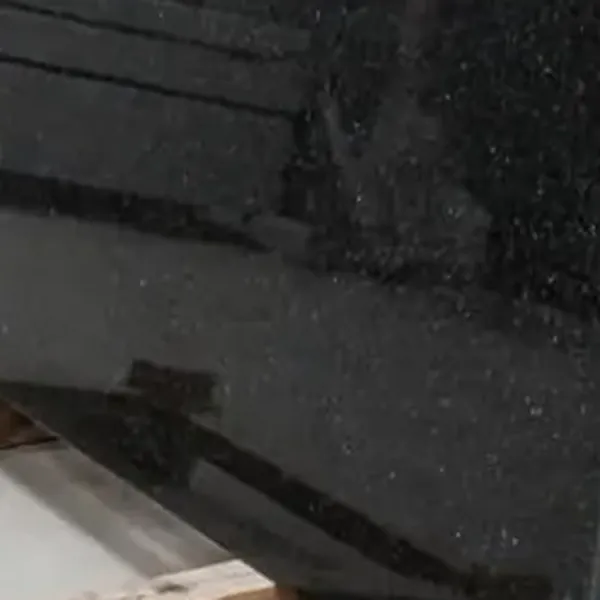 Impala Black GraniteFrom Rs 400 / sq ft
 Sadio Pink GraniteFrom Rs 750 / sq ft
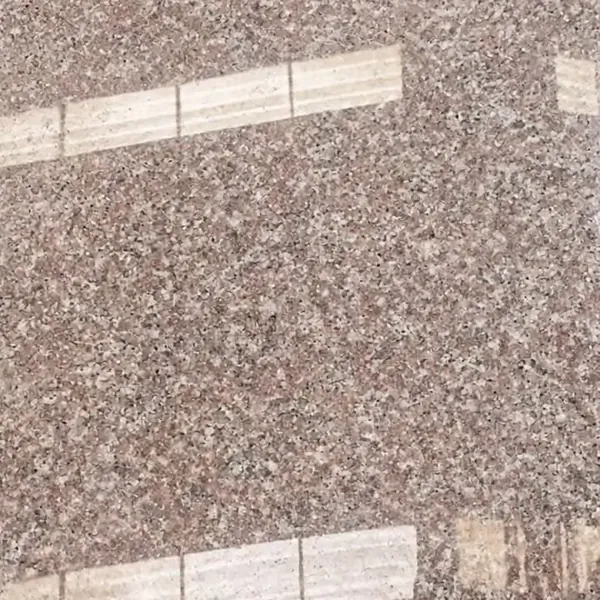 Cherry Pink GraniteFrom Rs 850 / sq ft
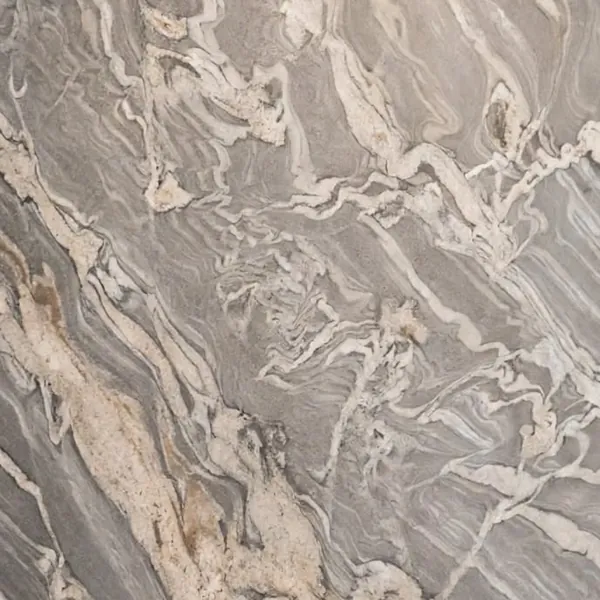 Grey Juparana GraniteFrom Rs 700 / sq ft
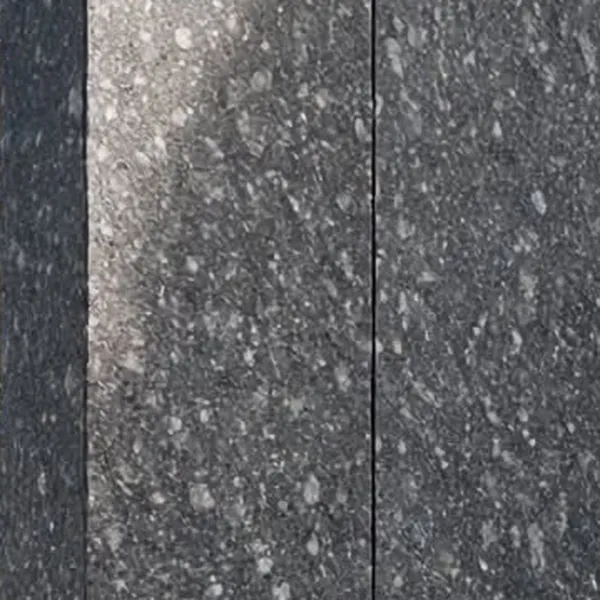 Silver Eye GraniteFrom Rs 750 / sq ft
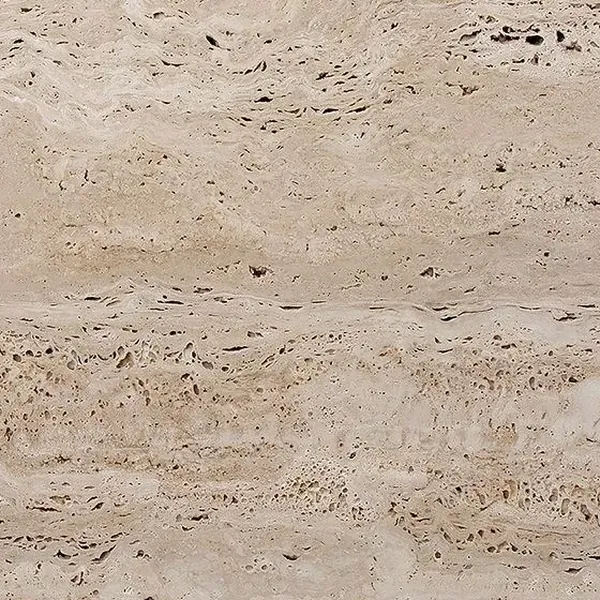 Classic TravertineFrom Rs 3,000 / sq ft
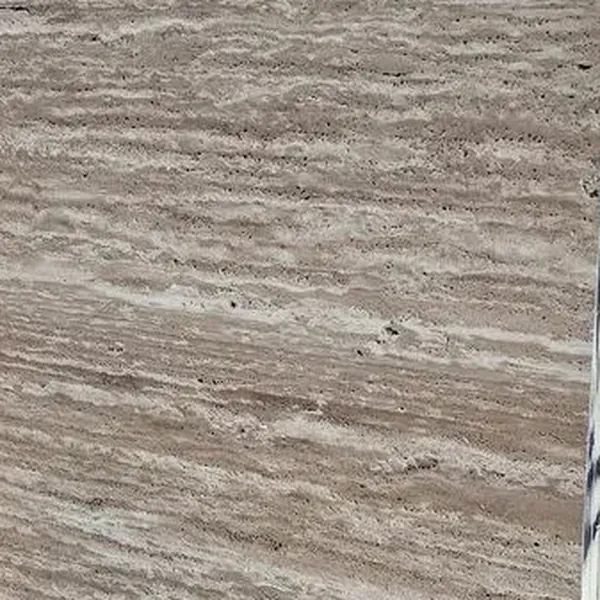 Beige TravertineFrom Rs 3,000 / sq ft
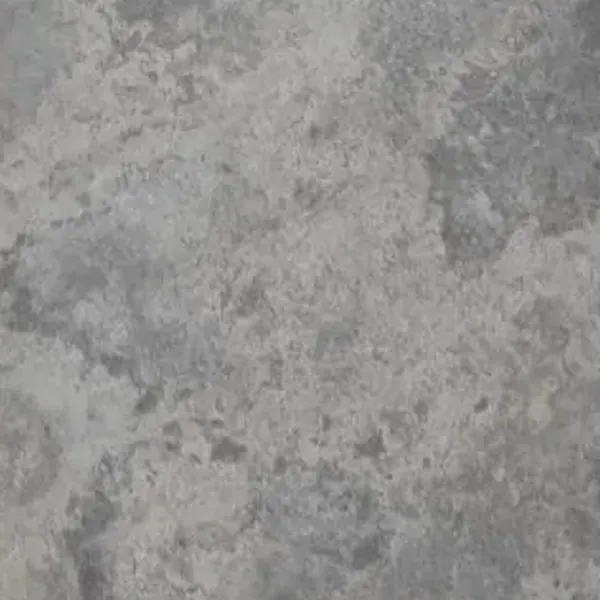 Silver TravertineFrom Rs 2,600 / sq ft
Estimated rates per square foot for the slab only, as listed on each stone's page. Rates move with stock and import costs, so confirm today's price on WhatsApp.
Frequently asked questions
Which stone is best for a house front elevation in Pakistan?
Vein-cut travertine is the most popular modern choice. Granite is the most durable option and keeps its colour in strong sun.
What stone is best for a car porch?
Granite with a flamed or leather finish, such as Impala Black, handles car weight and stays grippy in rain.
Can I use marble outdoors?
On covered porches, yes. On exposed areas, polished marble can be slippery when wet and weathers over time; use a honed finish and seal it.
Which stone stays coolest around a pool?
Light-coloured stone such as cream or beige travertine absorbs less heat than dark stone, so it is more comfortable underfoot.
Can quartz be used outdoors?
No. UV light can yellow the resin in quartz, so keep it indoors. Use granite or travertine for outdoor areas.
How do I keep outdoor stone clean?
Seal travertine and light stones, wash elevations from time to time to clear dust, sweep porches regularly and rinse chlorinated water off pool decks.
Want to see these stones in person?
Visit our showroom at Bedian Road, DHA Phase 6, Lahore, ask for free samples, or send us your measurements for a quote.