Travertine in Pakistan: Filled vs Unfilled, Vein Cut vs Cross Cut, and Finishes
Travertine has become one of the most requested stones for elevations, pool decks and modern interiors in Pakistan. Its terms can be confusing, so here they are in plain words.
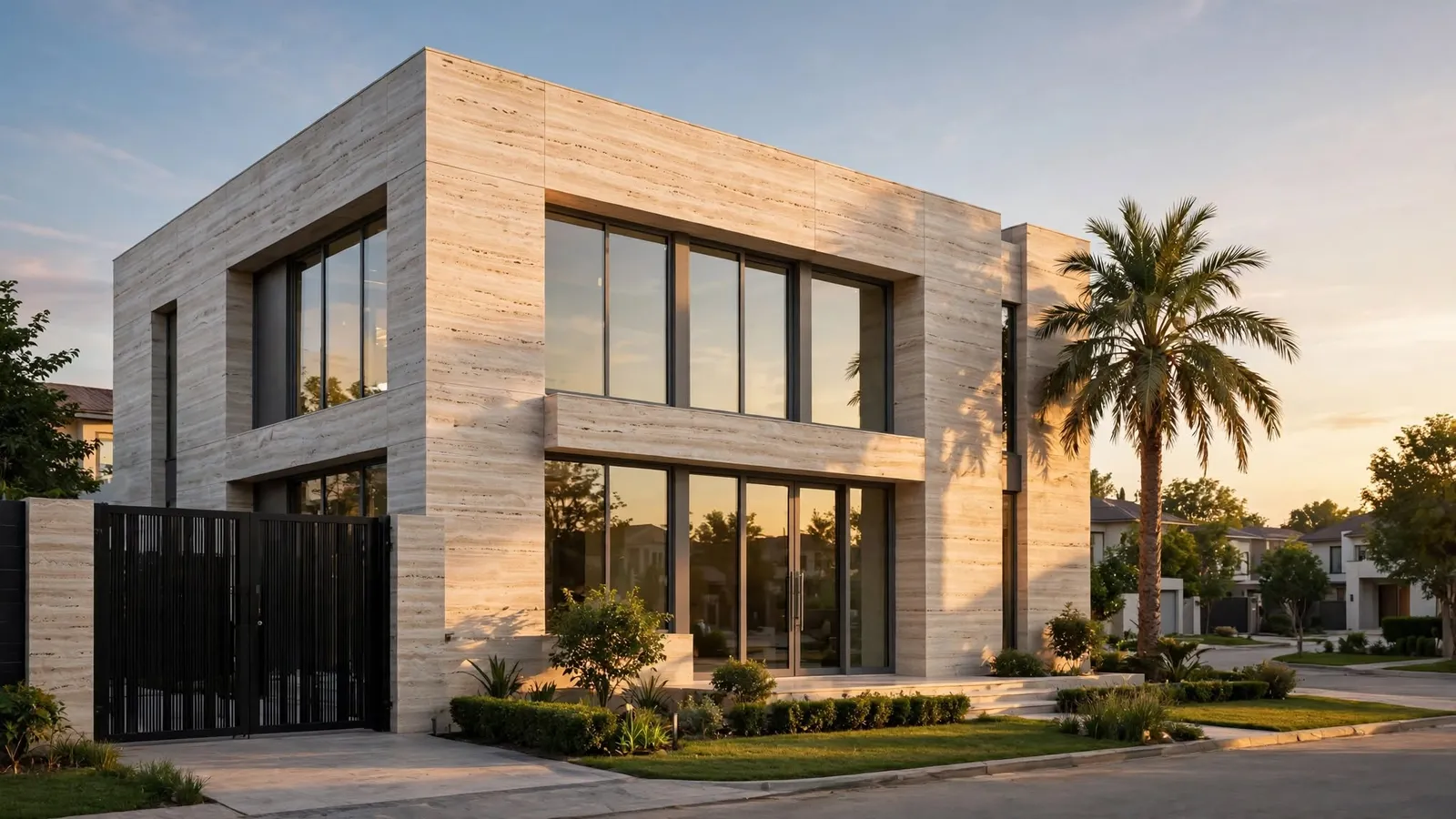
Travertine is a natural limestone formed by mineral springs. As the water deposited layers of calcium carbonate, gas bubbles left small holes in the stone. Those holes, and the soft banded look, are what give travertine its warm, natural character. Most of the travertine we stock comes from Turkey, with Italian and Iranian options too.
Travertine has become one of the most requested stones for elevations, pool decks and modern interiors in Pakistan, but the terms used to sell it can be confusing. This guide explains filled and unfilled stone, vein cut and cross cut, the main finishes, and then gives a step-by-step way to choose and look after travertine in a Pakistani home.
Filled vs unfilled
Filled travertine has its natural holes filled with a matching resin or cement filler, then honed or polished smooth. It is easier to clean and suits floors and interior walls.
Unfilled travertine keeps the open pores. It looks more rustic and textured, and is often used on feature walls and exterior cladding where dust collection in the holes is not a problem.
In a dusty city such as Lahore, this choice matters. Open pores on an indoor floor will collect dust and crumbs, so filled stone is the practical choice inside. On an exterior wall, the open texture is part of the look and rain or a wash-down keeps it presentable.
Vein cut vs cross cut
The same block looks completely different depending on how it is sliced:
- Vein cut slices across the layers, showing straight linear bands. It gives a modern, directional look on elevations and long walls.
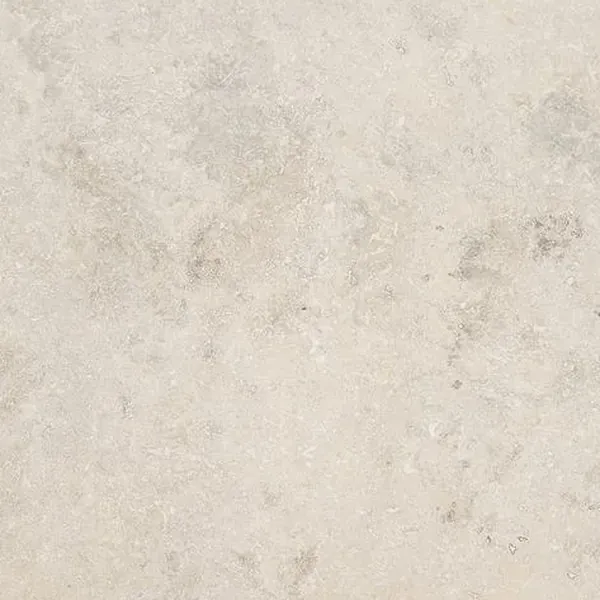
- Cross cut slices along the layers, showing a cloudy, mottled pattern without stripes. It looks softer and more classic.
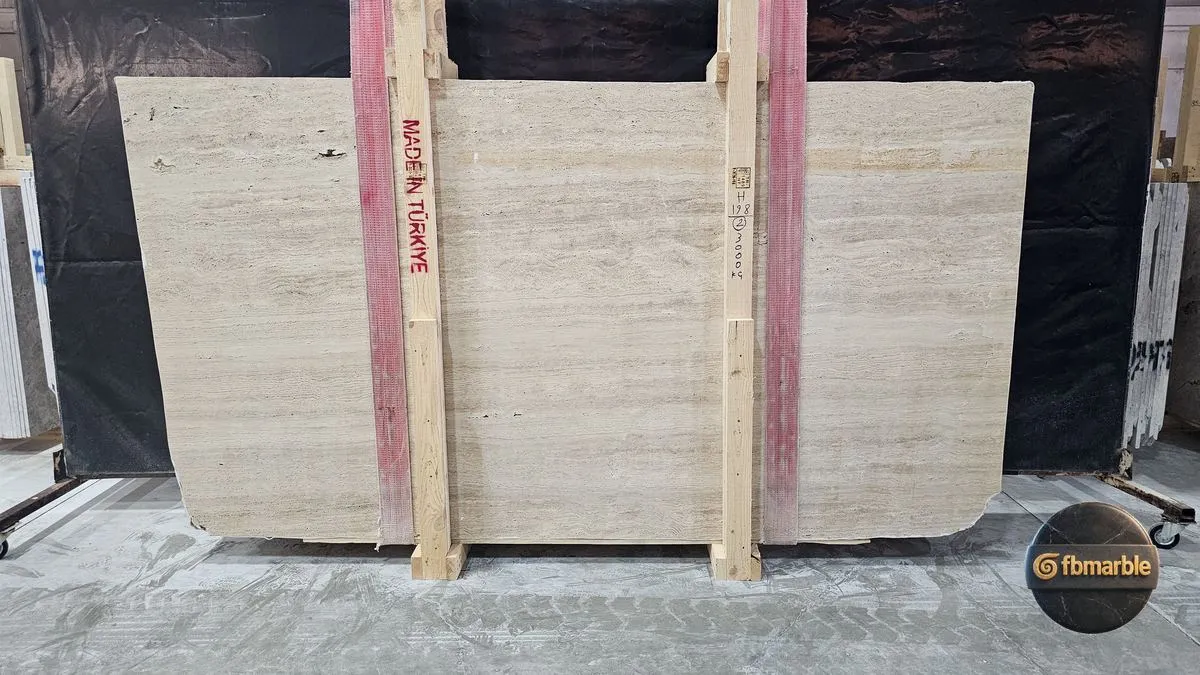
With vein cut stone, decide early whether the bands should run horizontally or vertically. Horizontal bands make a wall look wider and lower. Vertical bands make it look taller. Tell your mason before fixing starts, because the direction cannot be changed afterwards.
Finishes
| Finish | Look and feel | Best for |
|---|---|---|
| Honed | Smooth, matte | Floors, bathrooms, walls |
| Polished | Glossy | Indoor feature walls, low-traffic floors |
| Tumbled | Rounded edges, aged texture | Pool decks, patios, rustic floors |
| Brushed | Soft textured surface | Outdoor paths, terraces |
Where travertine works well
- House elevations: Classic and Beige vein-cut travertine are popular for front elevations.
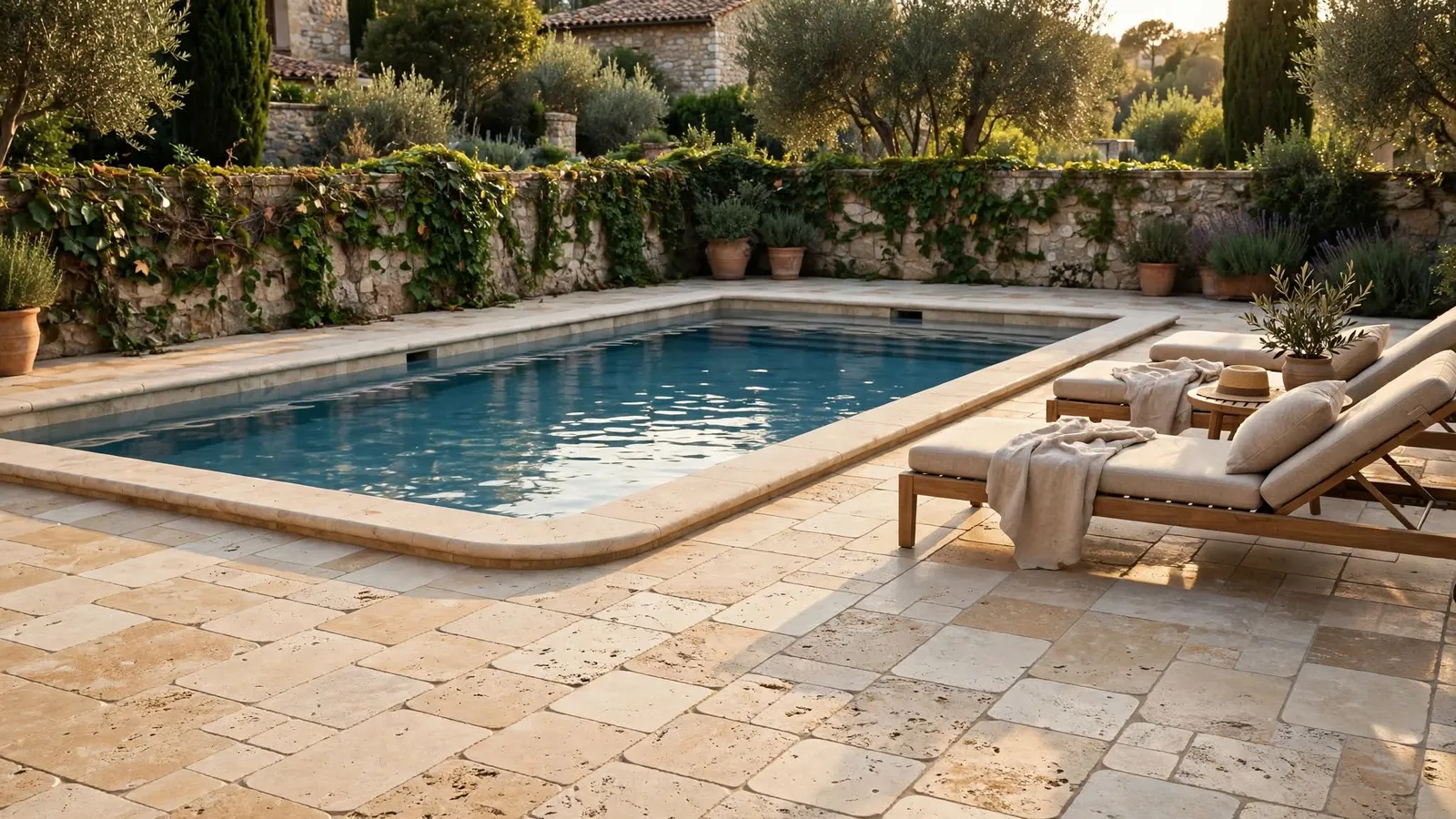
- Pool decks: tumbled and honed travertine stays relatively comfortable underfoot and gives grip when wet. See our outdoor stone guide.
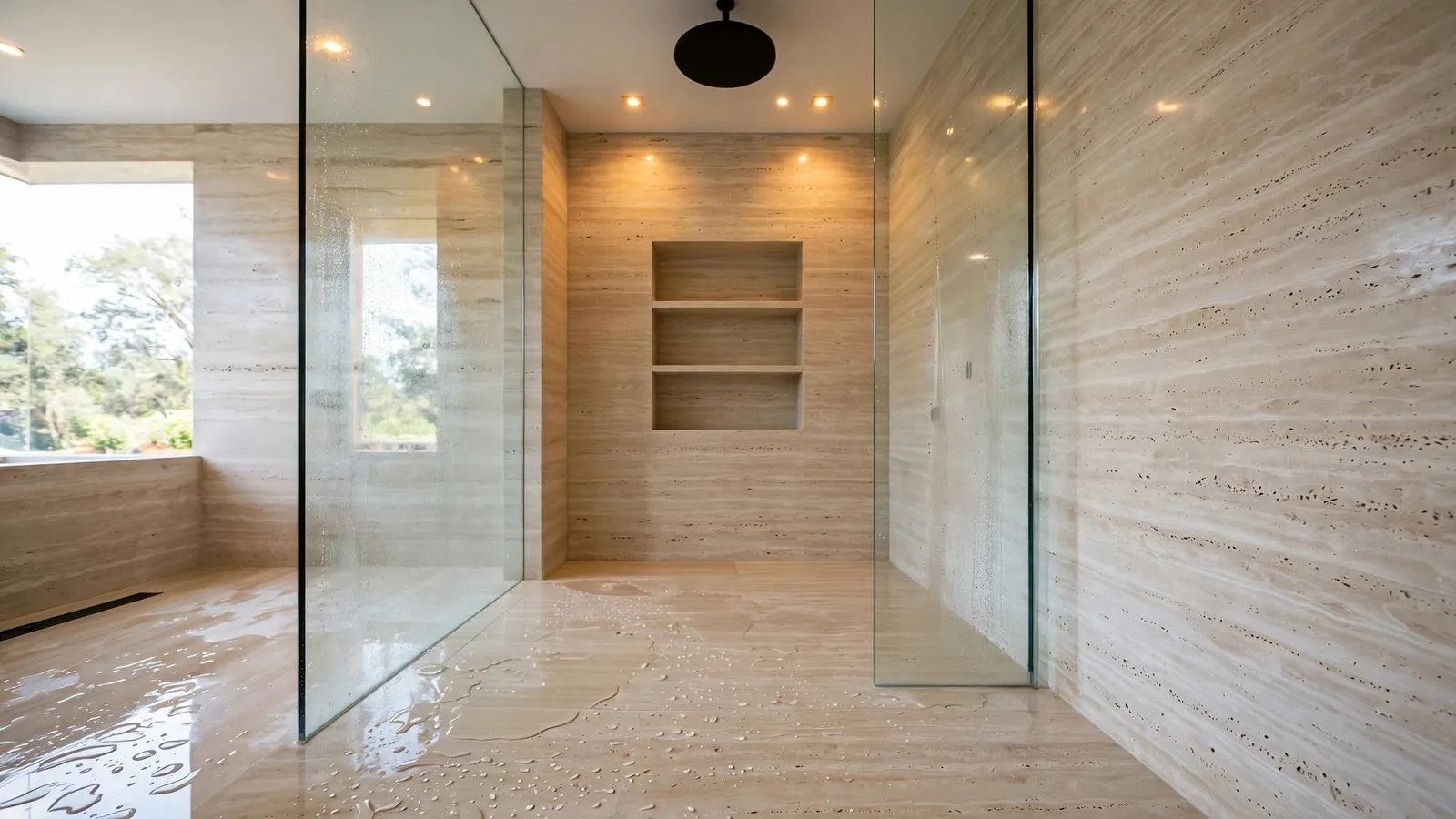
- Bathrooms and showers: honed, filled travertine gives a calm spa look.
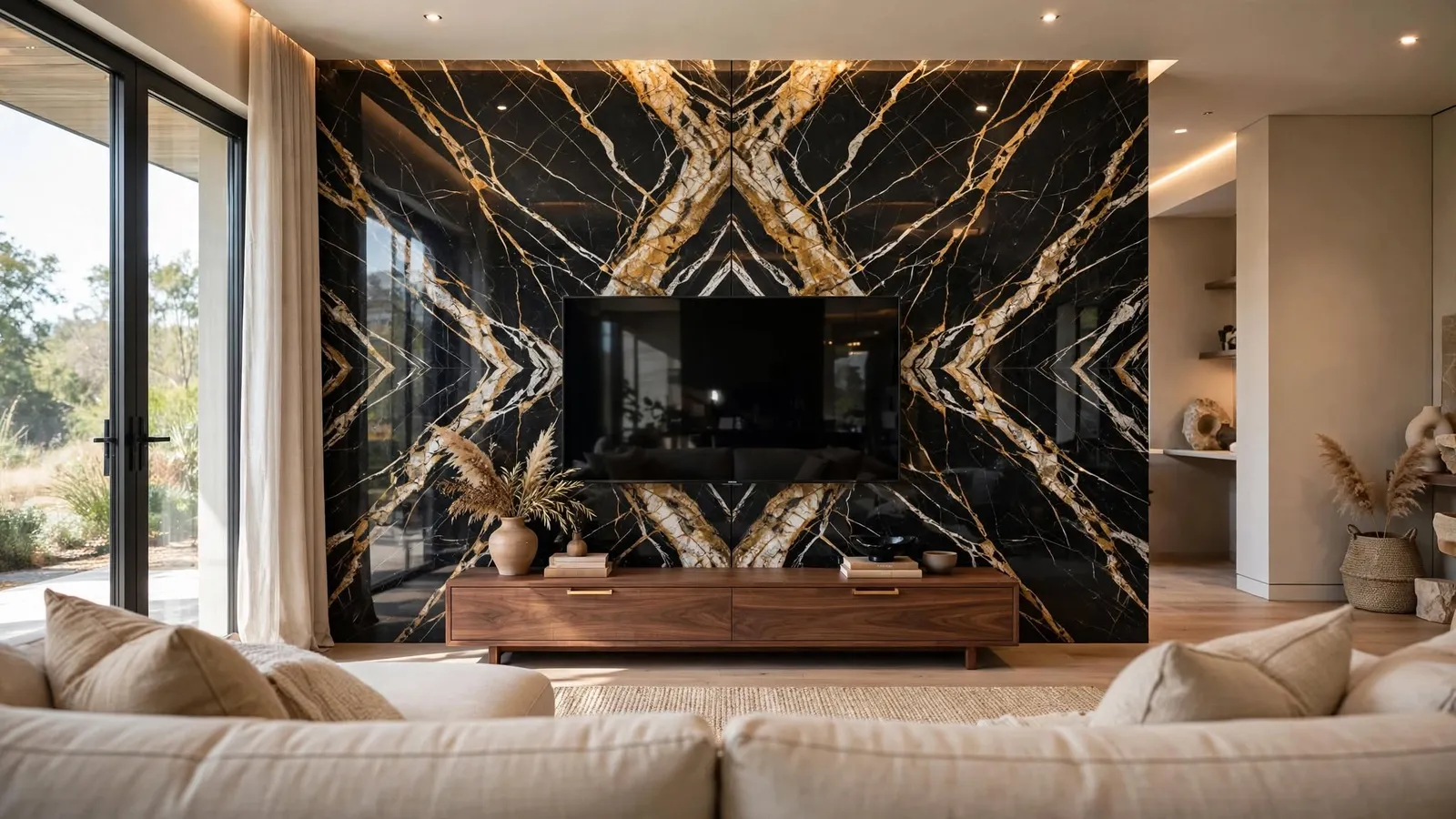
- Interior feature walls: darker tones like Walnut and Noce add warmth.
Travertine compared with marble
Travertine and marble are both calcium-based, so they share the same weakness to acids and the same need for a pH-neutral cleaner. The difference is mainly in look and texture. Marble is dense and can be polished to a high shine, with veins running through a smooth surface. Travertine has a softer, earthier look, with natural holes and bands that give it a relaxed, natural feel. That texture is why travertine is often chosen for elevations, pool areas and spa-style bathrooms, where a matte, natural surface suits the setting better than a mirror polish.
For a formal drawing room floor with a high gloss, marble is usually the closer fit. For a calm, textured wall, a shower or a terrace, travertine is often the better match. Our marble types page shows the marble options side by side.
Where to think twice
Because travertine is calcium-based, it is not the best choice for a busy kitchen counter, where lemon, imli, vinegar and tomato are used every day. Polished travertine on a high-traffic floor will also show wear sooner than a honed or tumbled finish. For those areas, consider granite for the counter and a honed finish for the floor.
What you need for a travertine project
- measurements of every wall or floor area in square feet
- a decision on filled or unfilled, and vein cut or cross cut
- a finish suited to each area: honed, polished, tumbled or brushed
- a penetrating stone sealer suitable for travertine
- a pH-neutral stone cleaner for routine cleaning
Choosing and fitting travertine: step by step
Step 1: Decide where it goes
List each area: front elevation, boundary wall, pool deck, bathroom or lounge feature wall. Inside and outside areas usually need different choices of fill and finish.
Step 2: Pick filled or unfilled
Choose filled travertine for floors, bathrooms and interior walls where easy cleaning matters. Choose unfilled for exterior cladding and feature walls where the rustic texture is the point.
Step 3: Choose the cut and colour
Vein cut gives straight bands for a modern elevation. Cross cut gives a softer, cloudy look. Classic and Beige are light and suit most elevations, while Walnut and Noce bring warmth to interiors.
Step 4: Match the finish to the use
Use honed for floors and bathrooms, tumbled for pool decks and patios, brushed for paths and terraces, and polished only for indoor walls or low-traffic floors. Wet areas need grip, so avoid polished stone there.
Step 5: Dry-lay before fixing
Natural stone varies, so lay the pieces out first and spread the colour and pattern evenly across the wall or floor.
Step 6: Seal after installation
Seal the stone once it is fixed and clean, especially outdoors and in showers. On an elevation, sealing reduces dust and water staining. Around a pool, rinse off chlorinated water regularly.
Care
Like marble, travertine is calcium-based, so acids such as lemon, vinegar and harsh "tezab" cleaners will etch it. Seal it after installation, especially outdoors and in showers, and clean with a pH-neutral stone cleaner.
In summer, pool decks and terraces get a lot of sun. Light travertine colours and textured finishes stay relatively comfortable underfoot. Hard water used for washing the deck or the elevation can leave mineral marks, so a final rinse and a wipe of any standing water helps keep the stone clean.
Common mistakes
- Using unfilled stone on an indoor floor. The open pores collect dust and dirt. Use filled travertine inside.
- Choosing polished travertine for wet areas. It is slippery when wet. Use honed or tumbled stone around showers and pools.
- Cleaning with tezab or acid. Acids etch travertine. Use a pH-neutral stone cleaner.
- Skipping the sealer outdoors. Unsealed elevations and pool decks take dust and water stains more easily.
- Not deciding the band direction. Vein cut bands that run the wrong way change the look of the whole wall.
Price in Pakistan
Our travertine range is estimated at about Rs 2,500 – 3,200 per sq ft, depending on colour, cut and finish. Exact rates are on each stone's page. See the full travertine collection.
Stones in this guide
 Filled TravertineFrom Rs 3,000 / sq ft
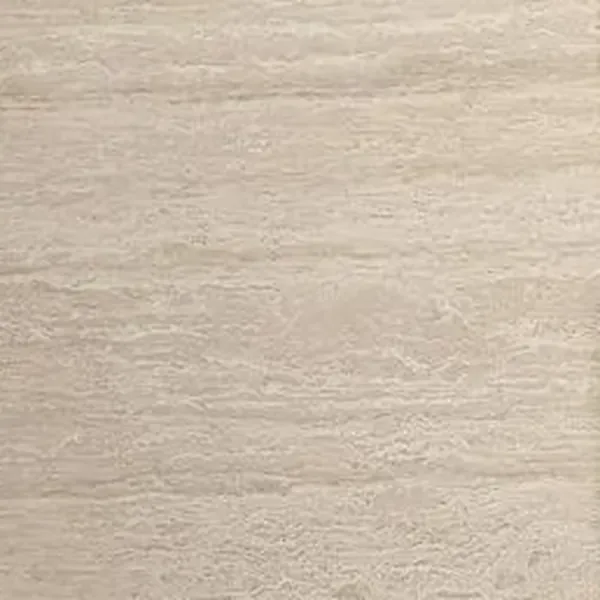 Unfilled TravertineFrom Rs 2,600 / sq ft
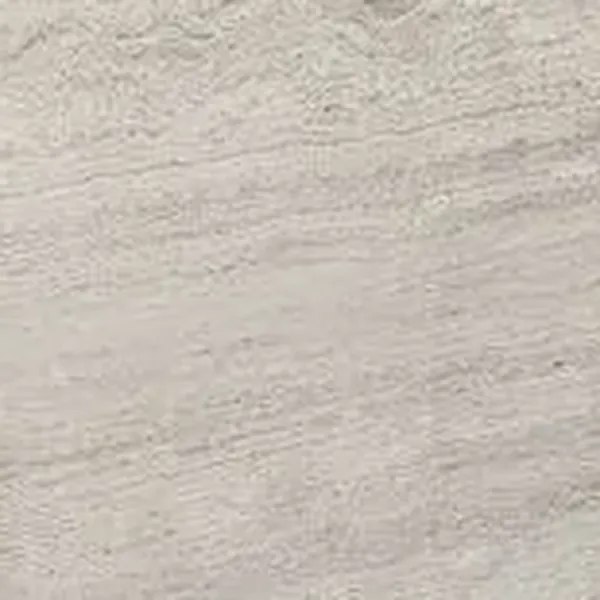 Vein Cut TravertineFrom Rs 2,600 / sq ft
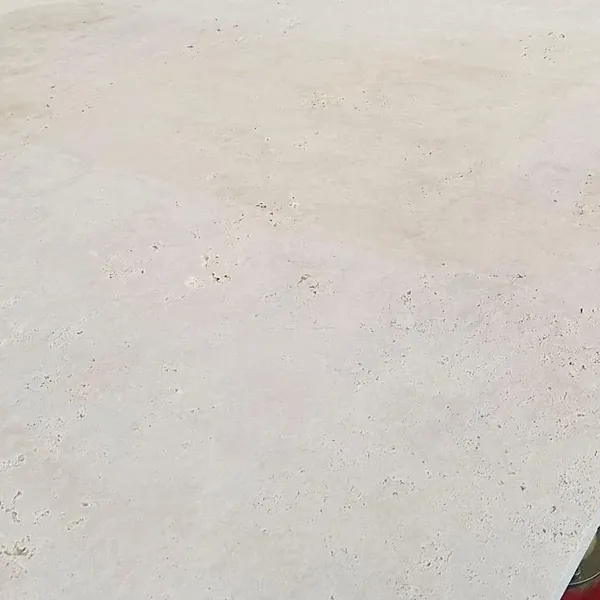 Cross Cut TravertineFrom Rs 3,000 / sq ft
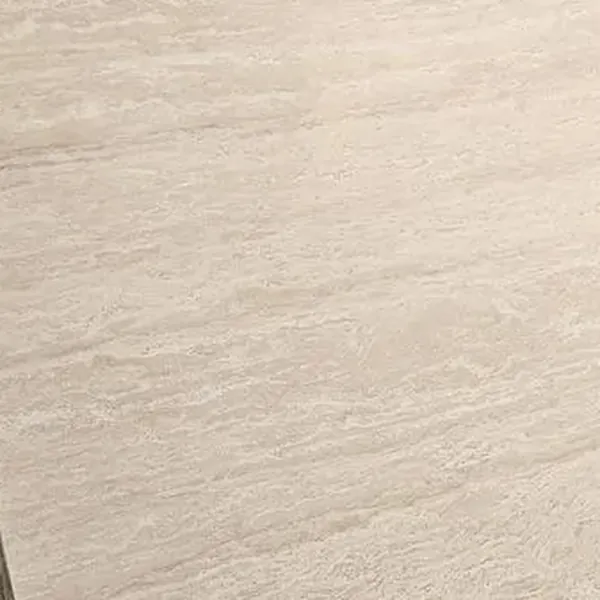 Honed TravertineFrom Rs 2,500 / sq ft
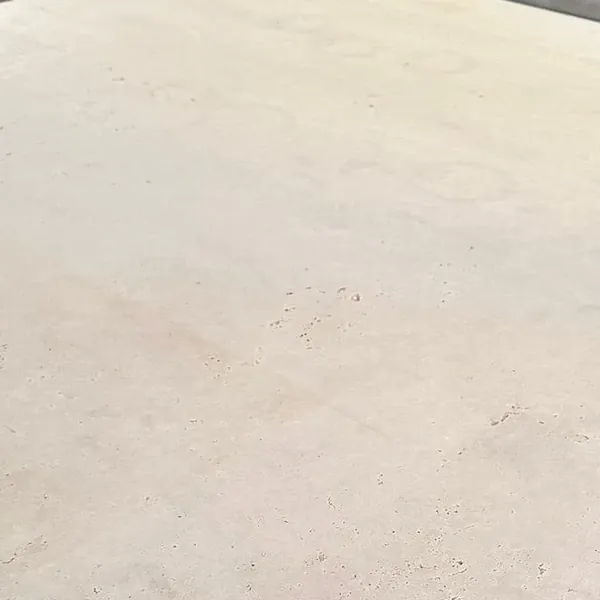 Polished TravertineFrom Rs 2,500 / sq ft
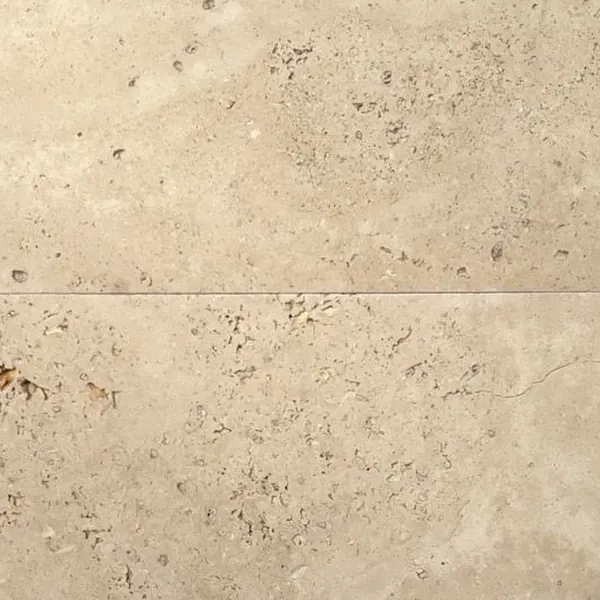 Tumbled TravertineFrom Rs 2,600 / sq ft
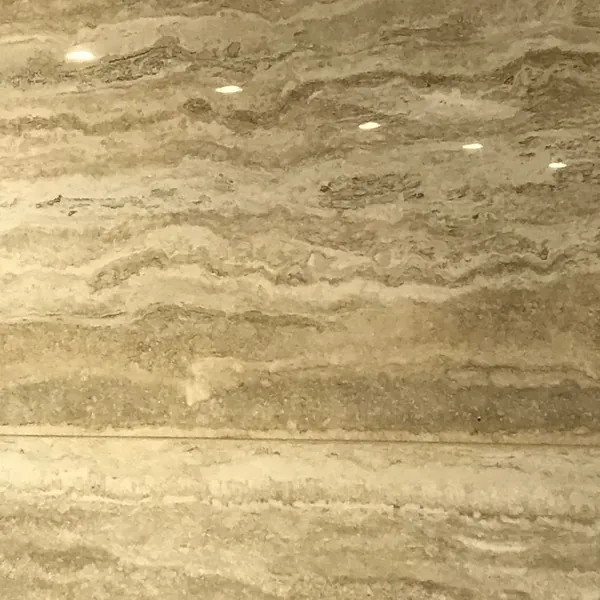 Brushed TravertineFrom Rs 3,000 / sq ft
Estimated rates per square foot for the slab only, as listed on each stone's page. Rates move with stock and import costs, so confirm today's price on WhatsApp.
Frequently asked questions
What is the difference between filled and unfilled travertine?
Filled travertine has its natural holes filled and smoothed, which makes it easier to clean. Unfilled keeps the open pores for a rustic, textured look.
Is travertine good for house elevations in Pakistan?
Yes. Vein-cut travertine in Classic or Beige tones is widely used for elevations. Seal it to reduce dust and water staining.
What is the price of travertine in Pakistan?
Our travertine is estimated at about Rs 2,500 – 3,200 per sq ft, depending on colour, cut and finish.
Can travertine be used around a pool?
Yes. Tumbled or honed travertine gives grip when wet and stays relatively comfortable underfoot. Seal it and rinse off chlorinated water regularly.
What is the difference between vein cut and cross cut travertine?
Vein cut slices across the layers and shows straight bands. Cross cut slices along the layers and shows a cloudy, mottled pattern without stripes.
How do I clean travertine?
Use a pH-neutral stone cleaner and water. Avoid lemon, vinegar and tezab, which etch calcium-based stone.
Want to see these stones in person?
Visit our showroom at Bedian Road, DHA Phase 6, Lahore, ask for free samples, or send us your measurements for a quote.