How to Care for Coloured Granite: Keeping Blue, Red, Green and Brown Granite Bright for Years
Coloured granites such as Blue Pearl, Red Ruby, Volga Blue and Tan Brown are tough, but their deep colour and mirror polish are what you paid for. A few simple habits keep both for decades.
Granite is far harder than marble and does not etch from lemon juice or vinegar the way marble does. So why do some coloured granite counters and floors look dull, patchy or faded after a few years? Usually it is the wrong cleaner, a worn-out sealer, or a resin treatment that was never meant for that location. Here is how to avoid all three.
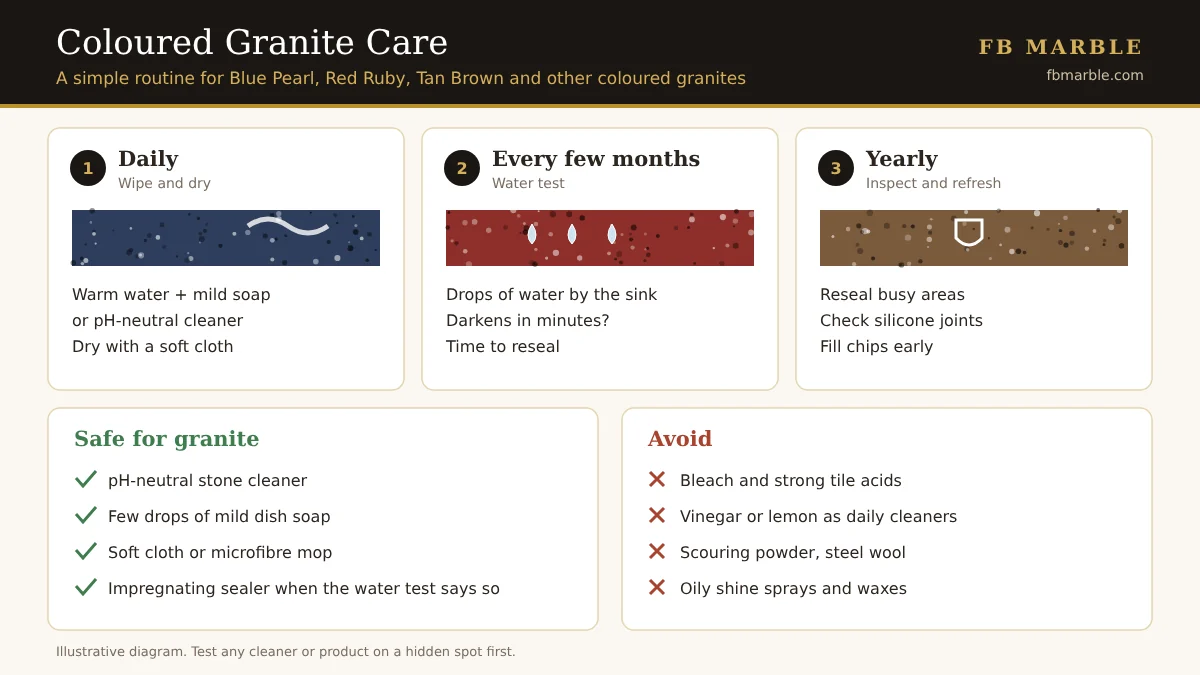
The care routine below is simple. It splits into what to do every day, what to check every month and what to look at once a year. Follow it and a blue, red, green or brown granite kitchen keeps its depth of colour and its polish for decades, even with daily cooking, hard water and Lahore dust.
What you need
- Soft microfibre cloths for wiping and drying.
- Mild dish soap, or a pH-neutral stone cleaner.
- A soft mop and two buckets for floors, one for clean water.
- An impregnating sealer for resealing when the water test says so.
- Trivets or wooden boards for hot pans and pressure cookers.
- Colour-matched epoxy for small edge chips, or the number of someone who does repairs.
Why coloured granite needs a little extra care
- Dark and deep colours show everything. Soap film, hard-water marks and grease show up much more on Blue Pearl, Volga Blue or Black Pearl than on a speckled white granite.
- Some slabs are resin-treated. Many imported and some local slabs are filled with resin at the factory to close tiny fissures and deepen the polish. That resin is softer than the stone and is damaged by strong chemicals and strong sun.
- Red and pink granites are more porous than most black granites, so oil and haldi stains can soak in if the sealer has worn off.
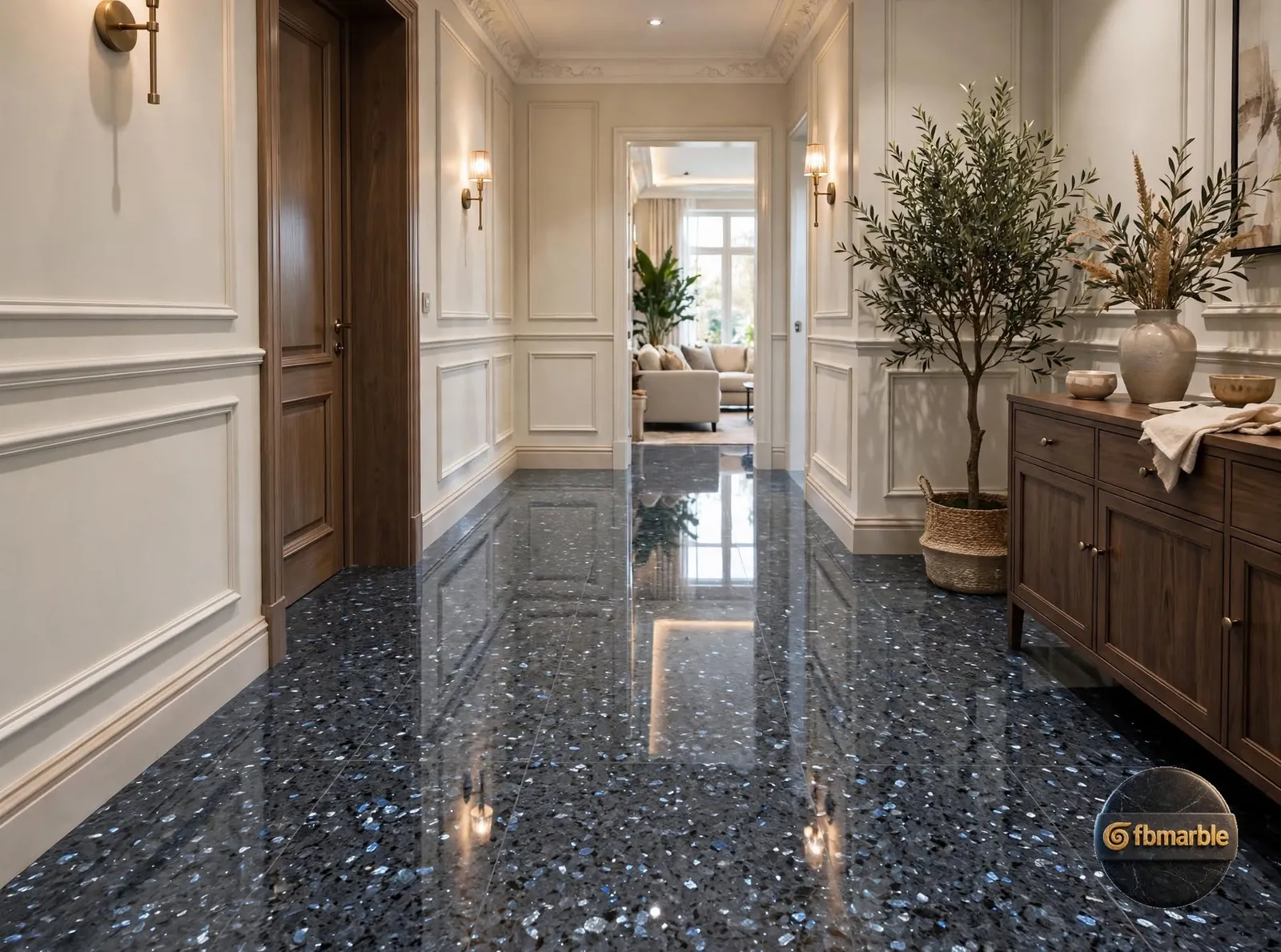
Step 1: Daily care
- Wipe counters with warm water and a few drops of mild dish soap, or a pH-neutral stone cleaner.
- Dry with a soft cloth. On dark granite, drying is what prevents water spots.
- Wipe spills of oil, haldi, tea and juice quickly, especially on red, pink and light brown stones.
- Mop floors with clean water and a neutral cleaner; change the water often so the dirt is not spread back as a film.
Hard water is the main reason dark granite looks cloudy in many Pakistani homes. Tap water that is left to dry on the stone leaves a thin white layer of minerals, which builds up around the sink and the water filter. A quick wipe with a dry cloth after washing up stops it before it starts. Use only a few drops of soap too: too much leaves a film that dulls the polish just as badly.
In the kitchen, the hob area takes the most punishment. Splashes of ghee and tadka oil, chai that boils over and haldi from the masala dabba are all easier to lift while fresh. Keep a cloth near the hob and wipe as you cook.
Step 2: Use the right cleaners, and avoid the wrong ones
| Avoid | Why |
|---|---|
| Bleach and strong toilet or tile acids | Strip the sealer and can dull resin-treated surfaces |
| Vinegar and lemon as daily cleaners | Wear down sealer over time; harsh on any marble nearby |
| Scouring powder and steel wool | Scratch the polish and resin |
| Oily "shine" sprays | Leave a sticky film that attracts dust and looks patchy |
Granite generally does not etch from acids, but acids weaken the sealer, and once the sealer is gone, stains can soak in. Many homes also have marble floors or thresholds next to granite counters, and acid cleaners will etch that marble. A neutral cleaner is the safe choice for both.
Step 3: Monthly water test
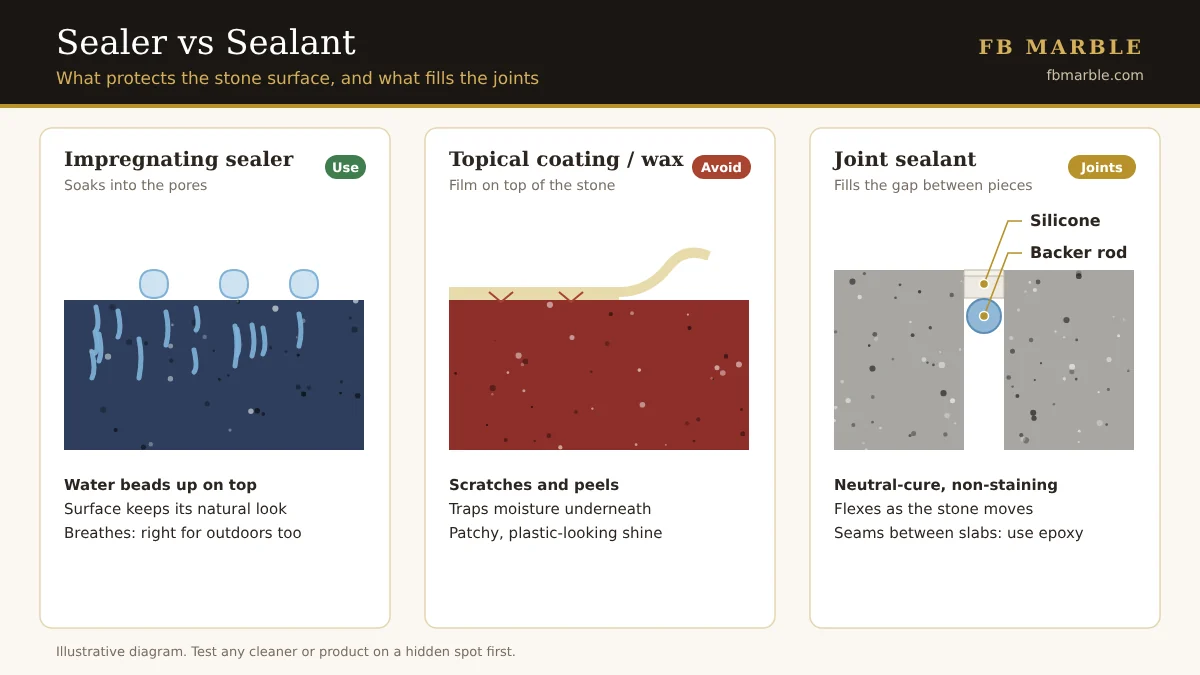
Put a few drops of water on the busiest areas: beside the sink, the hob and the chopping area. If the stone darkens within a few minutes, it is time to reseal. Our sealing guide explains the test and the steps, and sealer vs sealant explains which product goes where.
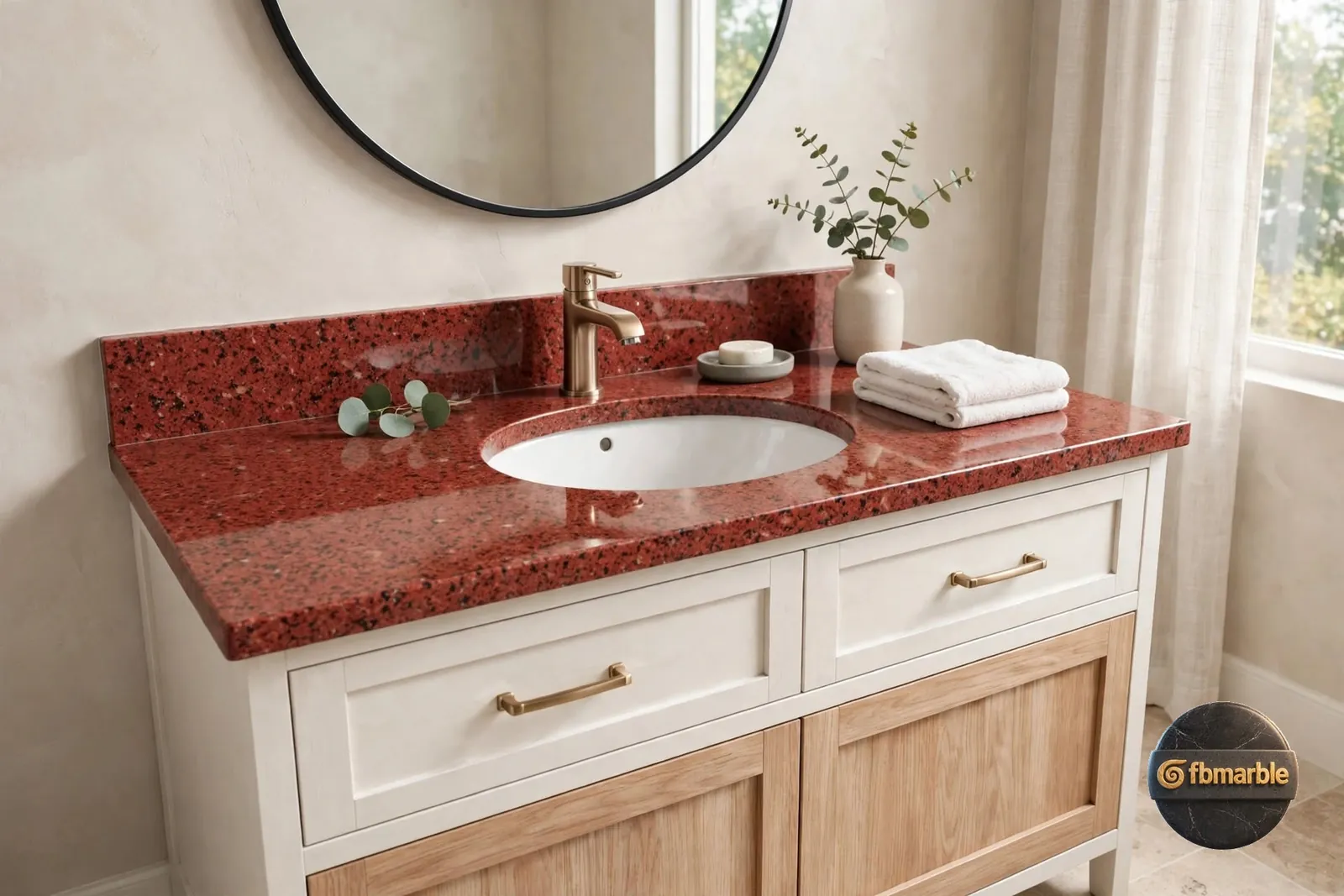
Do the test on a clean, dry surface. If water still beads up after several minutes, the sealer is working and nothing more is needed. Dense black granites can go a long time between treatments, while red and pink stones usually need resealing sooner.
Step 4: Yearly inspection and refresh
- Reseal where the water test shows absorption (often every 1 to 2 years on counters).
- Check joints and the silicone around sinks for gaps or mould, and replace if needed.
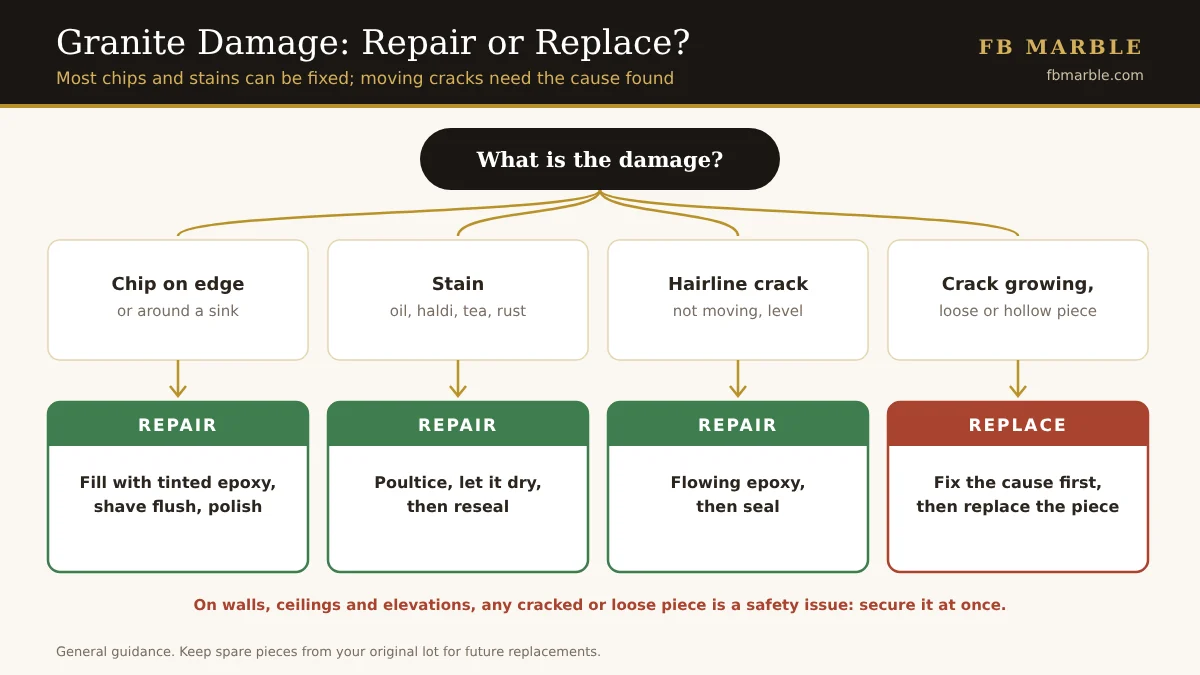
- Look for small chips on edges and fill them early with colour-matched epoxy; see our epoxy guide.
- If a floor has lost its shine in walkways, a professional can re-polish it with diamond pads. Granite takes a new polish well.
Before Eid or a family wedding is a good time for this yearly check, as it is when kitchens and lounges get their heaviest use and their most visitors.
Step 5: Know the rules for resin-treated slabs
Ask your supplier whether a slab is resin-treated. Resin is not a defect; it is normal for many beautiful stones. But it changes the care rules: keep strong chemicals away, use trivets for hot pans, and do not use resin-treated slabs in strong outdoor sun, where the resin can yellow or turn cloudy. For outside, read granite for outdoor use.
Step 6: Look after coloured granite floors
Floors need a slightly different approach from counters. Dust and fine grit blow in through doors and windows, especially in the dry months before the monsoon, and that grit acts like sandpaper under shoes. Over time it dulls the polish in walkways and doorways first.
- Sweep or dust-mop daily in busy areas, before mopping, so grit is lifted rather than pushed around.
- Put mats at outside doors to catch dust and sand.
- Use felt pads under chairs, tables and sofa legs.
- Mop with a well-wrung mop and a neutral cleaner, then let the floor dry or wipe it dry on dark stone.
Daily, monthly and yearly at a glance
| When | What to do |
|---|---|
| Every day | Wipe with a neutral cleaner, dry, clear spills quickly |
| Every month | Water test beside the sink, hob and chopping area |
| Every year | Reseal if needed, check silicone, fill chips, consider re-polishing worn floors |
Common mistakes
- Using too much soap. It leaves a film that looks like a dull stone.
- Leaving water to dry on dark granite. Hard-water spots build up quickly.
- Cleaning with bleach or tile acid. It strips the sealer and can dull resin.
- Putting hot pans straight on resin-treated tops. Use a trivet.
- Applying oily shine sprays. They attract dust and look patchy.
- Waiting for stains before resealing. The water test tells you earlier.
Choosing an easy-care colour
Choosing a colour for an easy-care kitchen? Mid-tone speckled stones such as Tan Brown hide marks better than solid dark or very light ones. Send us a photo of your kitchen on WhatsApp and we will suggest options.
Stones in this guide
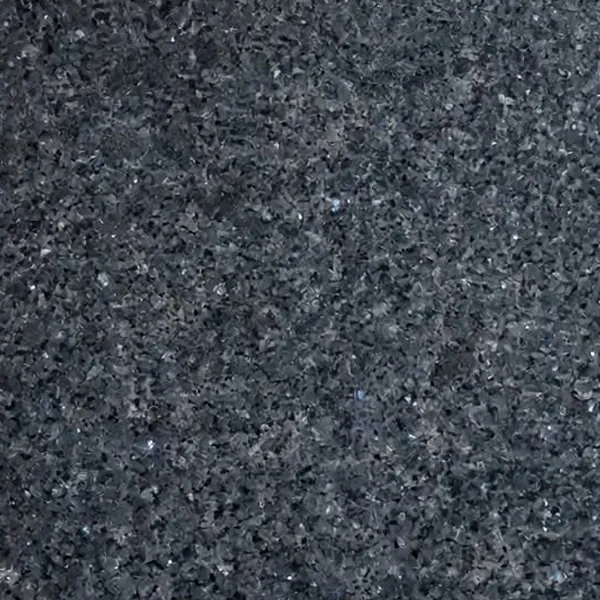 Blue Pearl GraniteFrom Rs 1,900 / sq ft
 Volga Blue GraniteFrom Rs 3,500 / sq ft
 Black Pearl GraniteFrom Rs 1,100 / sq ft
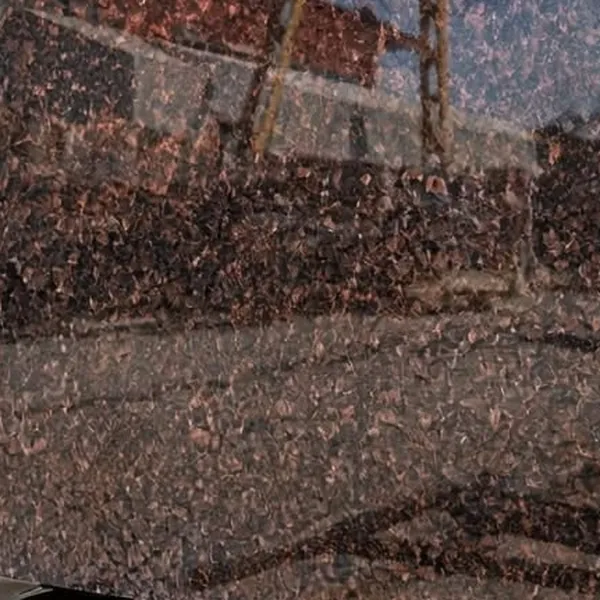 Tan Brown GraniteFrom Rs 1,400 / sq ft
Estimated rates per square foot for the slab only, as listed on each stone's page. Rates move with stock and import costs, so confirm today's price on WhatsApp.
Frequently asked questions
How do I clean coloured granite every day?
Use warm water with a little mild dish soap or a pH-neutral stone cleaner, then dry with a soft cloth to avoid water spots.
Can I use vinegar or bleach on granite?
Not as a regular cleaner. Both wear down the sealer, and strong chemicals can dull resin-treated slabs.
Why has my blue or black granite gone dull?
Usually soap film or hard-water marks. Clean with a neutral cleaner, rinse and dry. If walkways are worn, a professional re-polish restores the shine.
How often should coloured granite be sealed?
Do the water test every few months. Busy kitchen counters often need resealing every 1 to 2 years; dense black granites much less.
How do I get haldi or oil out of red granite?
Wipe it as soon as possible. If it has soaked in, a poultice usually draws it out; see repair or replace. Then reseal the area.
Can resin-treated granite be used outdoors?
It is best avoided in strong outdoor sun, where the resin can yellow or turn cloudy. The stone itself does not fade.
Want to see these stones in person?
Visit our showroom at Bedian Road, DHA Phase 6, Lahore, ask for free samples, or send us your measurements for a quote.